
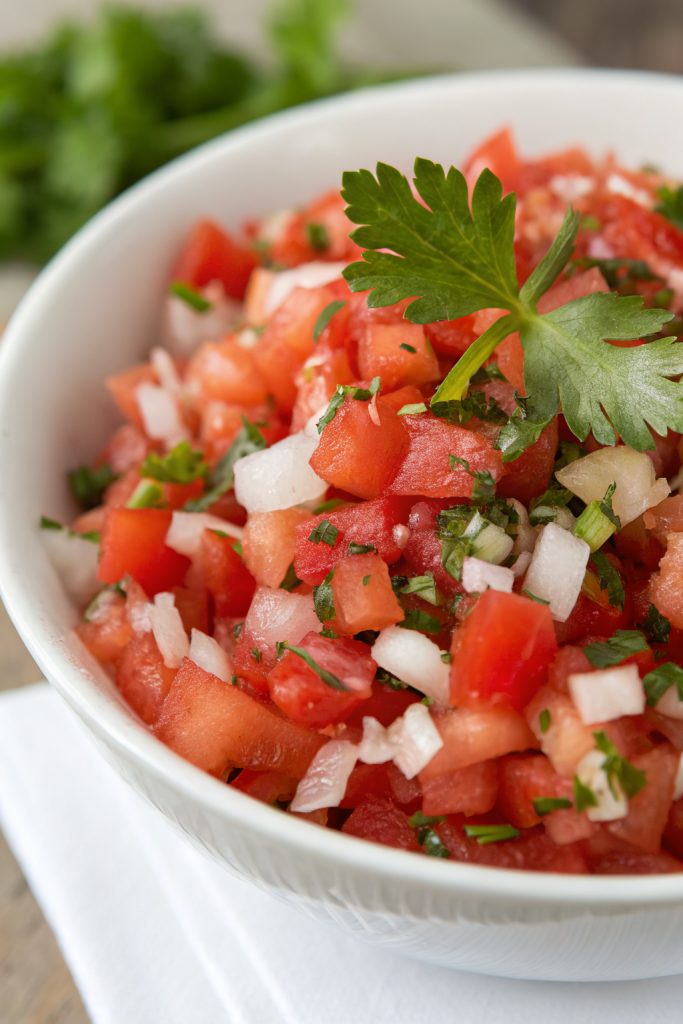
How To Make Pico De Gallo tastes fresh and zippy, with crunchy veggies and a big hit of lime and cilantro in every bite. It works for anyone who wants a quick, healthy flavor booster that comes together in about 15 minutes, start to finish. I started making pico de gallo in a tiny apartment kitchen with a dull knife, so if I can nail it, you absolutely can too.
Why You Should Try This Pico De Gallo Recipe
This pico de gallo hits that perfect balance of juicy tomatoes, sharp onion, spicy jalapeño, and tangy lime. It tastes fresh, clean, and bold, and it upgrades everything from basic tortilla chips to grilled chicken or eggs.
You mix it in one bowl, it uses simple ingredients, and it tastes even better than restaurant salsa fresca. It also fits gluten free, vegetarian, and vegan diets, so you can set out one bowl and make everyone happy.
“This Pico De Gallo tastes fresher than any restaurant salsa and disappears in minutes every time I serve it. ★★★★★”
Ingredients You’ll Need
Fresh produce
- Ripe tomatoes, about 4 medium
- Use Roma or plum tomatoes for less juice and firmer texture.
- In winter, choose cherry or grape tomatoes, since they usually taste sweeter and less watery.
- White onion, 1 small, very finely diced
- White onion gives that classic taqueria flavor and crunch.
- Use red onion if you prefer a slightly sweeter, milder bite.
- Jalapeño or serrano peppers, 1 to 2, seeded and minced
- Jalapeño gives gentle heat, serrano brings more kick.
- Keep some seeds if you want extra spice.
- Fresh cilantro, about 1/2 cup chopped leaves and tender stems
- Fresh limes, 1 to 2, juiced
- Use fresh lime juice only; bottled lime juice tastes dull and flat in pico de gallo.
- Garlic, 1 small clove, very finely minced (optional, but I love it)
Pantry staples
- Kosher salt or fine sea salt
- I like Diamond Crystal kosher salt since it tastes clean and dissolves quickly.
- Ground cumin (optional, a pinch)
- Traditional pico often skips cumin, but a tiny pinch adds warmth and depth.
- A small pinch of sugar (optional)
- Use this only if your tomatoes taste bland or too acidic.
Optional add‑ins and variations
- Diced cucumber for extra crunch
- Diced avocado for a chunkier, salsa-meets-guacamole vibe
- Diced mango or pineapple for a sweet and spicy twist
- A splash of orange juice for a softer citrus note
- Extra minced serrano for serious heat lovers
Equipment
- Sharp chef’s knife
- Cutting board
- Medium mixing bowl
- Spoon or spatula for stirring
- Citrus juicer or reamer (or just your hands)
- Fine mesh strainer or small colander (helpful if tomatoes release a lot of juice)
Tips & Tricks
- Use ripe but firm tomatoes so they hold their shape and do not turn mushy.
- Remove tomato cores and most of the seeds to avoid watery pico de gallo.
- Dice everything very small and as evenly as you can so each bite tastes balanced.
- Rinse chopped onion under cold water, then drain, to tame harsh bite while keeping crunch.
- Start with less jalapeño, taste, then add more until the heat level fits your crowd.
- Add salt gradually, stir, then taste again after a few minutes since salt pulls out moisture and flavor.
- Chill the pico de gallo for at least 10 to 15 minutes before serving so flavors meld.
- Stir gently right before serving and drain off extra liquid if you prefer a thicker texture.
- Use fresh lime juice and add it in stages so you hit bright and tangy, not sour.
- Make the pico de gallo close to serving time for best crunch and color.
How To Make The Best Pico De Gallo
1: Prep and dice the tomatoes
Slice off the stem end of each tomato. Cut the tomatoes in half, then scoop out most of the seeds and watery pulp with a spoon or your fingers. Dice the tomato flesh into small, even pieces, about 1/4 inch, and place them in a mixing bowl.
If the tomatoes release a lot of juice, you can drain some off in a strainer. Keep a little juice, since it carries flavor, but avoid a soupy bowl. You want juicy, not soggy.
2: Chop onion, jalapeño, and cilantro
Peel the onion and dice it very finely, smaller than the tomato pieces, and add it to the bowl. Cut the jalapeño in half, scrape out seeds and membranes if you want milder heat, then mince it as small as you can. Toss the minced jalapeño into the bowl.
Rinse the cilantro, pat it dry, then chop leaves and tender stems. Add the cilantro to the bowl as well. If you use garlic, mince it very finely so it blends in instead of overpowering each bite, then add it to the mix.
3: Season with lime, salt, and optional spices
Squeeze fresh lime juice over the mixture, starting with the juice of one lime. Sprinkle in salt, starting with about 1/2 teaspoon, plus a tiny pinch of cumin and sugar if you choose to use them. Stir everything gently but thoroughly so the lime and salt coat all the veggies.
Taste a spoonful with a chip. Adjust salt, lime, and heat level by adding more jalapeño if you want. Aim for bright, salty, and slightly spicy, since flavors soften a bit as the pico rests.
4: Rest and adjust before serving
Cover the bowl and place it in the fridge for 10 to 20 minutes. This short rest lets the salt draw out tomato juices and helps flavors blend. After chilling, stir again and taste.
If the pico de gallo looks too watery, drain off a little liquid or use a slotted spoon to serve. Add a tiny squeeze of lime or a pinch of salt if the flavor needs a last boost. Serve cold or at cool room temperature.
What to Serve with Pico De Gallo
This How To Make The Best Pico De Gallo works with so many meals that it almost counts as a kitchen cheat code. Spoon it over tacos, burrito bowls, quesadillas, grilled chicken, or fish for instant freshness. Use it as a topping for scrambled eggs, breakfast burritos, or nachos to cut through richness.
You can also serve it simply with tortilla chips, alongside guacamole and salsa verde, for an easy snack platter. Pair it with rice, beans, and grilled veggies to build a colorful, healthy dinner that still tastes fun.
Storage Options
- Store leftover pico de gallo in an airtight container in the fridge for up to 3 days; it tastes best within the first 24 hours.
- Stir before serving and use a slotted spoon if extra liquid collects at the bottom.
- Avoid freezing pico de gallo, since the tomatoes and cilantro turn mushy and lose their fresh texture.
- If the flavor fades slightly on day two, add a squeeze of fresh lime and a tiny pinch of salt to wake it back up.
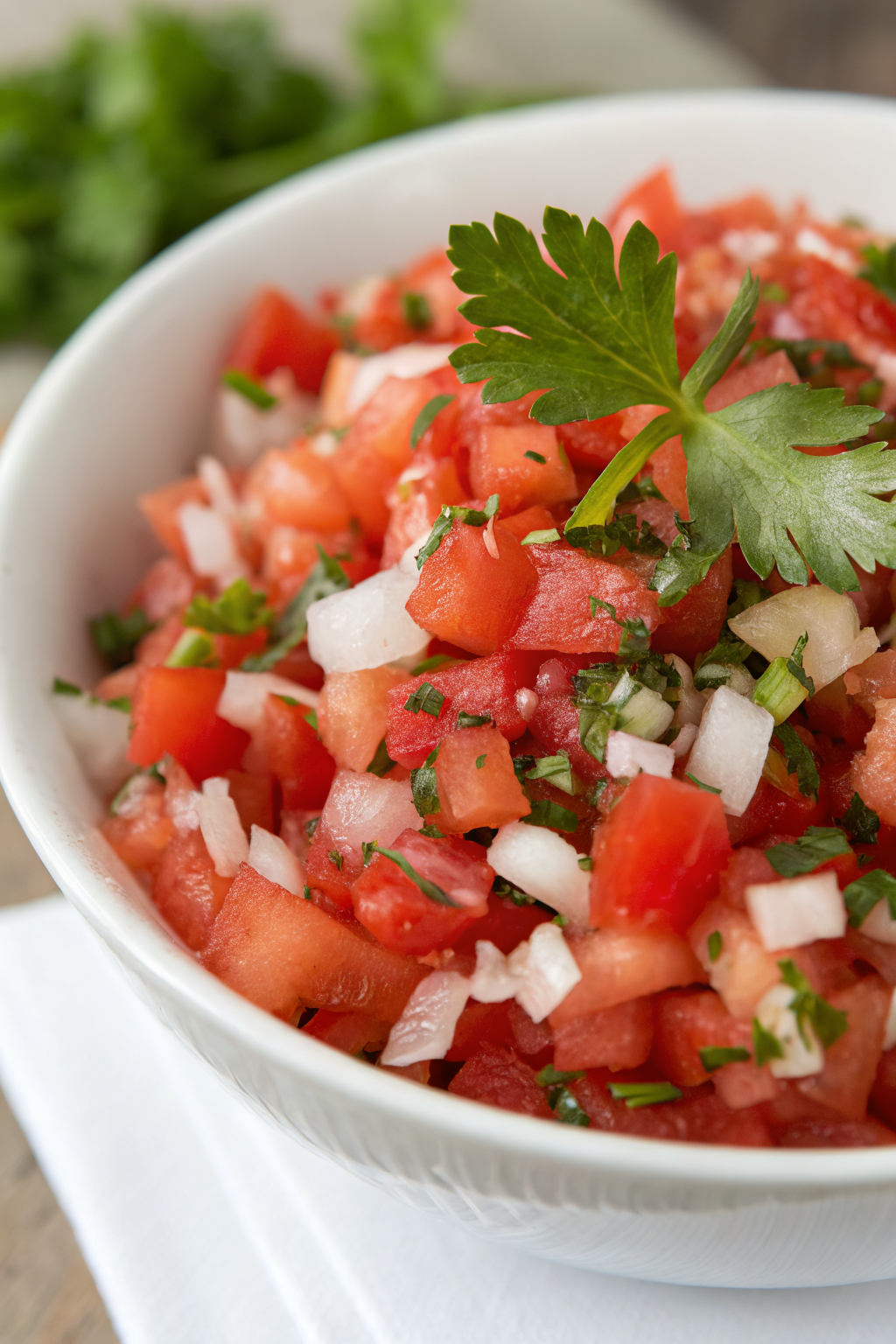
How To Make The Best Pico De Gallo
Ingredients
Instructions
- Slice off the stem end of each tomato. Cut the tomatoes in half, scoop out most of the seeds and watery pulp, then dice the tomato flesh into small, even 1/4-inch pieces. Place the diced tomatoes in a mixing bowl and drain off excess juice if they release a lot, leaving some for flavor.
- Peel the white onion and dice it very finely, smaller than the tomato pieces, then add it to the bowl. Halve the jalapeño or serrano, remove seeds and membranes for milder heat (leave some seeds for more spice), mince very finely, and add to the bowl.
- Rinse the cilantro, pat dry, then chop the leaves and tender stems and add to the bowl. If using garlic, mince it very finely so it blends in, then stir it into the mixture.
- Squeeze the juice of 1 lime over the vegetables. Sprinkle in the salt, starting with about 1/2 teaspoon, plus a pinch of cumin and sugar if using. Gently but thoroughly stir so the lime juice and seasonings coat all the ingredients. Taste with a tortilla chip and adjust salt, lime, and heat level by adding more jalapeño if desired.
- Cover the bowl and refrigerate for 10–20 minutes to let the flavors meld and the salt draw out some tomato juices. Stir again before serving. If the pico de gallo looks too watery, drain off a little liquid or use a slotted spoon. Taste and add a final pinch of salt or squeeze of lime if needed, then serve chilled or at cool room temperature.
Notes
Approximate per 1/4-cup serving (about 6 servings total): 20 calories; fat 0 g; saturated fat 0 g; carbohydrates 4 g; fiber 1 g; sugars 2 g; protein 1 g; sodium 120 mg. Values will vary based on exact tomato size, amount of lime juice, salt level, and any optional add-ins.
Leave a Reply