
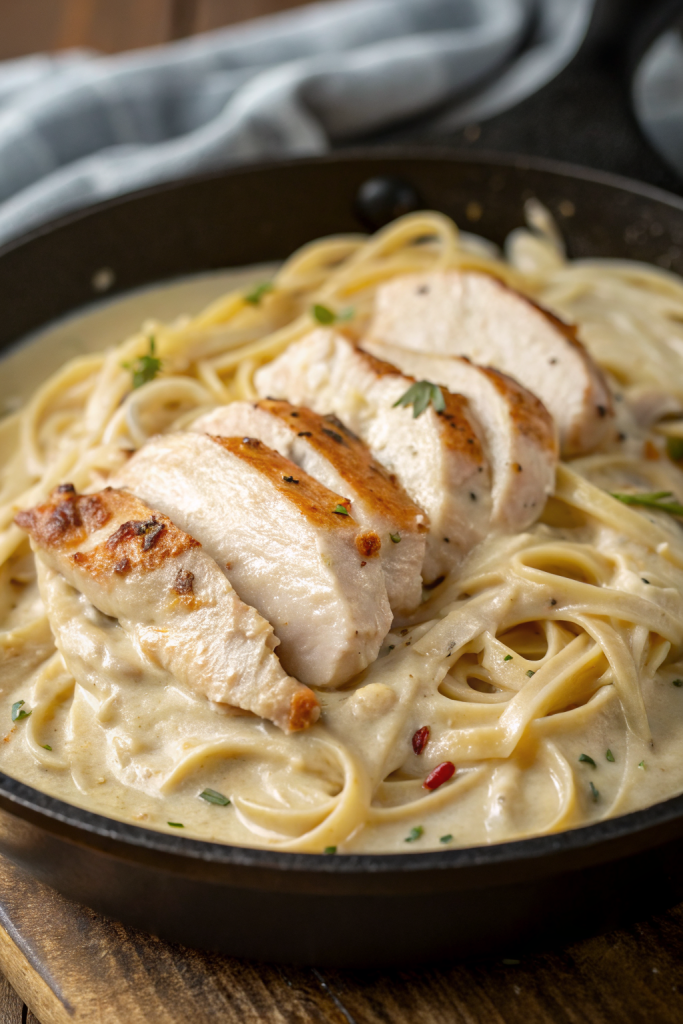
Chicken Alfredo Recipe tastes rich, creamy, garlicky, and just a little cheesy in the best way, comes together in about 35 minutes, and works perfectly for busy weeknights or at-home date nights, and I still make it on repeat after more than a decade of food blogging. This Chicken Alfredo Recipe suits beginners who want a foolproof dinner and seasoned home cooks who want a reliable base to tweak. I still remember burning my first Alfredo sauce in a tiny apartment kitchen, so if that happened to you too, you have company.
Why Make This Chicken Alfredo Recipe at Home
Homemade Chicken Alfredo tastes fresher, creamier, and more balanced than most restaurant versions. You control the salt, the garlic, and the portion of chicken and pasta, so every bowl hits exactly how you like it.
You also save money and skip mystery ingredients. The recipe uses basic pantry staples, one skillet, and one pot, so cleanup stays pretty painless.
"This Chicken Alfredo Recipe tastes like restaurant comfort food, but I pulled it off on a Tuesday night in under 40 minutes and felt like a kitchen rockstar. ★★★★★"
Ingredients You Need
Chicken and Pasta
-
1 pound boneless skinless chicken breasts
- Slice them into thin cutlets so they cook quickly and stay juicy.
- You can swap with boneless skinless chicken thighs for extra flavor and tenderness.
-
12 ounces fettuccine
- Classic Chicken Alfredo uses fettuccine, but you can use linguine, penne, or spaghetti.
- Use any good quality brand; bronze cut pasta holds the sauce a bit better.
Alfredo Sauce
-
2 tablespoons olive oil
- Use this to sear the chicken and build flavor in the pan.
-
2 tablespoons unsalted butter
- Salted butter also works; just taste before you add extra salt.
-
4 cloves garlic, minced
- Fresh garlic gives the best flavor; jarred garlic works in a pinch, but use a bit less.
-
1 ½ cups heavy cream
- Heavy cream gives the classic rich texture.
- You can use half and half for a lighter version, but the sauce thickens less.
-
1 cup freshly grated Parmesan cheese, packed
- Use real Parmesan, not the green can, since it melts smoother.
- Grate it yourself from a block so the sauce turns silky, not grainy.
-
½ cup pasta cooking water, reserved
- Starchy pasta water helps the sauce cling to the noodles.
-
½ teaspoon kosher salt, plus more to taste
-
½ teaspoon freshly ground black pepper
-
¼ teaspoon red pepper flakes (optional)
- This adds a tiny kick and balances the richness.
-
2 tablespoons chopped fresh parsley (optional, for garnish)
Pantry Shortcuts and Substitutions
- Use pre-trimmed chicken cutlets to skip knife work.
- Use pre-shredded Parmesan only if it lists minimal anti-caking agents; it may not melt as smoothly.
- Use jarred minced garlic if you feel short on time; reduce the amount slightly since it tastes stronger.
- Use dried parsley if you do not have fresh; add 1 teaspoon to the sauce near the end.
Equipment List
- Large pot for boiling pasta
- Large deep skillet or sauté pan for chicken and sauce
- Tongs for turning chicken and tossing pasta
- Wooden spoon or silicone spatula
- Fine grater or microplane for Parmesan
- Measuring cups and spoons
- Cutting board and sharp knife
Tips & Mistakes
- Slice chicken into thin, even cutlets so it cooks quickly and stays juicy.
- Pat chicken dry and season it well so it browns nicely instead of steaming.
- Do not overcrowd the pan or the chicken will turn pale and tough.
- Use medium heat for searing; very high heat burns the outside before the inside cooks.
- Boil pasta in well salted water so the noodles carry flavor into the sauce.
- Pull pasta slightly al dente since it finishes in the sauce.
- Reserve pasta water before you drain; that starchy liquid saves any sauce that feels too thick.
- Grate Parmesan fresh and very fine so it melts into a smooth sauce instead of clumping.
- Lower the heat before you add cheese so it melts gently and stays silky.
- Stir the sauce constantly once you add cheese so it blends evenly.
- Taste the sauce before you add more salt, since Parmesan already brings saltiness.
- Do not boil the sauce after you add cheese or it can split and turn grainy.
- Add pasta to the sauce, not the other way around, so you coat every strand evenly.
- Slice cooked chicken after it rests a few minutes so the juices stay inside.
- Serve Chicken Alfredo right away since the sauce thickens as it sits.
How to Make Chicken Alfredo Recipe
Step 1: Prep the Ingredients
Bring a large pot of water to a boil and salt it generously. Mince the garlic, chop the parsley, and grate the Parmesan into a fluffy pile. Slice the chicken breasts horizontally into thin cutlets and pat them dry with paper towels.
Season both sides of the chicken with salt and pepper. Set the chicken aside while the water heats. Keep all ingredients within reach so the cooking flows smoothly.
Step 2: Cook the Pasta
Add the fettuccine to the boiling water and stir right away so it does not stick. Cook until the pasta reaches just shy of al dente, usually 1 to 2 minutes less than the package suggests. Scoop out about 1 cup of pasta water and set it aside.
Drain the pasta but do not rinse it, since the starch helps the sauce cling. Toss the pasta lightly with a teaspoon of olive oil if it sits for more than a couple of minutes. That light coating keeps the strands from clumping.
Step 3: Sear the Chicken
Heat a large skillet over medium heat and add the olive oil. When the oil shimmers, lay the chicken cutlets in a single layer. Cook the first side for 4 to 5 minutes until it turns golden and releases easily from the pan.
Flip the chicken and cook another 3 to 4 minutes until the center feels firm and the juices run clear. Transfer the cooked chicken to a cutting board and let it rest. Slice it into strips or bite-size pieces after it cools slightly.
Step 4: Build the Alfredo Sauce
Lower the heat to medium low and add the butter to the same skillet. Scrape up any browned bits from the chicken since they add flavor to the sauce. Once the butter melts, add the minced garlic and cook 30 to 60 seconds until it smells fragrant but not browned.
Pour in the heavy cream and stir well. Let the cream heat gently for 3 to 4 minutes, stirring often, until small bubbles form around the edges. The sauce should thicken slightly but not boil hard.
Step 5: Add Cheese and Seasonings
Reduce the heat to low. Add the grated Parmesan a small handful at a time, stirring constantly after each addition. Let each handful melt fully before you add more so the sauce stays smooth.
Season the sauce with salt, black pepper, and red pepper flakes if you use them. If the sauce looks too thick, add a splash of the reserved pasta water and stir until it loosens to a silky consistency. Taste and adjust the seasoning so it hits your favorite balance of salty, cheesy, and garlicky.
Step 6: Combine Pasta, Sauce, and Chicken
Add the drained fettuccine directly into the skillet with the Alfredo sauce. Toss with tongs until every strand of pasta wears a glossy coat of sauce. If the sauce feels tight, add a bit more pasta water and toss again.
Add the sliced chicken to the skillet and toss gently so you keep the pieces intact. Warm everything together for 1 to 2 minutes over low heat. Sprinkle with chopped parsley for color and freshness.
Step 7: Serve
Plate the Chicken Alfredo in warm bowls if you can, since that helps the sauce stay creamy. Top each serving with a little extra Parmesan and black pepper. Serve right away while the sauce still feels loose and velvety.
Variations I've Tried
-
Broccoli Chicken Alfredo: Add small broccoli florets to the pasta water during the last 3 minutes of cooking, then toss them in with the pasta and sauce. This adds color, texture, and a bit of veggie balance. Kids often eat more broccoli when it hides in creamy Alfredo.
-
Mushroom Chicken Alfredo: Sauté sliced cremini or button mushrooms in the skillet after you cook the chicken, then build the sauce right over them. The mushrooms soak up the garlic and butter and add a savory depth. This version tastes extra cozy on a chilly night.
-
Spinach Chicken Alfredo: Stir a few big handfuls of fresh baby spinach into the sauce right before you add the pasta. The spinach wilts in seconds and folds into the creamy sauce. This trick sneaks in greens without much effort.
-
Lemon Garlic Chicken Alfredo: Add 1 teaspoon of lemon zest and 1 to 2 tablespoons of lemon juice to the sauce at the end. The citrus cuts through the richness and brightens the whole dish. This version works well in warmer months when you want something creamy but not heavy.
-
Lighter Chicken Alfredo: Use half heavy cream and half chicken broth, and add a teaspoon of cornstarch mixed with cold water to help it thicken. The sauce tastes lighter but still creamy. This works nicely when you want Chicken Alfredo on a regular weeknight rotation.
How to Serve Chicken Alfredo Recipe
Serve Chicken Alfredo Recipe hot in wide bowls so the sauce spreads nicely around the pasta. Add a shower of extra Parmesan, a sprinkle of parsley, and a crack of black pepper on top. Pair it with a simple green salad, garlic bread, or steamed vegetables like broccoli or green beans. Offer lemon wedges on the side if you like a brighter finish.
How to store
- Fridge: Cool leftovers to room temperature within 1 hour, then store Chicken Alfredo in an airtight container in the refrigerator for up to 3 days.
- Freezer: Freeze portions in freezer-safe containers for up to 2 months, knowing the sauce may thicken and the texture may change slightly after thawing.
- Reheating on stovetop: Reheat gently in a skillet over low heat with a splash of milk or cream and a spoonful of water, stirring often until the sauce loosens and the pasta heats through.
- Reheating in microwave: Reheat in short bursts, about 45 to 60 seconds at a time, stirring between rounds and adding a teaspoon of milk or water if it looks dry.
- Thawing from frozen: Thaw overnight in the fridge, then reheat on the stovetop with extra liquid to bring the sauce back to a creamy texture.
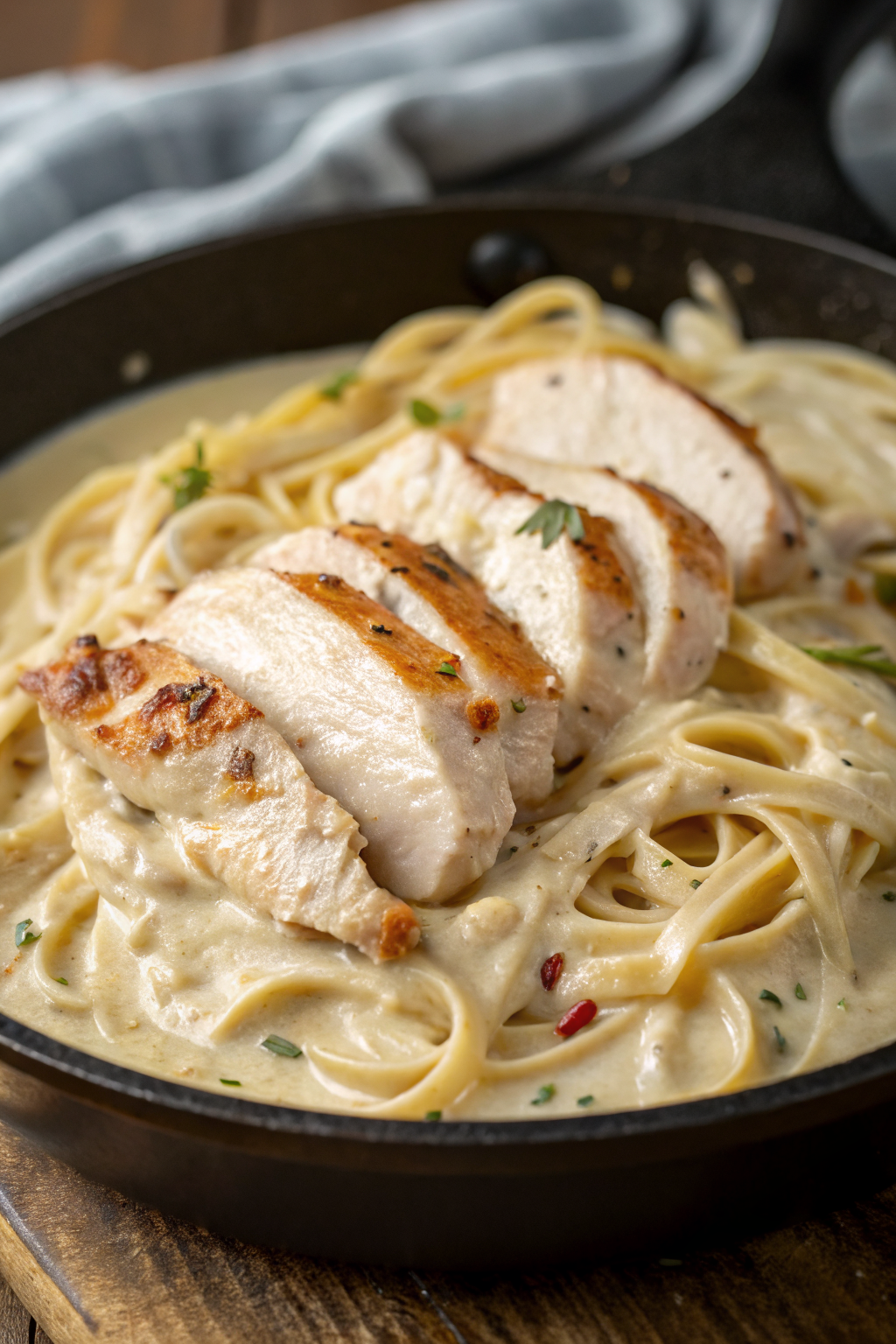
Chicken Alfredo Recipe
Ingredients
Instructions
- Bring a large pot of salted water to a boil. Mince the garlic, chop the parsley, and finely grate the Parmesan. Slice the chicken breasts horizontally into thin cutlets, pat dry, and season both sides with salt and pepper.
- Add the fettuccine to the boiling water and stir to prevent sticking. Cook until just shy of al dente, 1 to 2 minutes less than package directions. Reserve about 1 cup of pasta water, then drain without rinsing. If the pasta will sit, toss with 1 teaspoon olive oil to prevent clumping.
- Heat a large skillet over medium heat and add 2 tablespoons olive oil. When the oil shimmers, add the chicken cutlets in a single layer without crowding. Cook 4 to 5 minutes on the first side until golden and it releases easily, then flip and cook 3 to 4 minutes more, until cooked through. Transfer to a cutting board to rest, then slice into strips or bite-size pieces.
- Reduce the heat to medium-low. In the same skillet, add the butter and scrape up any browned bits. When the butter melts, add the minced garlic and cook 30 to 60 seconds, stirring, just until fragrant but not browned.
- Pour in the heavy cream and stir. Let it gently heat and bubble around the edges for 3 to 4 minutes, stirring often, until slightly thickened but not boiling hard.
- Lower the heat to low. Add the grated Parmesan a small handful at a time, stirring constantly and allowing each addition to melt completely before adding more. Season with 1/2 teaspoon kosher salt, 1/2 teaspoon black pepper, and red pepper flakes if using. If the sauce seems too thick, loosen with a splash of reserved pasta water until silky. Taste and adjust seasoning.
- Add the drained fettuccine directly to the skillet and toss with tongs until every strand is coated in sauce. Add more pasta water as needed for a loose, glossy consistency. Gently fold in the sliced chicken and warm through for 1 to 2 minutes over low heat.
- Serve the Chicken Alfredo immediately in warm bowls. Garnish with chopped parsley, extra Parmesan, and freshly ground black pepper if desired.
Notes
Approximate per serving (1/4 of recipe): 780 calories; fat 42 g; saturated fat 22 g; carbohydrates 59 g; fiber 3 g; sugars 3 g; protein 43 g; sodium 910 mg. Values are estimates and will vary based on specific brands, substitutions, and portion sizes.
Leave a Reply