
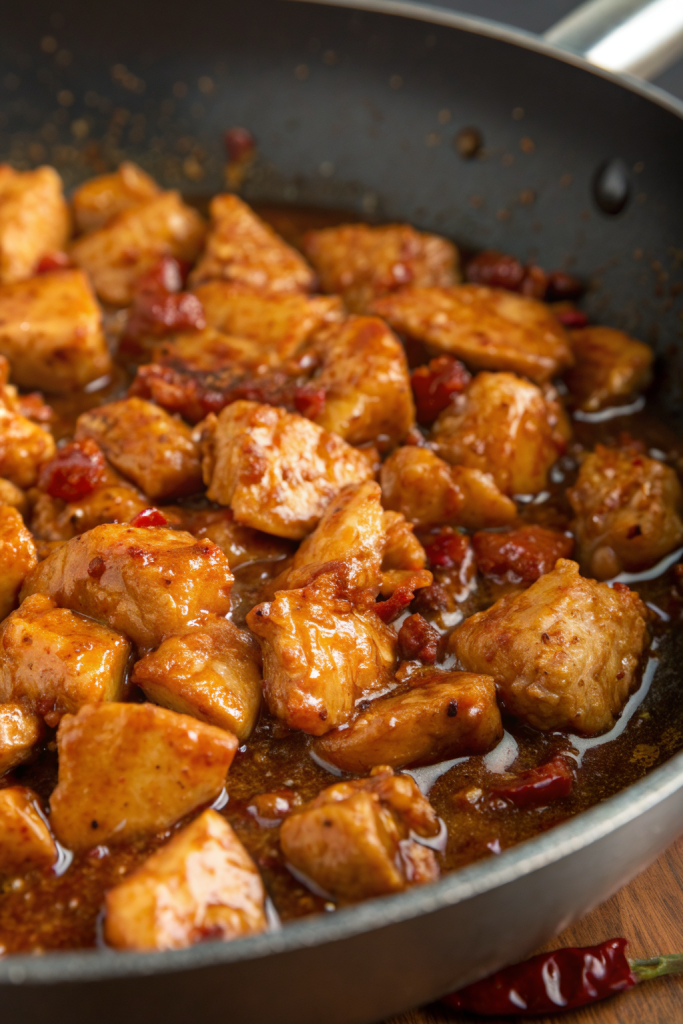
Asian Garlic Chicken Recipe hits that perfect balance of sweet, salty, garlicky, and a little sticky, with juicy chicken and a glossy sauce that clings to every bite. It works for busy weeknights, meal prep fans, and anyone who wants takeout-style flavor in about 30 minutes from start to finish. I tested this version so many times that my family started asking, “Is it garlic chicken night again?” and no one complained once.
Why Make This Asian Garlic Chicken Recipe at Home
You control the ingredients, the salt level, and the amount of garlic, which matters a lot with a sauce this bold. Homemade Asian Garlic Chicken tastes fresher than most takeout versions, and the chicken stays tender instead of turning rubbery.
You also save money and time, since this recipe uses simple pantry staples like soy sauce, rice vinegar, and cornstarch. Cleanup stays easy because you cook everything in one skillet or wok.
“This Asian Garlic Chicken Recipe tastes better than my usual takeout spot and comes together faster than delivery ★★★★★”
Ingredients You Need
Chicken
- 1.5 pounds boneless skinless chicken thighs, cut into bite-size pieces
- Thighs stay juicy and forgiving; use chicken breast if you prefer leaner meat and shorten the cook time slightly.
- 1 tablespoon soy sauce
- 1 tablespoon cornstarch
- 1 teaspoon neutral oil (canola, avocado, or vegetable)
I use thighs for weeknights because they handle a little overcooking without drying out. If you use chicken breast, slice it thin and cook it quickly over medium high heat.
Garlic Soy Sauce
- 6 to 8 cloves garlic, very finely minced or grated
- Use fresh garlic, not garlic powder, for the best punchy flavor.
- 1 teaspoon fresh ginger, grated (optional but highly recommended)
- 1/3 cup low sodium soy sauce
- Regular soy sauce works, but low sodium keeps the dish from turning too salty.
- 3 tablespoons water or low sodium chicken broth
- 3 tablespoons brown sugar or honey
- Brown sugar gives a deeper flavor; honey gives a lighter, floral sweetness.
- 1 tablespoon rice vinegar
- Apple cider vinegar works in a pinch.
- 1 tablespoon toasted sesame oil
- 1 to 1.5 teaspoons cornstarch, for thickening
- 1/4 teaspoon black pepper
- 1/4 to 1/2 teaspoon red pepper flakes or a small pinch of ground white pepper, to taste
This sauce tastes bold, garlicky, and slightly sweet, similar to a garlic chicken stir fry from a good Asian restaurant. Adjust the sugar and chili to match your own sweet and heat preference.
Stir Fry Add Ins (Optional but tasty)
Use any combo you like from this list:
- 1 small onion, sliced
- 1 red bell pepper, sliced
- 1 cup broccoli florets
- 1 small carrot, thinly sliced
- 1 cup snap peas or snow peas
You can toss in a frozen stir fry veggie mix straight from the freezer. Just cook it a minute or two longer so the extra moisture cooks off.
Garnishes
- 2 to 3 green onions, thinly sliced
- 1 to 2 teaspoons toasted sesame seeds
- Extra red pepper flakes, to taste
These garnishes add crunch, color, and a little extra flavor. I keep pre toasted sesame seeds in the pantry as a shortcut.
Pantry & Brand Notes
- Soy sauce: I like Kikkoman or Yamasa for consistent flavor. Use tamari or a gluten free soy sauce if you need a gluten free version.
- Rice vinegar: Seasoned rice vinegar adds a bit of sugar, so reduce the brown sugar by 1 teaspoon if you use it.
- Oil: Use a high heat neutral oil, not olive oil, so the garlic does not burn.
Equipment
- Large nonstick skillet or wok
- Cutting board and sharp knife
- Small bowl and whisk for the sauce
- Tongs or spatula
- Measuring cups and spoons
A wok gives you the best sear and sauce reduction, but a wide skillet works perfectly for most home kitchens.
Tips & Mistakes
- Cut chicken into even pieces so everything cooks at the same rate.
- Pat chicken dry before marinating so the cornstarch sticks and browns nicely.
- Marinate the chicken at least 10 minutes while you prep the sauce; flavor sinks in quickly.
- Use medium high heat so the chicken browns but the garlic does not burn.
- Add garlic to hot oil only when you stand ready to stir; garlic can burn in seconds.
- Stir the sauce mixture again right before you pour it in, since cornstarch settles at the bottom.
- Do not crowd the pan; cook chicken in two batches if needed so it sears instead of steams.
- Taste the sauce at the end and adjust with a splash of water if it tastes too strong or salty.
- Keep veggies crisp tender; overcooked vegetables turn mushy and dull.
- Turn off the heat as soon as the sauce thickens and turns glossy to avoid a gummy texture.
How to Make Asian Garlic Chicken Recipe
Step 1: Prep the Chicken
Cut the chicken into bite-size pieces, about 1 inch. Add the chicken to a bowl with 1 tablespoon soy sauce, 1 tablespoon cornstarch, and 1 teaspoon oil. Toss until every piece looks coated and set aside while you mix the sauce.
Step 2: Mix the Garlic Sauce
In a small bowl, whisk together soy sauce, water or broth, brown sugar, rice vinegar, sesame oil, cornstarch, black pepper, and red pepper flakes. Add the minced garlic and grated ginger and stir again. Taste a tiny drop and adjust the sweetness or heat to your liking.
Step 3: Cook the Chicken
Heat 1 to 2 tablespoons oil in a large skillet or wok over medium high heat. Add the chicken in a single layer and let it sit for 1 to 2 minutes so it browns, then stir and cook until the pieces look cooked through, about 5 to 7 minutes total. Transfer the cooked chicken to a plate and keep it nearby.
Step 4: Cook the Vegetables
In the same pan, add a tiny splash of oil if the pan looks dry. Add onion, bell pepper, broccoli, carrot, or any veggies you use. Stir fry for 3 to 4 minutes until they turn bright and crisp tender.
Step 5: Add Garlic Sauce and Chicken
Give the sauce a quick stir, then pour it into the pan with the vegetables. Stir constantly as the sauce heats; it will start to bubble and thicken in about 1 to 2 minutes. Add the cooked chicken back to the pan and toss until the sauce coats every piece.
Step 6: Finish and Garnish
Turn off the heat once the sauce looks glossy and thick enough to cling to the chicken. Sprinkle in green onions and sesame seeds and toss again. Taste one piece and adjust with a splash of water, a pinch of sugar, or a few extra chili flakes if you want.
Variations I've Tried
I swap the chicken for thinly sliced pork or beef and keep the same garlic sauce, which turns it into a different but equally tasty stir fry. I also make a shrimp version and cut the cook time way down, since shrimp cook in just a couple of minutes. For a vegetarian spin, I use extra firm tofu, press it dry, toss it in cornstarch, and pan fry it until crispy, then coat it in the same sauce.
I sometimes add a spoonful of chili garlic sauce or gochujang for a spicier version. I also stir in a handful of cashews or peanuts at the end for crunch, which works great if you like nutty texture with sticky garlic sauce.
How to Serve Asian Garlic Chicken Recipe
Serve this Asian Garlic Chicken Recipe over hot steamed jasmine rice, brown rice, or fluffy white rice so the sauce can soak in. You can spoon it over noodles like lo mein or rice noodles for a slurpable bowl. Add a simple side of steamed broccoli, cucumber salad, or stir fried green beans for extra veggies. Kids often like it with plain rice and a little extra honey in the sauce, while adults might add more chili flakes on top.
How to store
- Fridge: Store leftover Asian Garlic Chicken in an airtight container in the fridge for up to 4 days.
- Freezer: Cool completely, then freeze in a freezer safe container or bag for up to 2 months.
- Reheating on stove: Reheat gently in a skillet over medium heat with a splash of water until hot and saucy again.
- Reheating in microwave: Reheat in a microwave safe dish in 45 to 60 second bursts, stirring between each, until heated through.
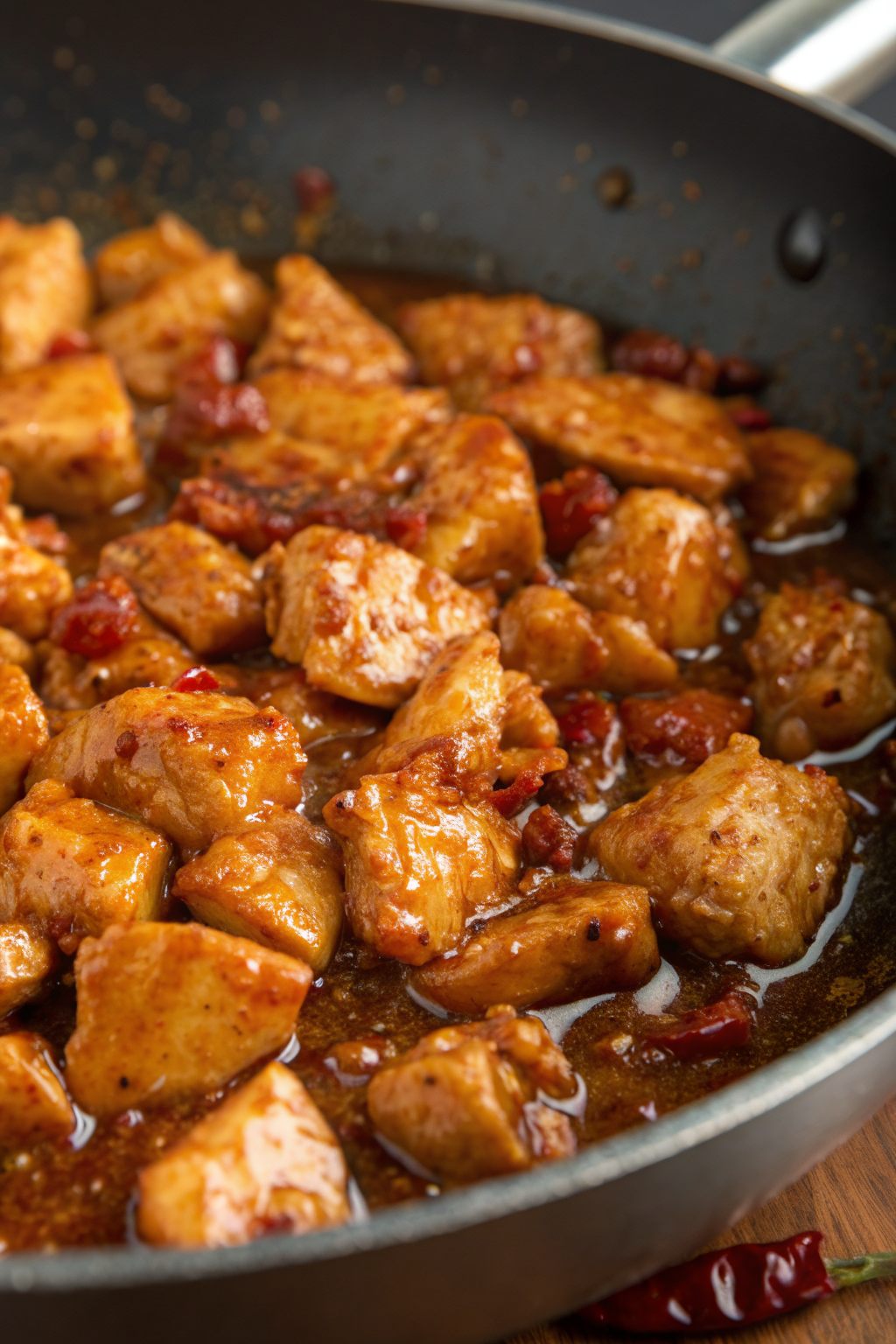
Asian Garlic Chicken Recipe
Ingredients
Instructions
- Cut the chicken thighs into bite-size pieces, about 1 inch each.
- Add the chicken to a bowl with 1 tablespoon soy sauce, 1 tablespoon cornstarch, and 1 teaspoon neutral oil. Toss until every piece is evenly coated and set aside to marinate while you prepare the sauce.
- In a small bowl, whisk together the low sodium soy sauce, water or chicken broth, brown sugar or honey, rice vinegar, toasted sesame oil, cornstarch, black pepper, and red pepper flakes or white pepper.
- Add the minced garlic and grated ginger (if using), then whisk again. Taste a tiny drop and adjust sweetness or heat to your liking.
- Heat 1 to 2 tablespoons neutral oil in a large skillet or wok over medium high heat.
- Add the marinated chicken in a single layer. Let it sear without moving for 1 to 2 minutes, then stir and continue cooking until the pieces are browned and cooked through, about 5 to 7 minutes total.
- Transfer the cooked chicken to a plate and set aside.
- In the same pan, add a small splash of oil if the pan looks dry.
- Add the onion, bell pepper, broccoli, carrot, and snap peas or snow peas, if using. Stir fry for 3 to 4 minutes until the vegetables are bright and crisp tender.
- Give the garlic sauce a quick stir to re-disperse the cornstarch, then pour it into the pan with the vegetables.
- Stir constantly as the sauce comes to a simmer; it will bubble and thicken in 1 to 2 minutes.
- Return the cooked chicken and any juices on the plate to the pan. Toss everything together until the chicken and vegetables are evenly coated in the glossy sauce.
- Turn off the heat as soon as the sauce is thick enough to cling to the chicken.
- Sprinkle with sliced green onions and toasted sesame seeds, and add extra red pepper flakes if desired.
- Serve hot over steamed jasmine rice, brown rice, white rice, or noodles.
Notes
Approximate per serving (4 servings, without optional nuts or extra toppings): 350–400 calories; fat 17 g; saturated fat 3 g; carbohydrates 22 g; fiber 1 g; sugars 13 g; protein 30 g; sodium 1050 mg. Values will vary based on exact ingredients, brands, added vegetables, and portion size. Storage
Fridge: Store leftovers in an airtight container for up to 4 days.
Freezer: Cool completely, then freeze in a freezer-safe container or bag for up to 2 months.
Reheating: Reheat gently in a skillet over medium heat with a splash of water until hot and saucy, or in the microwave in 45–60 second bursts, stirring between each, until heated through.