
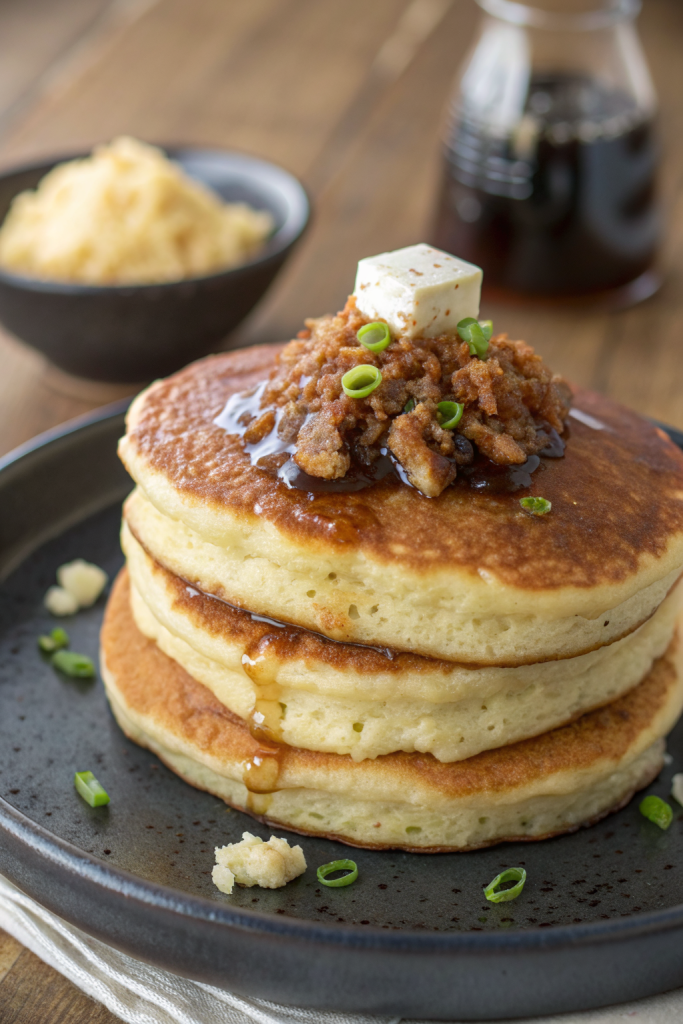
Okonomiyaki Japanese Pancakes Recipe tastes savory, a little smoky from the sauce, and super satisfying from the chewy cabbage-packed batter. It suits busy weeknights, picky eaters, and anyone who wants a full meal on one plate in about 40 minutes. I fell in love with okonomiyaki in a tiny Osaka street stall and have chased that flavor in my home kitchen ever since.
Why You Should Try This Okonomiyaki Japanese Pancakes Recipe
These Japanese pancakes hit every craving at once: salty, tangy, slightly sweet, and rich from the egg and mayo on top. The cabbage keeps each bite light enough that you can eat a whole pancake without needing a nap.
You also cook everything in one pan, which keeps cleanup easy. Kids love the drizzle art on top, and adults appreciate how flexible the toppings stay, so everyone can customize their own.
“This Okonomiyaki Japanese Pancakes Recipe tastes like a cozy Osaka street stall in your own kitchen, and it disappears from the plate in minutes. ★★★★★”
Ingredients You’ll Need
Base batter and veggies
- 1 ½ cups all-purpose flour
- Use regular unbleached flour; King Arthur or Gold Medal both work great.
- 1 ¼ cups dashi stock
- Use instant dashi granules with water as a shortcut, or swap with low-sodium chicken broth if needed.
- 2 large eggs
- ½ small green cabbage, finely shredded (about 4 packed cups)
- Napa cabbage works in a pinch, though the texture turns softer.
- 4 green onions, thinly sliced
- ½ cup tenkasu (tempura scraps) or crushed plain rice crackers
- This adds crunch; panko crumbs can stand in if you cannot find tenkasu.
- ½ teaspoon kosher salt
- ¼ teaspoon ground white pepper or black pepper
Protein options
Pick one or mix a couple.
- 6 to 8 slices thinly sliced pork belly or bacon
- Use center cut bacon and trim excess fat if it feels too heavy.
- ½ cup small shrimp, peeled and chopped
- ½ cup squid rings, chopped
- ½ cup cooked shredded chicken or tofu cubes for a lighter version
Toppings
- Okonomiyaki sauce
- Use store-bought brands like Otafuku, or mix 3 tablespoons ketchup, 2 tablespoons Worcestershire, 1 tablespoon oyster sauce, and 1 teaspoon soy sauce as a quick version.
- Japanese mayonnaise (Kewpie style)
- Regular mayo works, but Kewpie gives a richer, tangier finish.
- Aonori (dried green seaweed flakes)
- Katsuobushi (bonito flakes)
- Extra sliced green onions
- Pickled ginger (beni shoga)
Oil and equipment
- 2 to 3 tablespoons neutral oil (canola, vegetable, or light olive oil)
- Large nonstick skillet or flat griddle
- Mixing bowl
- Whisk or chopsticks
- Spatula wide enough to flip pancakes
- Measuring cups and spoons
Tips & Tricks
- Slice the cabbage very thin so it softens quickly and blends into the batter.
- Mix the batter gently and stop once no dry flour remains to keep the texture tender.
- Use medium heat, not high, so the pancakes cook through without burning on the outside.
- Cover the pan for a few minutes while cooking to help the center set.
- Precut the pork belly or bacon into shorter strips so it sits neatly on top and flips easily.
- Keep the pancakes smaller, about 6 inches wide, if you feel nervous about flipping.
- Warm the okonomiyaki sauce slightly so it spreads smoothly over the hot pancake.
- Set up a topping bar and let everyone decorate their own pancake at the table.
How to Make Okonomiyaki Japanese Pancakes Recipe
Step 1: Mix the batter
Add flour, salt, and pepper to a large mixing bowl and whisk to combine. Pour in the dashi stock and whisk until the mixture turns smooth and lump free. Crack in the eggs and whisk again until the batter looks silky and slightly thick.
Fold in the shredded cabbage, green onions, and tenkasu. Stir until the veggies coat evenly with batter and no dry pockets remain. Set the bowl aside for 5 to 10 minutes so the cabbage softens slightly.
Step 2: Prep the protein and pan
Slice the pork belly or bacon into shorter strips if needed. Pat shrimp, squid, or tofu dry with a paper towel so they do not steam too much in the pan. Heat a large nonstick skillet over medium heat and add about 1 teaspoon of oil.
Swirl the oil to coat the surface. Keep the heat at medium so the okonomiyaki browns gradually and cooks through. Line up your toppings near the stove so you can work quickly.
Step 3: Cook the first side
Scoop about 1 to 1 ¼ cups of batter into the hot pan and shape it into a round about 6 to 7 inches wide. Press the top gently with a spatula to even it out, but keep some height for a nice fluffy center. Lay pork belly strips or your chosen protein on top of the uncooked side.
Cover the pan with a lid and cook for 4 to 5 minutes. Check the bottom; it should look golden brown and feel set enough to flip without breaking. Adjust the heat slightly if it browns too fast.
Step 4: Flip and finish cooking
Slide the spatula fully under the pancake and flip it in one quick motion so the pork side faces down. Press the top gently to keep even contact with the pan. Cover again and cook another 4 to 5 minutes until the pork cooks through and the center feels firm when you press it.
If the pancake looks very thick, cook 1 to 2 extra minutes on low heat. Transfer the cooked okonomiyaki to a plate and keep it warm while you cook the remaining batter. Add a little more oil between pancakes to keep the surface lightly coated.
Step 5: Sauce and decorate
Spread a generous spoonful of okonomiyaki sauce over the hot pancake and use the back of the spoon to cover the surface. Squeeze Japanese mayo over the top in thin zigzags or a crosshatch pattern. Sprinkle aonori and katsuobushi over the top so the bonito flakes dance from the heat.
Finish with extra green onions and a small pile of pickled ginger in the center or on the side. Cut the pancake into wedges with a knife or spatula. Serve right away while the edges still taste crisp and the center stays hot and tender.
What to Serve with Okonomiyaki Japanese Pancakes Recipe
Serve these Japanese pancakes with a simple miso soup or clear broth to balance the richness. A crisp cucumber salad with rice vinegar and sesame seeds adds a fresh crunch. You can also add steamed edamame or a small bowl of plain rice if you want a bigger meal.
Offer green tea, iced barley tea, or sparkling water with citrus slices as refreshing drinks. If you cook several smaller okonomiyaki, stack them on a platter and let everyone grab their own piece.
Storage Options
- Cool leftover okonomiyaki completely, then store slices in an airtight container in the fridge for up to 3 days.
- Place parchment between stacked pieces so they do not stick together.
- Freeze individual portions wrapped tightly in plastic, then in a freezer bag, for up to 1 month.
- Reheat in a lightly oiled skillet over medium-low heat or in an air fryer until hot and crisp at the edges; avoid the microwave if possible since it softens the texture.
Okonomiyaki Japanese Pancakes Recipe
Ingredients
Instructions
- In a large mixing bowl, whisk together the flour, salt, and pepper.
- Pour in the dashi stock and whisk until the batter is smooth and lump free.
- Add the eggs and whisk again until the batter looks silky and slightly thick.
- Fold in the shredded cabbage, green onions, and tenkasu until the vegetables are evenly coated and no dry pockets remain. Let the batter rest for 5 to 10 minutes so the cabbage softens slightly.
- Slice the pork belly or bacon into shorter strips if needed. Pat shrimp, squid, or tofu dry with a paper towel if using.
- Heat a large nonstick skillet over medium heat and add about 1 teaspoon of oil, swirling to coat the surface.
- Keep the heat at medium so the okonomiyaki browns gradually and cooks through. Have your protein and toppings nearby so you can work quickly.
- Scoop about 1 to 1 1/4 cups of batter into the hot pan and shape it into a round about 6 to 7 inches wide.
- Gently press the top with a spatula to even it out while keeping some height for a fluffy center.
- Lay pork belly strips or your chosen protein on top of the uncooked side.
- Cover the pan with a lid and cook for 4 to 5 minutes, until the bottom is golden brown and set enough to flip. Adjust the heat if it browns too quickly.
- Slide a wide spatula fully under the pancake and flip it in one quick motion so the protein side faces down.
- Press the top gently to keep even contact with the pan, then cover and cook another 4 to 5 minutes, until the protein is cooked through and the center feels firm when pressed.
- If the pancake is very thick, cook for 1 to 2 extra minutes on low heat. Transfer the cooked okonomiyaki to a plate and keep warm while you cook the remaining batter, adding a little oil to the pan between pancakes.
- Spread a generous spoonful of okonomiyaki sauce over the hot pancake, using the back of a spoon to cover the surface.
- Drizzle Japanese mayonnaise over the top in thin zigzags or a crosshatch pattern.
- Sprinkle with aonori and katsuobushi so the bonito flakes move in the heat.
- Finish with extra green onions and a small pile of pickled ginger. Cut into wedges and serve immediately while hot and tender with crisp edges.
Notes
Approximate per serving (1 of 4, with pork belly, sauces, and toppings): 520 calories; fat 30 g; saturated fat 8 g; carbohydrates 44 g; fiber 4 g; sugars 7 g; protein 19 g; sodium 1180 mg. Values will vary based on protein choice, sauce amount, brands, and portion size.