
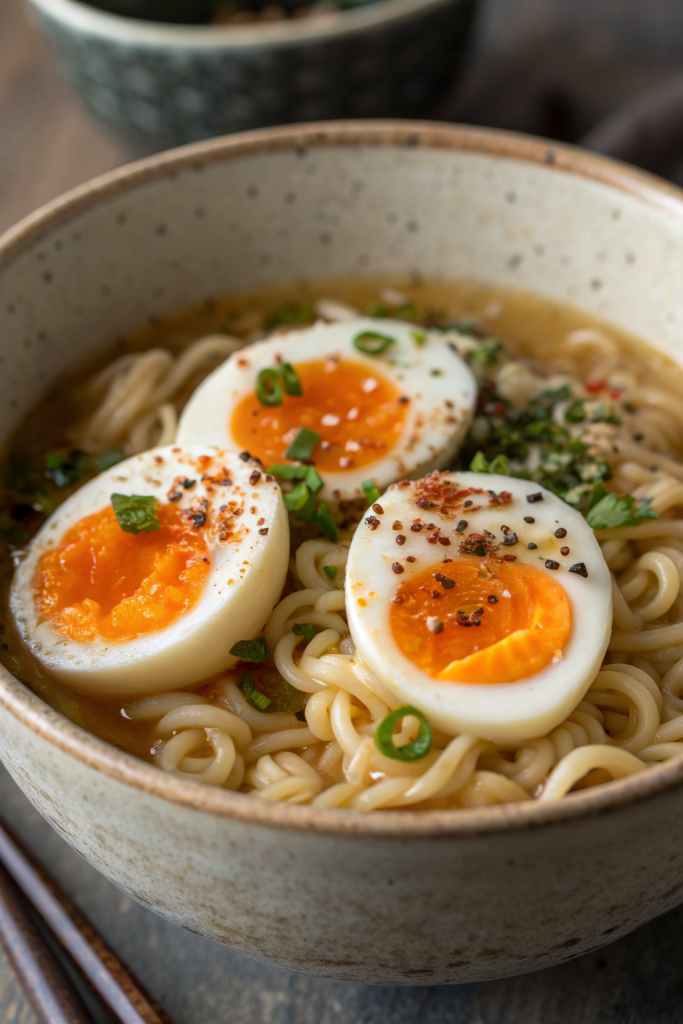
Ajitama Japanese Ramen Egg Recipe hits that perfect balance of jammy yolk, savory soy, and gentle sweetness that makes a simple bowl of noodles taste like a restaurant ramen. It works great for busy home cooks who want a big flavor payoff in about 25–30 minutes of active time, plus an easy overnight marinade. I still eat these straight from the fridge over the sink like a teenager, and I regret nothing.
Why Ajitama Japanese Ramen Egg Recipe Is Worth It
These ramen eggs pack deep umami flavor with almost no effort. You boil eggs, mix a quick marinade, and let the fridge do the rest.
The texture steals the show. The whites stay tender, and the yolks stay thick, glossy, and jammy instead of chalky. You can meal prep a batch and upgrade instant ramen, rice bowls, or snacks all week.
“This Ajitama Japanese Ramen Egg Recipe tastes like a ramen shop secret but comes together in my tiny home kitchen with zero stress. ★★★★★”
Ingredients You Need
Eggs
- 6–8 large eggs
- Use fridge-cold eggs so they peel easier.
- Choose large, not extra-large, so the timing stays accurate.
Marinade (tare)
-
1/2 cup soy sauce
- Use Japanese-style soy sauce (like Kikkoman or Yamasa) for classic flavor.
- Swap low-sodium soy if you prefer a milder salt level.
-
1/2 cup water
- This dilutes the soy so the eggs do not taste too salty.
-
1/4 cup mirin
- Mirin adds sweetness and a gentle aroma.
- If you do not keep mirin, mix 3 tablespoons water + 1 tablespoon sugar as a quick stand-in.
-
2 tablespoons sake
- This adds depth and a subtle savory note.
- Use extra water or low-sodium broth if you skip alcohol.
-
1–2 tablespoons sugar
- Start with 1 tablespoon, taste, then add more if you want a sweeter marinade.
- Use brown sugar for a hint of caramel flavor.
Aromatics (optional but tasty)
- 2 cloves garlic, lightly smashed
- 1 small knob ginger (about 1 inch), sliced
- 1 green onion, cut into 2–3 pieces
- Small strip of kombu (dried kelp), about 2 inches (optional, big umami boost)
Water and seasoning for boiling
- Enough water to cover eggs by about 1 inch in a medium pot
- 1 tablespoon rice vinegar (helps with easier peeling)
- 1 tablespoon salt (also helps the peel release more cleanly)
Equipment
- Medium saucepan or pot
- Slotted spoon
- Large bowl for ice bath
- Measuring cups and spoons
- Zip-top bag or small container that holds eggs snugly in marinade
- Timer (phone works fine, but set it or the yolks will overcook)
Quick Tips & substitutions
- Use week-old eggs instead of super fresh ones so the shells peel easier.
- Set a timer the second the eggs hit boiling water to keep yolks jammy.
- Shock eggs in an ice bath right away so the yolks stay soft and glossy.
- Peel eggs under running water to slide off stubborn shell bits.
- Use low-sodium soy sauce if you plan to marinate longer than 24 hours.
- Swap mirin with a mix of water and sugar if you do not keep Japanese pantry staples.
- Skip sake and use water or light broth if you avoid alcohol.
- Add a small strip of kombu or a few dried shiitakes to the marinade for extra umami.
- Keep eggs in a snug container or bag so the marinade covers them fully.
- Taste the marinade before you add eggs and adjust salt or sugar to your liking.
How to Make Ajitama Japanese Ramen Egg Recipe
Step 1: Mix the marinade
Add soy sauce, water, mirin, sake, and sugar to a small saucepan. Stir and heat over low just until the sugar dissolves and the liquid turns warm. Turn off the heat.
Add garlic, ginger, green onion, and kombu if you use them. Let the mixture cool to room temperature. Move the cooled marinade to a container or zip-top bag that fits the eggs snugly.
Step 2: Boil the eggs
Fill a medium pot with enough water to cover the eggs by about 1 inch. Add salt and rice vinegar. Bring the water to a gentle boil over medium-high heat.
Lower the heat so the boil softens to a strong simmer. Gently lower the cold eggs into the water with a spoon so they do not crack. Start a timer right away.
- For very jammy yolks: cook 6 minutes 30 seconds
- For slightly firmer but still soft yolks: cook 7 minutes
- For more set yolks that still stay moist: cook 8 minutes
Stir the water gently during the first 30 seconds so the yolks center. That small swirl makes the eggs look prettier when you slice them.
Step 3: Chill and peel
While the eggs cook, fill a large bowl with ice and cold water. When the timer goes off, move the eggs straight into the ice bath with a slotted spoon. Let them chill at least 10–15 minutes so the cooking stops completely.
Tap each egg all over on the counter to crack the shell. Peel under a thin stream of running water so the shell slips off more easily. Pat the peeled eggs dry with a paper towel.
Step 4: Marinate the eggs
Place the peeled eggs into the cooled marinade. Make sure the liquid covers the eggs fully. If the eggs float, tuck a folded paper towel on top so it soaks marinade and presses them down.
Cover and chill in the fridge at least 4 hours, though overnight gives deeper flavor. Taste one after 6–8 hours and see if you want more salt or sweetness next time. Use that first batch as your personal baseline.
Step 5: Serve or store
Lift eggs from the marinade when you want to eat them. Slice in half with a sharp knife for ramen bowls, or keep them whole for snacks and bento. Spoon a little extra marinade over rice or noodles so nothing goes to waste.
Keep leftover marinade in the fridge for up to 3 days and use it to season stir-fries or fried rice. Do not use it again for another batch of eggs since it already touched cooked eggs.
Recipe Variations
- Gluten-free: Use tamari or a certified gluten-free soy sauce and check mirin labels.
- No alcohol: Replace sake with water or light broth and use mirin-style seasoning without alcohol.
- Lower sodium: Use low-sodium soy sauce and add a splash of water; shorten marinating time to 4–6 hours.
- Sweeter style: Increase sugar or mirin by 1–2 tablespoons for a more teriyaki-style egg.
- Spicy version: Add a spoon of chili crisp, a few slices of fresh chili, or a pinch of red pepper flakes to the marinade.
- Garlic-heavy: Double the garlic cloves and slice them thin for a bolder garlic note.
- Smoky flavor: Add a few drops of smoked soy sauce or a pinch of smoked salt.
- Vegan “egg” idea: Marinate firm tofu slices or halved baby potatoes in the same marinade and serve on ramen or rice.
Ways to Serve Ajitama Japanese Ramen Egg Recipe
- Nestle halves on top of a steaming bowl of shoyu or miso ramen.
- Add to instant ramen with some frozen veggies and sliced green onion.
- Serve over hot rice with nori strips, sesame seeds, and a drizzle of sesame oil.
- Pack in bento boxes with chicken, veggies, and pickles.
- Slice onto avocado toast or breakfast bowls for a savory twist.
- Use as a protein snack with cucumber sticks and cherry tomatoes.
- Top cold soba or udon bowls with an egg half and shredded nori.
Storage Success
Store Ajitama Japanese ramen eggs in an airtight container in the fridge. Keep them either in the marinade or drained, depending on how strong you like the flavor. Eat them within 3–4 days for the best texture and taste. If the yolks start to dry out or the whites turn rubbery, chop the eggs and use them in rice bowls or salads so nothing goes to waste.
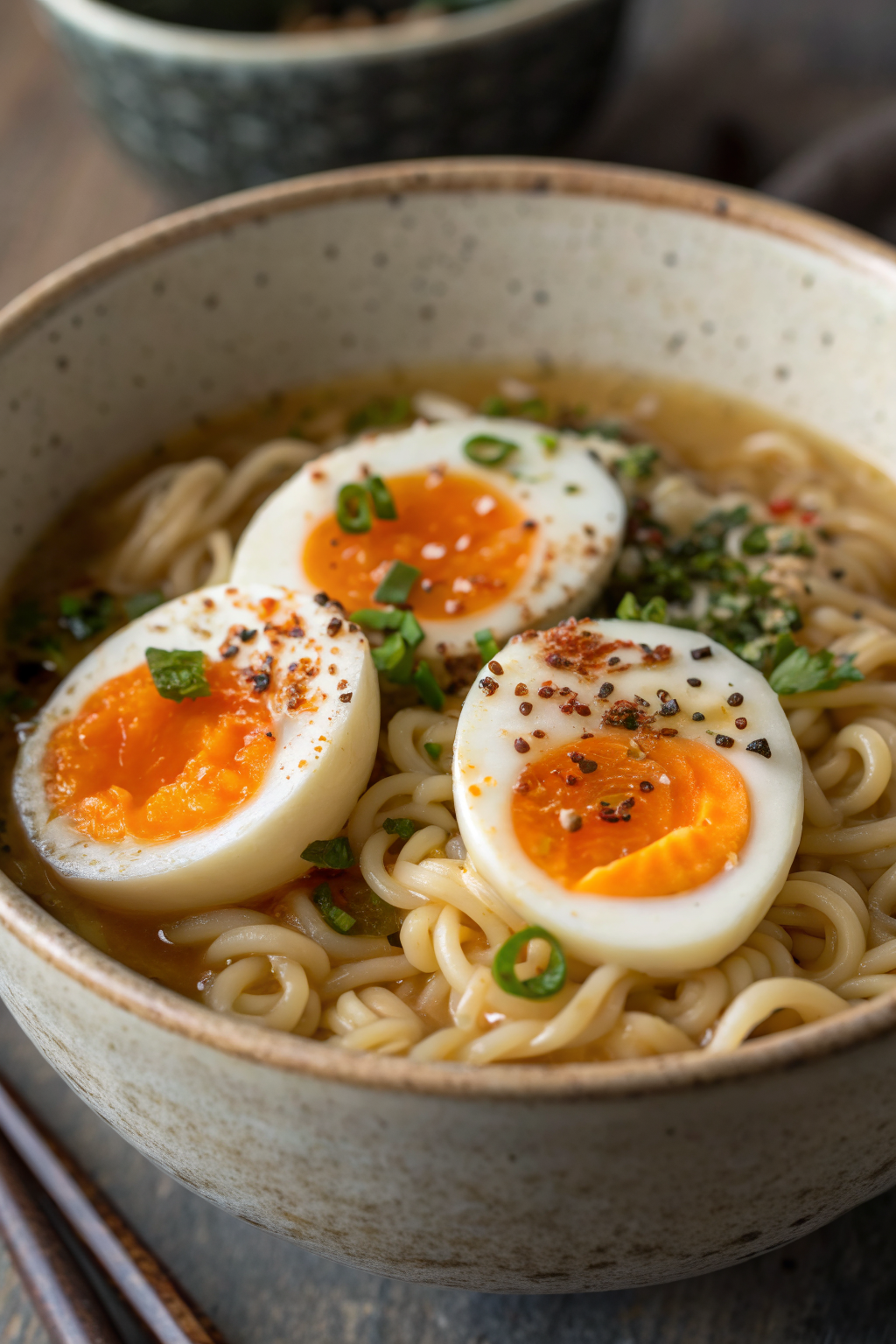
Ajitama Japanese Ramen Egg Recipe
Ingredients
Instructions
- Add soy sauce, water, mirin, sake, and sugar to a small saucepan. Stir and heat over low just until the sugar dissolves and the liquid is warm, then turn off the heat.
- Add the garlic, ginger, green onion, and kombu if using. Let the mixture cool completely to room temperature.
- Transfer the cooled marinade to a container or zip-top bag that will hold the eggs snugly.
- Fill a medium pot with enough water to cover the eggs by about 1 inch. Add the salt and rice vinegar and bring to a gentle boil over medium-high heat.
- Lower the heat to maintain a strong simmer. Gently lower the cold eggs into the water using a spoon so they do not crack, and start a timer immediately.
- Stir the water gently for the first 30 seconds to help center the yolks.
- Cook 6 minutes 30 seconds for very jammy yolks, 7 minutes for slightly firmer soft yolks, or up to 8 minutes for more set but still moist yolks.
- While the eggs cook, fill a large bowl with ice and cold water.
- When the timer goes off, transfer the eggs immediately to the ice bath with a slotted spoon and chill for at least 10–15 minutes to stop the cooking.
- Tap each egg gently on the counter to crack the shell all over, then peel under a thin stream of running water. Pat the peeled eggs dry with a paper towel.
- Place the peeled eggs into the cooled marinade, making sure they are fully submerged. If they float, tuck a folded paper towel on top to help keep them under the liquid.
- Cover and refrigerate for at least 4 hours, or overnight for deeper flavor.
- Remove eggs from the marinade when ready to serve. Slice in half for ramen or rice bowls, or keep whole for snacks and bento.
- Refrigerate marinated eggs in an airtight container and enjoy within 3–4 days for the best texture and taste.
Notes
Approximate per egg: 90–100 calories; fat 6 g; saturated fat 2 g; carbohydrates 3 g; fiber 0 g; sugars 2 g; protein 7 g; sodium 430 mg. Values will vary based on exact marinating time, soy sauce brand, and egg size.