
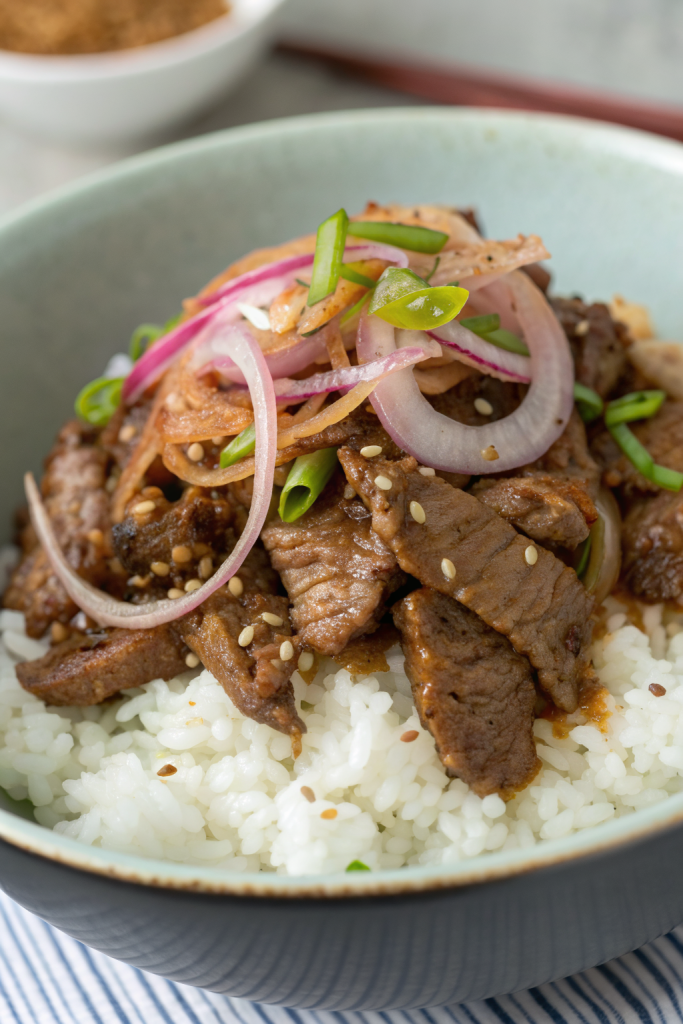
Gyudon Japanese Beef Rice Bowl Recipe tastes savory-sweet, beefy, and deeply comforting, perfect for busy weeknights when you want something fast but cozy on a bed of fluffy rice. It works well for beginners and seasoned home cooks, and you can get it on the table in about 30 minutes. I first learned this dish as a broke college kid, and it still feels like a warm hug in a bowl after a long day.
Why Gyudon Japanese Beef Rice Bowl Recipe Is Worth It
Gyudon packs thinly sliced beef, sweet onions, and a soy-based broth over hot rice, so every bite hits salty, slightly sweet, and umami all at once. You cook everything in one pan, which means fewer dishes and more time to actually sit and eat.
You can scale this recipe easily, so it works for solo dinners, family meals, or meal prep. It also uses simple pantry staples like soy sauce, mirin, and sugar, so you skip any complicated shopping mission.
“This Gyudon Japanese Beef Rice Bowl Recipe tastes like a cozy Japanese diner at home, but comes together faster than takeout ★★★★★”
Ingredients You Need
Beef and Rice
- 1 lb (450 g) thinly sliced beef (ribeye, chuck, or sirloin; use “shabu-shabu” or “sukiyaki” cut if your store carries it)
- 4 cups cooked Japanese short-grain rice (or any medium/short-grain white rice; use leftover rice to save time)
Broth and Seasoning
- 1 ½ cups dashi stock
- Use instant dashi granules with water as a shortcut.
- If you cannot find dashi, use low-sodium beef broth plus a small splash of fish sauce for extra umami.
- 4 tbsp soy sauce (use low-sodium if you watch salt)
- 3 tbsp mirin (Japanese sweet rice wine; use “aji-mirin” from most grocery stores)
- 2 tbsp sake (optional but adds depth; skip if you avoid alcohol and add 1 extra tbsp mirin + 1 tbsp water)
- 1 ½–2 tbsp sugar (white or light brown; adjust to taste)
- ½ tsp grated fresh ginger (or ¼ tsp ground ginger in a pinch)
- 1 small garlic clove, minced (optional, not traditional but tasty)
Vegetables and Toppings
- 2 medium yellow onions, thinly sliced
- 2–3 green onions, thinly sliced (for garnish)
- Pickled red ginger (beni shoga), to taste (classic gyudon topping)
- 2–4 eggs (optional; use for onsen-style egg, soft-poached egg, or quick fried egg)
- Shichimi togarashi (Japanese seven-spice) or chili flakes, to taste
- Toasted sesame seeds (optional, for garnish)
Oil and Basic Seasoning
- 1 tbsp neutral oil (canola, vegetable, or light olive oil)
- Pinch of salt, only if needed after tasting the broth
Equipment
- Medium pot or deep skillet with lid (10–12 inch)
- Cutting board and sharp knife
- Rice cooker or pot for rice
- Measuring cups and spoons
- Small bowl and chopsticks or fork for mixing eggs (if you add them)
Quick Tips & substitutions
- Slice beef very thin while it sits half-frozen; it cuts easier and cooks more evenly.
- Use pre-sliced “hot pot” or “shabu-shabu” beef from Asian markets to save prep time.
- Swap dashi with low-sodium beef or chicken broth plus a small piece of kombu if you have it.
- Use brown sugar or honey instead of white sugar if you prefer a deeper sweetness.
- Choose tamari instead of soy sauce for a gluten-conscious version.
- Replace mirin with 2 tbsp sugar plus 2 tbsp water if you cannot find it.
- Use ground beef in a pinch; cook it until browned, then add onions and broth.
- Cook rice in advance or use microwaveable rice packs when you feel short on time.
- Add extra onions if you want more sweetness and volume without more meat.
- Taste the broth before adding salt; soy sauce and dashi already bring plenty of seasoning.
How to Make Gyudon Japanese Beef Rice Bowl Recipe
Step 1: Prep rice and ingredients
Rinse the rice until the water runs mostly clear, then cook it in a rice cooker or pot according to package directions. While the rice cooks, thinly slice the onions and green onions, and grate the ginger. If you slice your own beef, keep it slightly frozen so you cut it into very thin strips.
Step 2: Build the broth base
Set a medium pot or deep skillet over medium heat and add the dashi, soy sauce, mirin, sake, and sugar. Stir until the sugar dissolves and the mixture starts to steam. Add grated ginger and garlic, then stir again so the flavors blend.
Step 3: Cook the onions
Add the sliced onions to the pot and spread them out. Simmer over medium heat until they turn soft and slightly translucent, about 7–10 minutes, and stir occasionally so they cook evenly. The onions should taste sweet and tender, not crunchy.
Step 4: Add and cook the beef
Increase the heat slightly so the broth simmers more actively. Add the thinly sliced beef in small handfuls, and gently separate the slices with chopsticks or tongs so they do not clump. Cook the beef just until it turns brown and tender, about 3–5 minutes, and skim off any foam that rises to the top.
Step 5: Adjust seasoning and keep warm
Taste the broth and beef mixture, then adjust sweetness with more sugar or saltiness with a splash of soy sauce. Lower the heat and let everything simmer gently for another 2–3 minutes so the flavors sink into the meat and onions. Turn the heat to low and keep the lid on while you prep toppings, so the beef stays hot and juicy.
Step 6: Prepare egg topping (optional but highly recommended)
For a soft-poached egg, simmer water in a small pot, crack eggs into small bowls, then slide them gently into the water and cook about 4 minutes. For a quick fried egg, heat a little oil in a pan and fry eggs until the whites set and the yolks stay runny. You can also use a pasteurized egg yolk directly on hot rice if you feel comfortable with that style.
Step 7: Assemble the bowls
Fluff the hot rice and divide it among serving bowls. Spoon the beef and onions generously over the rice, and drizzle some of the savory-sweet broth on top so the rice soaks up the flavor. Add an egg on each bowl if you use it, then finish with green onions, pickled red ginger, shichimi togarashi, and sesame seeds.
Recipe Variations
- Gluten-conscious: Use tamari instead of soy sauce and check that your dashi granules and mirin label say gluten-free.
- Lower carb: Serve the beef and onions over steamed shredded cabbage, cauliflower rice, or shirataki noodles instead of white rice.
- Extra veggie: Add sliced mushrooms, napa cabbage, or spinach during the onion step.
- Spicy version: Stir a spoonful of gochujang or chili paste into the broth, or sprinkle extra shichimi togarashi on top.
- Budget-friendly: Use thinly sliced pork shoulder or ground beef instead of more expensive cuts.
- Egg-free: Skip the egg and add tofu cubes or extra mushrooms for richness.
Ways to Serve Gyudon Japanese Beef Rice Bowl Recipe
- Serve with miso soup and a simple cucumber salad for a quick Japanese-style set meal.
- Pack leftovers into bento-style containers with rice on one side and beef on the other.
- Top with extra pickled red ginger and green onions for a brighter, punchier bowl.
- Pair with iced green tea or hot roasted barley tea for a refreshing drink.
- Add a side of steamed edamame or blanched broccoli for more veggies.
Storage Success
Cool the beef and onions slightly, then store them in an airtight container in the fridge for up to 3 days. Keep the rice in a separate container so it does not soak up too much liquid and turn mushy. Reheat the beef gently on the stove with a splash of water or broth, or use the microwave in short bursts and stir between intervals. Freshly cooked rice tastes best, but you can revive leftover rice with a sprinkle of water and a quick steam in the microwave.
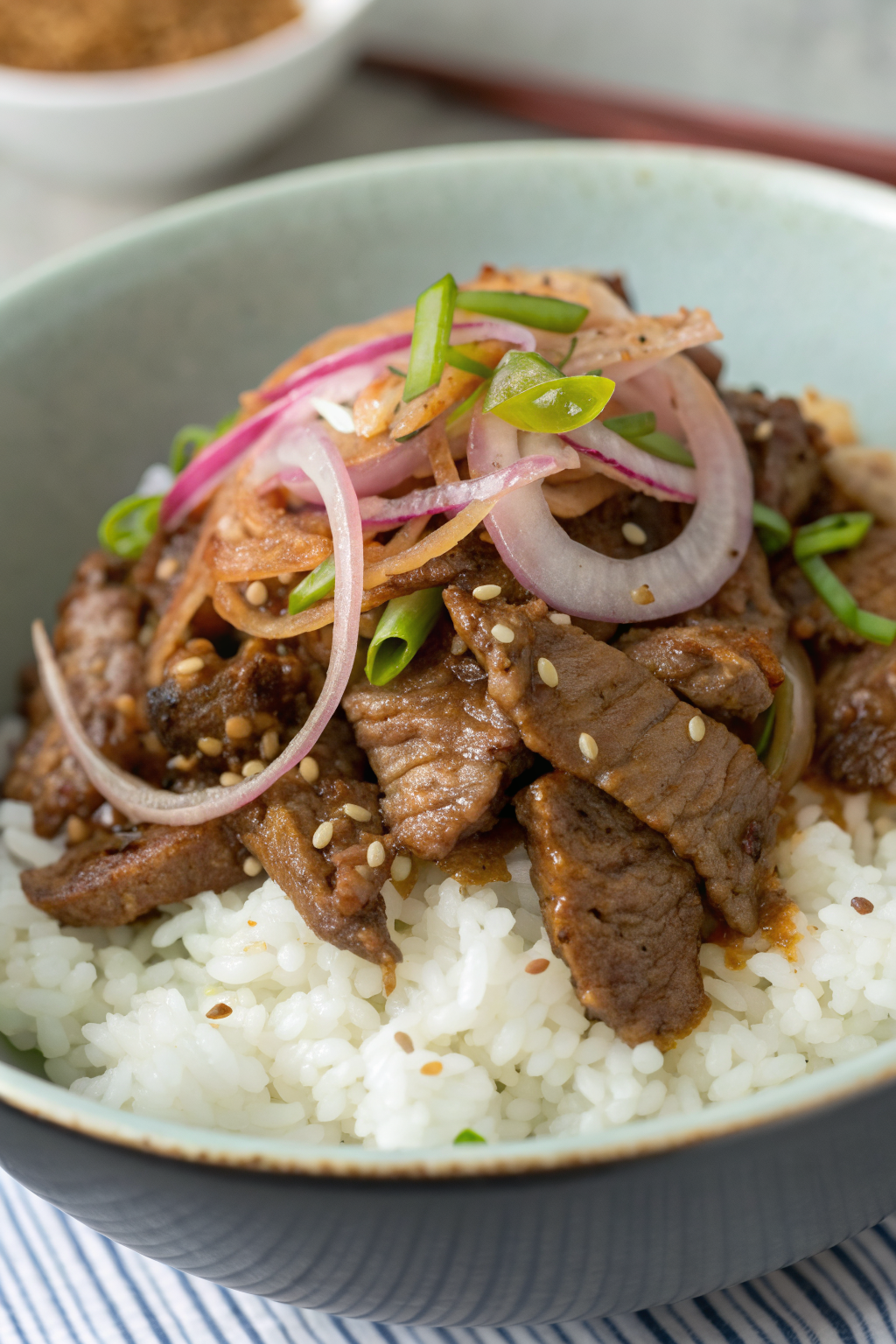
Gyudon Japanese Beef Rice Bowl Recipe
Ingredients
Instructions
- Rinse the rice until the water runs mostly clear, then cook it in a rice cooker or pot according to package directions. While the rice cooks, thinly slice the onions and green onions, and grate the ginger.
- In a medium pot or deep skillet over medium heat, combine the dashi, soy sauce, mirin, sake, and sugar. Stir until the sugar dissolves and the mixture begins to steam, then add the grated ginger and minced garlic and stir again.
- Add the sliced onions to the pot, spread them out, and simmer over medium heat until soft and slightly translucent, about 7–10 minutes, stirring occasionally.
- Increase the heat slightly so the broth simmers more actively. Add the thinly sliced beef in small handfuls, gently separating the slices so they do not clump. Cook just until the beef turns brown and tender, about 3–5 minutes, skimming off any foam that rises to the top.
- Taste the broth and beef mixture, adjusting sweetness with more sugar or saltiness with a splash of soy sauce if needed. Lower the heat and let it simmer gently for another 2–3 minutes, then keep warm on low heat with a lid on.
- If using eggs, prepare soft-poached or fried eggs: for soft-poached, simmer water in a small pot, slide in cracked eggs from small bowls, and cook about 4 minutes; for fried eggs, cook in a lightly oiled pan until whites are set and yolks are still runny.
- Fluff the hot rice and divide it among serving bowls. Spoon the beef and onions generously over the rice, adding some of the savory-sweet broth so the rice soaks up the flavor. Top with an egg if using, then garnish with green onions, pickled red ginger, shichimi togarashi, and toasted sesame seeds. Serve immediately.
Notes
Approximate per serving (1 of 4, including rice but without optional egg and toppings): 580 calories; fat 18 g; saturated fat 6 g; carbohydrates 74 g; fiber 2 g; sugars 13 g; protein 28 g; sodium 1450 mg. Values will vary based on exact ingredients, brands, and portion sizes.