
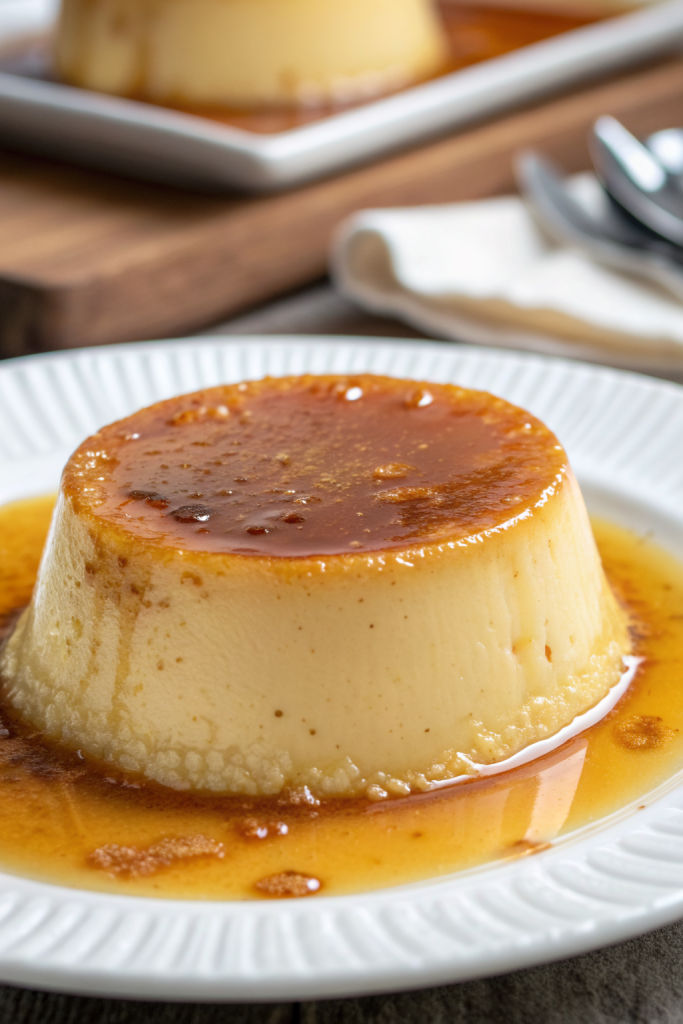
Japanese Silky Custard Purin Recipe tastes like a cross between crème caramel and flan, but lighter, silkier, and just a bit bouncier in the best way. It suits anyone who loves gently sweet desserts and needs a make-ahead treat that takes about 20 minutes of hands-on time plus chilling. I tested this version in my tiny apartment kitchen while my cat judged my caramel skills from the counter.
Why You Should Try This Japanese Silky Custard Purin Recipe
This Japanese Silky Custard Purin Recipe gives you a dessert that feels fancy but stays incredibly simple. The custard tastes smooth, eggy, and creamy, with a light caramel sauce that adds gentle bitterness and keeps the sweetness in check.
You cook it on the stovetop or in the oven with a water bath, so the texture stays ultra smooth and never grainy. It also works perfectly as a make-ahead dessert for guests, since it tastes even better after an overnight chill.
“This Japanese Silky Custard Purin Recipe tastes like a café dessert but comes together in a tiny home kitchen with almost no effort. ★★★★★”
Ingredients You’ll Need
For the caramel
- 4 tablespoons granulated sugar
- 2 tablespoons water
- 1 tablespoon hot water, to loosen the caramel at the end
I like standard white granulated sugar here because it melts evenly and gives a clean caramel flavor. Avoid brown sugar for this part because the molasses can turn the caramel muddy and bitter too quickly.
For the custard
- 2 large eggs, room temperature
- 1 large egg yolk, room temperature
- 1 and 2/3 cups whole milk
- 3 tablespoons heavy cream
- 5 tablespoons granulated sugar
- 1 teaspoon vanilla extract
- Small pinch of fine sea salt
Use whole milk for the classic Japanese purin texture. If you only have 2 percent milk, add an extra tablespoon of heavy cream to keep the custard silky. You can swap vanilla extract with vanilla bean paste if you want a more intense flavor and pretty specks.
Equipment
- 3 to 4 small ramekins or heatproof cups (about 4 ounces each)
- Small saucepan for caramel
- Medium saucepan for heating milk
- Fine mesh strainer
- Mixing bowl
- Whisk
- Baking dish or deep pan for water bath
- Kettle or pot for hot water
- Plastic wrap or lids for chilling
If you do not own ramekins, you can use small heatproof mugs or even glass jars, as long as they handle hot water around them. Just keep sizes similar so the custards cook evenly.
Tips & Tricks
- Warm the eggs to room temperature so they mix smoothly with the warm milk and avoid curdling.
- Stir the caramel gently and stop stirring once it starts to bubble so it does not crystallize.
- Pull the caramel when it turns a deep amber color, not black, to keep a pleasant bitterness instead of a burnt taste.
- Strain the custard mixture through a fine mesh sieve to catch any egg bits and keep the texture silky.
- Tap the filled ramekins lightly on the counter to pop surface bubbles before cooking.
- Cover the ramekins loosely with foil to prevent a skin from forming on top.
- Keep the water bath hot but not boiling so the custard sets gently and stays smooth.
- Chill the purin at least 4 hours, but overnight gives the best flavor and texture.
How to Make Japanese Silky Custard Purin Recipe
Step 1: Make the caramel base
Add 4 tablespoons sugar and 2 tablespoons water to a small saucepan. Set the pan over medium heat and swirl gently until the sugar dissolves and starts to bubble. Stop stirring and let the mixture cook until it turns a deep amber color, about 5 to 7 minutes, while you swirl the pan occasionally.
Turn off the heat and carefully add 1 tablespoon hot water while you swirl, which loosens the caramel slightly. Divide the hot caramel immediately among your ramekins, tilting each one so the caramel coats the bottom evenly. Set the ramekins aside while you prepare the custard.
Step 2: Warm the milk mixture
Pour the whole milk and heavy cream into a medium saucepan. Add the sugar and a tiny pinch of salt. Heat over low to medium heat, stirring often, until the sugar dissolves and the milk feels warm to the touch, not hot or boiling.
You want the milk around 120 to 130°F if you use a thermometer. Turn off the heat and stir in the vanilla extract. Set the pan aside while you work on the eggs.
Step 3: Mix the eggs
Crack 2 eggs and 1 egg yolk into a mixing bowl. Whisk gently until the mixture looks smooth and the whites and yolks combine. Avoid whipping in too much air, since extra bubbles can show up in the final purin.
Step 4: Temper the eggs
Slowly pour a small ladle of the warm milk mixture into the eggs while you whisk constantly. This step warms the eggs gradually so they do not scramble. Continue to add the milk mixture in a thin stream, whisking the whole time, until you combine everything.
Once the mixture looks uniform, pour it through a fine mesh strainer into a clean bowl or large measuring cup. Skim any foam from the top with a spoon. This step keeps the Japanese Silky Custard Purin Recipe extra smooth.
Step 5: Fill the ramekins and set up the water bath
Pour the strained custard over the caramel in each ramekin, leaving a little space at the top. Tap each ramekin gently on the counter to release any trapped air bubbles. Cover each ramekin loosely with foil.
Place the ramekins in a deep baking dish or pan. Pour hot tap water or recently boiled water around the ramekins until it reaches about halfway up their sides. Move the pan carefully to the oven.
Step 6: Bake the purin
Heat the oven to 300°F. Bake the custards in the water bath for about 30 to 40 minutes, depending on the size of your ramekins. Check by gently shaking one ramekin; the edges should look set while the center still jiggles softly like jelly.
If the custard looks liquid in the center, keep baking and check every 5 minutes. Once they reach that soft jiggle stage, remove the pan from the oven and lift the ramekins out of the water with tongs or a towel. Set them on a rack to cool to room temperature.
Step 7: Chill and unmold
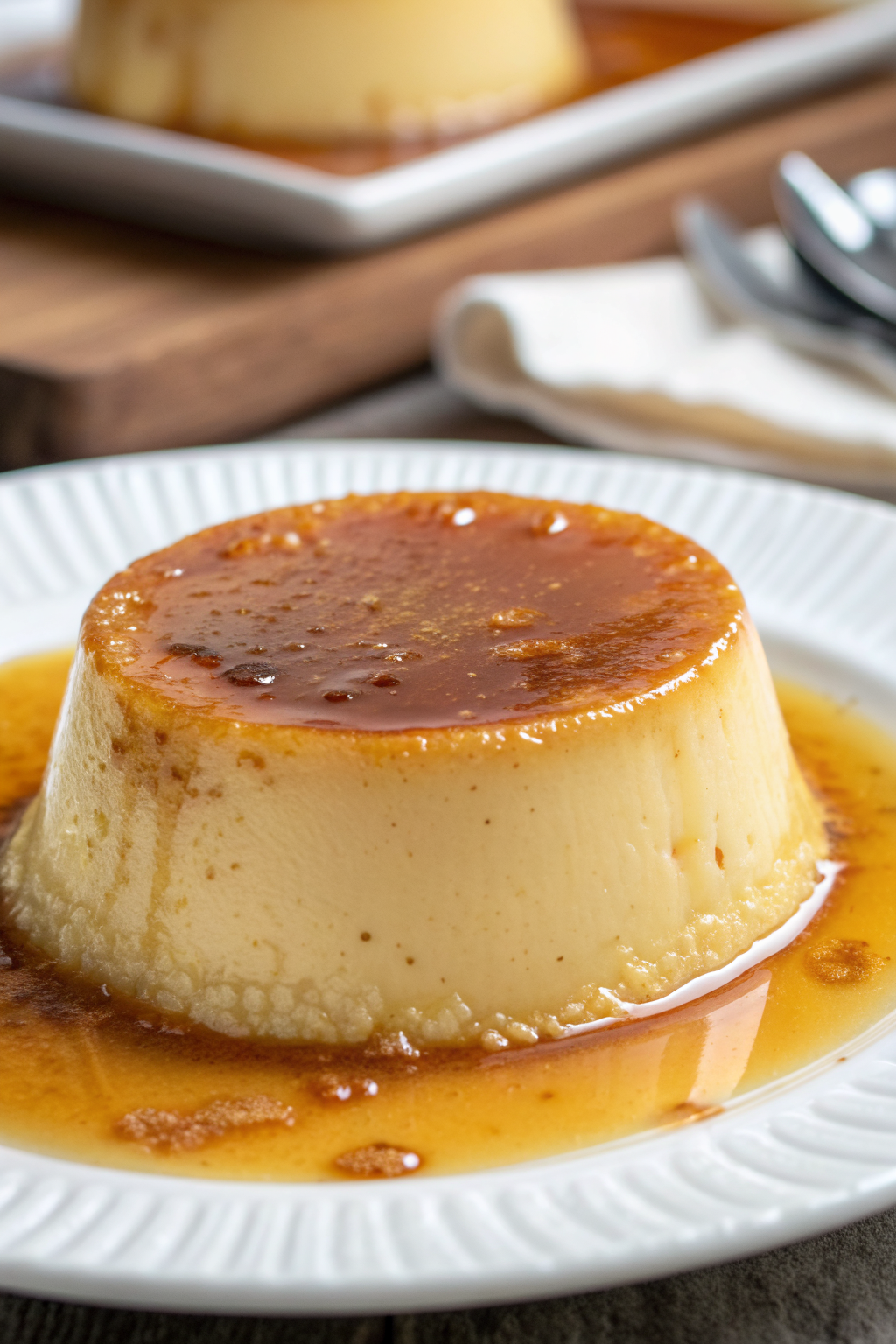
Cover the cooled ramekins with plastic wrap or lids and place them in the fridge for at least 4 hours, or overnight. When you feel ready to serve, slide a thin knife around the edge of each custard. Place a small plate on top of the ramekin, flip it over, and give a gentle shake so the purin drops onto the plate and the caramel sauce flows over it.
If the custard sticks, dip the bottom of the ramekin in warm water for 10 to 15 seconds and try again. Serve your Japanese Silky Custard Purin Recipe cold, with the caramel sauce pooling around the base.
What to Serve with Japanese Silky Custard Purin Recipe
Serve this Japanese Silky Custard Purin Recipe as a light dessert after a simple rice bowl, teriyaki chicken, or a veggie stir fry. Add a few fresh berries on the side or a small spoonful of lightly sweetened whipped cream if you want a café style plate. A cup of hot green tea, roasted barley tea, or a mild latte pairs perfectly with the gentle sweetness of the custard. Kids also love it with a glass of cold milk or iced matcha latte without extra sugar.
Storage Options
- Store the purin in the fridge, covered, for up to 3 days for best texture and flavor.
- Keep the custards in their ramekins until serving, since they hold their shape better that way.
- Avoid freezing, because the custard can separate and lose its silky texture after thawing.
- Serve straight from the fridge or let the purin sit at room temperature for 10 minutes if you prefer a softer bite.
Japanese Silky Custard Purin Recipe
Ingredients
Instructions
- Add the granulated sugar and water for the caramel to a small saucepan and set over medium heat, swirling gently until the sugar dissolves and starts to bubble.
- Stop stirring and continue cooking, swirling the pan occasionally, until the caramel turns a deep amber color, about 5 to 7 minutes.
- Turn off the heat and carefully add the hot water, swirling to loosen the caramel slightly.
- Immediately divide the hot caramel among 3 to 4 small ramekins, tilting each ramekin to coat the bottom evenly. Set aside to cool slightly while you make the custard.
- In a medium saucepan, combine the whole milk, heavy cream, granulated sugar, and a small pinch of fine sea salt.
- Heat over low to medium heat, stirring often, until the sugar dissolves and the milk mixture is warm to the touch (about 120°F to 130°F). Do not let it boil.
- Remove from the heat and stir in the vanilla extract. Set aside.
- Crack the eggs and egg yolk into a mixing bowl and whisk gently until the whites and yolks are fully combined without incorporating too much air.
- Slowly ladle a small amount of the warm milk mixture into the eggs while whisking constantly to warm the eggs gradually.
- Continue to add the rest of the warm milk mixture in a thin stream, whisking continuously, until fully combined.
- Pour the custard mixture through a fine mesh strainer into a clean bowl or large measuring cup, and skim off any foam from the surface.
- Pour the strained custard evenly over the set caramel in the ramekins, leaving a little space at the top.
- Tap each ramekin gently on the counter to release any air bubbles, then cover each one loosely with foil.
- Place the ramekins in a deep baking dish and pour hot water around them until it reaches about halfway up the sides of the ramekins.
- Transfer the baking dish to an oven preheated to 300°F and bake for 30 to 40 minutes, or until the edges are set and the centers still jiggle softly when gently shaken.
- Remove the ramekins from the water bath and let them cool to room temperature on a rack.
- Cover the cooled ramekins with plastic wrap or lids and refrigerate for at least 4 hours, or preferably overnight, until fully chilled and set.
- To unmold, run a thin knife around the edge of each custard, place a small plate over the top, and invert. Gently shake until the custard releases and the caramel sauce flows over it.
- If the custard does not release easily, briefly dip the bottom of the ramekin in warm water for 10 to 15 seconds and try again. Serve cold.
Notes
Approximate per serving (1 of 4): 220 calories; fat 10 g; saturated fat 4.5 g; carbohydrates 26 g; fiber 0 g; sugars 25 g; protein 7 g; sodium 80 mg. Values are estimates and will vary based on exact ingredients, brands, and portion size.