
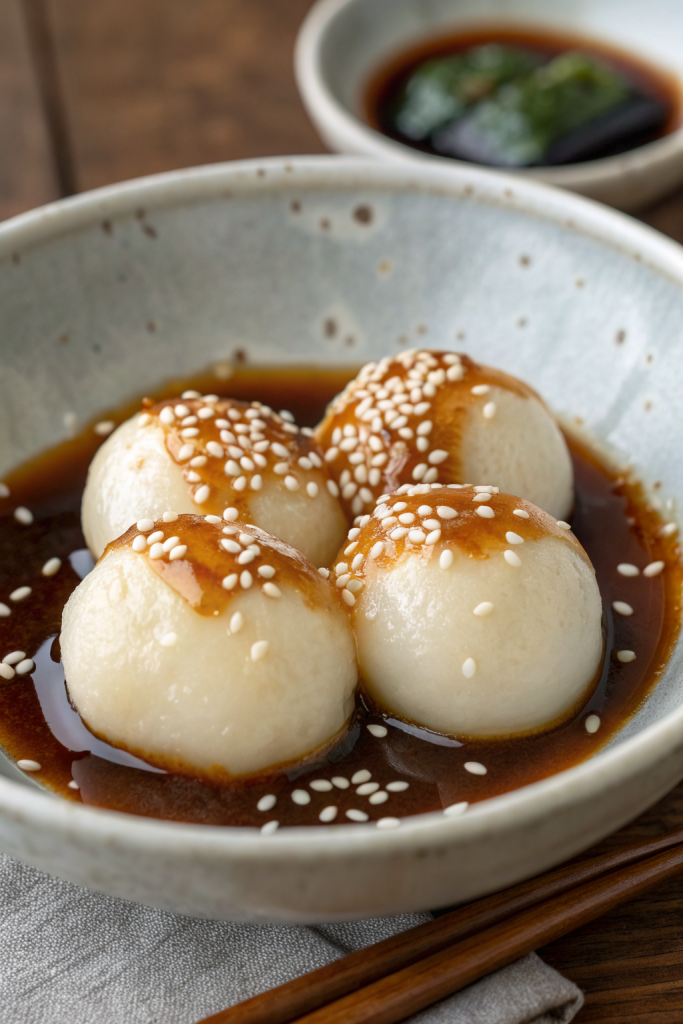
Shiratama Dango Japanese Dessert Recipe tastes soft, chewy, and gently sweet, perfect for anyone who loves mochi-style treats and wants a light dessert in about 25 minutes from start to finish. This recipe works well for beginners and busy home cooks who want a simple Japanese dessert that still feels special. I first learned to roll these little rice dumplings at a tiny sweets shop in Tokyo, and I have chased that perfect chewy texture ever since.
Why Make This Shiratama Dango Japanese Dessert Recipe at Home
Homemade shiratama dango tastes fresher and bouncier than anything from a package. You control the sweetness, the toppings, and the texture, so each batch fits your taste exactly.
The recipe uses only a few pantry ingredients and simple equipment. You can serve the dumplings warm or chilled, plain or dressed up, so they fit weeknight cravings and special occasions.
“These little rice dumplings taste so soft, chewy, and comforting that I keep a bag of shiratamako on hand just for this recipe. ★★★★★”
Ingredients You Need
Main ingredients
-
Shiratamako (glutinous rice flour):
- Use 100% glutinous rice flour labeled shiratamako for the best chewy, bouncy texture.
- If you only find mochiko (sweet rice flour), you can use it, but the texture turns slightly softer and less bouncy.
- I often use brands like Shirakiku or Koda Farms; both work well.
-
Water:
- Use room temperature water so the dough hydrates evenly.
- Add it gradually so the dough stays soft but not sticky.
-
Sugar (optional but tasty):
- A small amount of granulated sugar adds gentle sweetness and helps the dumplings taste good even without sauce.
- You can skip it if you plan to serve the dumplings in very sweet syrup or with sweet red bean paste.
Classic toppings and sauces
Pick one or mix a few. This dessert loves variety.
-
Kinako sugar topping
- 2 tablespoons kinako (roasted soybean flour)
- 1–2 tablespoons sugar
- Small pinch of salt
- Mix in a bowl and taste; adjust sugar to your liking.
- Store leftover kinako mix in an airtight jar at room temperature.
-
Kuromitsu-style brown sugar syrup shortcut
- 3 tablespoons dark brown sugar or Japanese black sugar
- 2 tablespoons water
- Small pinch of salt
- Simmer in a small pan until slightly thick, about 2–3 minutes, then cool.
- You can use light brown sugar in a pinch, but dark sugar gives deeper flavor.
-
Anko (sweet red bean paste)
- Use smooth koshian or chunky tsubuan from a can or pouch.
- I often keep a shelf-stable pouch in the pantry for quick desserts.
- Warm it slightly before serving if you like a cozy, comforting bowl.
-
Fresh fruit
- Sliced strawberries, kiwi, mango, or canned mandarin oranges taste great with these dumplings.
- Fruit adds freshness and color, especially if you serve shiratama dango in a parfait or anmitsu-style bowl.
Optional flavor add-ins for the dough
-
Matcha powder:
- Add 1–2 teaspoons matcha to the dry flour for green tea shiratama dango.
- Sift it with the flour so no clumps remain.
-
Black sesame powder:
- Add 1–2 teaspoons ground black sesame for nutty, gray-speckled dumplings.
- Serve with honey or brown sugar syrup for a rich flavor combo.
Equipment list
- Medium mixing bowl
- Silicone spatula or wooden spoon
- Kitchen scale (ideal) or measuring cups
- Small bowl of water for your hands
- Pot for boiling water
- Slotted spoon or fine mesh strainer
- Bowl of ice water
- Small saucepan for syrup (if making brown sugar syrup)
- Small bowls for serving
Tips & Mistakes
- Add water to the flour gradually so the dough stays soft and smooth, not sticky or crumbly.
- Aim for a dough texture like soft earlobe or playdough; if it cracks, add a teaspoon of water, and if it sticks, add a pinch of flour.
- Roll each dumpling to about the size of a large marble so they cook evenly and stay tender.
- Press a tiny dimple in the center of each ball with your finger so they cook through and hold sauce better.
- Keep a small bowl of water nearby and lightly wet your hands so the dough rolls smoothly without sticking.
- Drop the dumplings into boiling water gently so they do not splash or stick together.
- Stir right after you add them so they do not cling to the bottom of the pot.
- Cook the dumplings until they float and then give them another 1–2 minutes so the centers turn fully chewy.
- Transfer cooked dumplings straight into ice water so they keep a bouncy texture and stop cooking.
- Do not leave them in water for hours; they soak up water and turn mushy.
- Add toppings just before serving so the dumplings stay glossy and soft.
- Taste your toppings and adjust sweetness; kinako and anko vary by brand.
How to Make Shiratama Dango Japanese Dessert Recipe
Step 1: Mix the shiratama dough
Add shiratamako and sugar (if using) to a medium bowl and stir to combine.
Pour in water a little at a time while you mix with a spatula or your hand.
Stop adding water once the dough comes together into a smooth, soft ball that feels like an earlobe when you press it.
If the dough cracks when you roll it, knead in a teaspoon of water at a time.
If it sticks to your fingers, sprinkle in a teaspoon of shiratamako and knead again.
Knead for 1–2 minutes until the dough feels smooth and slightly stretchy.
Step 2: Shape the dumplings
Divide the dough into equal pieces, about 10–14 depending on the size you like.
Roll each piece between your palms into a smooth ball, about 1 inch wide.
Dip your fingertip in water and press a small dimple in the center of each ball.
Place the shaped dumplings on a plate or tray so they do not touch too tightly.
Cover them lightly with plastic wrap or a clean towel so they do not dry out.
Set them aside while you heat the cooking water.
Step 3: Boil the shiratama dango
Bring a pot of water to a gentle boil over medium heat.
Slide the dumplings into the water and stir right away so they do not stick to the bottom.
The dumplings sink at first, then rise to the surface as they cook.
Once they float, cook them for another 1–2 minutes so the centers turn fully chewy.
Taste one dumpling; it should feel bouncy and soft, not chalky in the middle.
Adjust the time slightly based on size; smaller dumplings cook faster.
Step 4: Chill in ice water
Prepare a large bowl of ice water while the dumplings cook.
Use a slotted spoon to lift the cooked dumplings from the pot straight into the ice water.
Stir gently so they cool evenly and do not stick.
Let them sit in the ice water for about 2–3 minutes until fully cooled.
Drain them well in a strainer so extra water drips off.
Transfer them to a plate or bowl and cover lightly if you do not serve them right away.
Step 5: Make quick toppings
For kinako sugar, stir kinako, sugar, and a tiny pinch of salt in a small bowl.
Taste and adjust sugar to your liking.
You can double this mix and store the extra for future batches.
For brown sugar syrup, add dark brown sugar, water, and a pinch of salt to a small saucepan.
Heat over medium, stir, and simmer until the sugar dissolves and the syrup thickens slightly, about 2–3 minutes.
Cool to room temperature before you pour it over the dumplings.
Warm anko gently in a small pan or microwave-safe bowl if you like it warm.
Slice any fruit you plan to use and keep it chilled.
Set all toppings on the table so everyone can build their own bowl.
Step 6: Serve
Place a portion of shiratama dango in each serving bowl.
Spoon anko on the side, sprinkle kinako sugar over the dumplings, and drizzle with brown sugar syrup.
Add fresh fruit around the edges for color and freshness.
Serve right away while the dumplings feel soft and bouncy.
If you like a chilled dessert, keep the dumplings slightly cool and top them with cold fruit and syrup.
Adjust sweetness at the table with extra kinako or syrup.
Variations I've Tried
I often mix matcha powder into the dough for a gentle green tea flavor and a pretty pale green color.
Matcha shiratama dango taste great with sweet red bean paste and a drizzle of condensed milk.
Black sesame shiratama dango use ground black sesame in the dough and pair nicely with honey or brown sugar syrup.
They look dramatic in a bowl with bright fruit like strawberries or mango.
You can also make tiny rainbow dumplings by dividing the dough and tinting each portion with natural food coloring or fruit powders.
Kids love this version, and it turns a simple dessert into a fun activity.
For a parfait-style dessert, layer shiratama dango with vanilla ice cream, fruit, anko, and syrup in a tall glass.
This version feels like a Japanese-style sundae and works well for summer gatherings.
How to Serve Shiratama Dango Japanese Dessert Recipe
Serve shiratama dango slightly chilled or at room temperature in small bowls. Top them with anko, kinako sugar, and brown sugar syrup, then add fresh fruit like strawberries, kiwi, or mango for color and brightness. You can also serve them in a dessert bowl with vanilla ice cream or matcha ice cream for a richer treat. For a lighter option, pair the dumplings with chilled green tea or roasted barley tea and extra fruit on the side.
How to store
- Short term, room temperature: Keep cooked, drained dumplings covered at cool room temperature for up to 2 hours before serving.
- Fridge: Store plain dumplings (without sauce) in an airtight container with just enough water to cover them for up to 1 day; change the water once if it turns cloudy.
- Freezer: Freeze cooked dumplings on a tray until firm, then transfer to a freezer bag and keep up to 1 month; thaw in the fridge, then warm briefly in hot water.
- Reheating: Drop chilled or thawed dumplings into hot (not boiling hard) water for 30–60 seconds until soft and bouncy again, then drain and top with sauces.
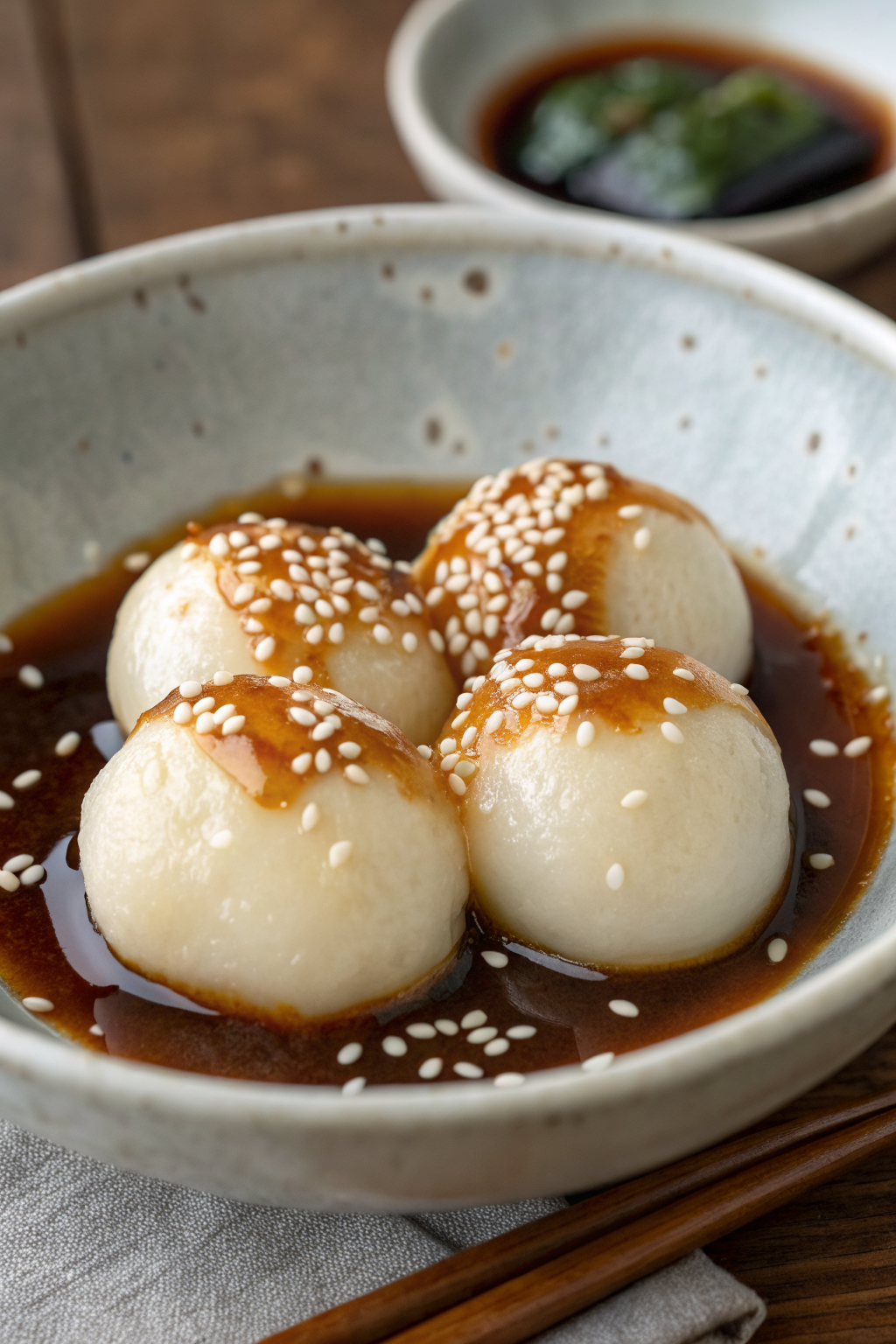
Shiratama Dango Japanese Dessert Recipe
Ingredients
Instructions
- Add shiratamako and sugar (if using) to a medium mixing bowl and stir to combine.
- Pour in the room temperature water a little at a time, mixing with a spatula or your hand until the dough comes together into a smooth, soft ball that feels like an earlobe when pressed.
- Adjust the texture: if the dough cracks when you roll it, knead in a teaspoon of water at a time; if it sticks to your fingers, sprinkle in a little more shiratamako and knead again. Continue kneading for 1–2 minutes until smooth and slightly stretchy.
- Divide the dough into 10–14 equal pieces, depending on the size you like.
- Roll each piece between your palms into a smooth ball about 1 inch wide.
- Dip a fingertip in water and press a small dimple into the center of each ball to help them cook evenly and hold sauce.
- Place the shaped dumplings on a plate or tray so they are not touching too tightly, then cover lightly with plastic wrap or a clean towel so they do not dry out.
- Bring a pot of water to a gentle boil over medium heat.
- Slide the dumplings into the boiling water and stir right away so they do not stick to the bottom or each other.
- Cook until the dumplings float to the surface, then continue boiling for another 1–2 minutes until the centers are fully chewy, not chalky. Taste one to check the texture.
- While they cook, prepare a large bowl of ice water. Use a slotted spoon to transfer the cooked dumplings directly into the ice water and stir gently so they cool evenly and do not stick.
- Let the dumplings chill for 2–3 minutes, then drain well in a strainer so excess water drips off. Keep covered lightly if not serving immediately.
- For the kinako sugar topping, stir together the kinako, sugar, and a pinch of salt in a small bowl, then taste and adjust the sweetness to your liking.
- For the brown sugar syrup, combine dark brown sugar, water, and a pinch of salt in a small saucepan. Heat over medium, stirring, and simmer for 2–3 minutes until the sugar dissolves and the syrup thickens slightly. Let cool to room temperature.
- Warm the anko gently if you prefer it warm, and slice any fruit you plan to use, keeping it chilled until serving.
- Place portions of drained shiratama dango into small serving bowls.
- Spoon anko on the side if using, sprinkle the dumplings with kinako sugar, and drizzle with brown sugar syrup.
- Add fresh fruit around the edges for color and freshness, then serve right away while the dumplings are soft and bouncy. Adjust sweetness at the table with extra kinako or syrup if desired.
Notes
Approximate per serving (1/4 of recipe, including a portion of kinako sugar and brown sugar syrup, without anko or fruit): 190 calories; fat 2 g; saturated fat 0 g; carbohydrates 42 g; fiber 1 g; sugars 13 g; protein 3 g; sodium 60 mg. Values will vary based on toppings, exact amounts, brands, and portion size. Storage
Keep cooked, drained dumplings covered at cool room temperature for up to 2 hours. For longer storage, refrigerate plain dumplings (without sauce) in just enough water to cover them for up to 1 day, changing the water if it becomes cloudy. For freezing, place cooked dumplings on a tray until firm, then transfer to a freezer bag and freeze for up to 1 month. Reheat chilled or thawed dumplings by warming in hot (not rapidly boiling) water for 30–60 seconds until soft and bouncy, then drain and add toppings.