
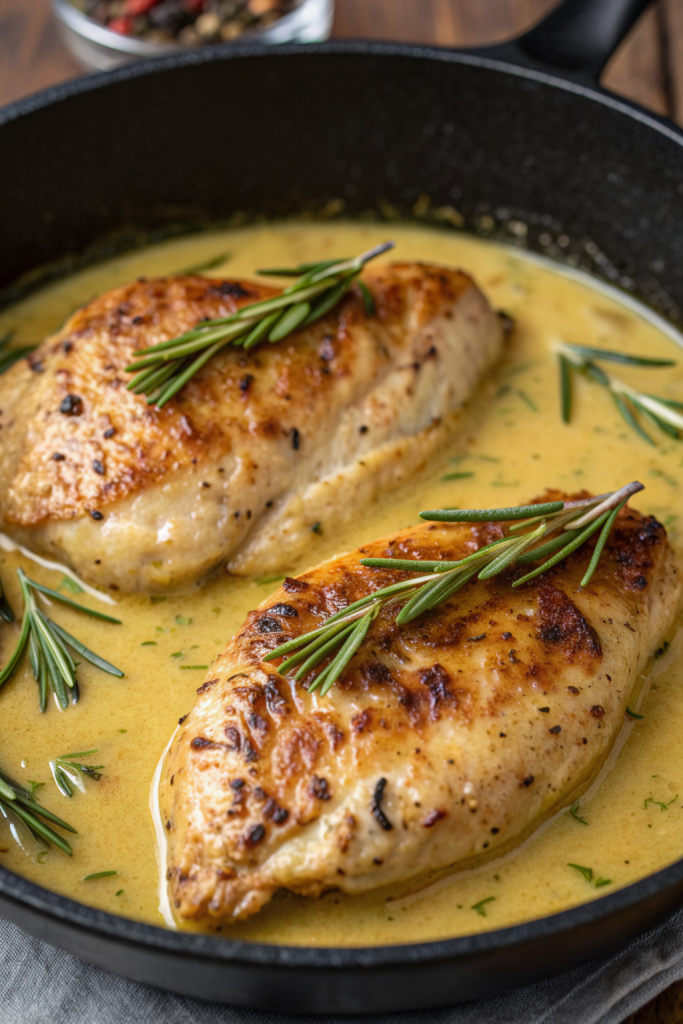
Rosemary Dijon Chicken Recipe tastes savory, herby, tangy, and just a little bit fancy while still counting as a weeknight dinner. It works for busy home cooks who want a 30–40 minute meal that feels restaurant-level without complicated steps. I have cooked some version of this dish for years, and my kids now call it “the good chicken,” which feels like the highest possible honor.
Why Rosemary Dijon Chicken Recipe Is Worth It
This Rosemary Dijon Chicken Recipe gives you juicy chicken with a golden crust, a silky mustard herb sauce, and that cozy roasted garlic aroma that makes everyone wander into the kitchen. The sauce clings to the chicken and tastes amazing over rice, potatoes, or a hunk of crusty bread.
You only need simple ingredients that you probably already keep in your pantry and fridge. The recipe works on busy weeknights, but it also impresses guests, which makes it a great “keep in your back pocket” dinner.
“This Rosemary Dijon Chicken Recipe tastes like a restaurant meal that magically cooks in one pan on a Tuesday night. ★★★★★”
Ingredients You Need
Chicken:
- 2 pounds boneless skinless chicken thighs
- Use thighs for the juiciest result.
- Use boneless skinless chicken breasts if you prefer leaner meat; pound them to even thickness.
Marinade and sauce:
- 3 tablespoons Dijon mustard
- Use a smooth Dijon like Maille or Grey Poupon for the best flavor.
- 2 tablespoons whole grain mustard (optional but tasty for texture)
- 3 tablespoons olive oil
- 3 cloves garlic, minced or pressed
- 2 tablespoons fresh lemon juice
- 1 tablespoon honey or maple syrup
- 1 tablespoon fresh rosemary, finely chopped
- Use 1 teaspoon dried rosemary if you do not have fresh.
- 1 teaspoon kosher salt
- ½ teaspoon black pepper
- ½ teaspoon smoked paprika or sweet paprika
- ¼ cup low sodium chicken broth or water
- 1 tablespoon butter (optional, for a richer sauce)
Pantry shortcuts and substitutions:
- Use garlic powder if you run out of fresh garlic: ½ teaspoon equals about 1 clove.
- Use dried Italian seasoning if you do not have rosemary; use 1 teaspoon.
- Use grainy mustard only if you like a bit of texture; skip it if you want a smooth sauce.
Optional finishing touches:
- Extra chopped fresh rosemary or parsley for garnish
- Lemon wedges for serving
Equipment list:
- Large skillet or sauté pan, preferably oven safe
- Cutting board and sharp knife
- Small bowl for mixing marinade
- Tongs or spatula
- Instant read thermometer (helps you avoid dry chicken)
Quick Tips & substitutions
- Pat the chicken dry before seasoning so it browns better and does not steam.
- Use thighs if you want maximum juiciness and forgiveness on cook time.
- Use breasts if you prefer leaner meat; pound them to even thickness and cook slightly less.
- Marinate for at least 15 minutes; aim for 1 to 2 hours in the fridge for deeper flavor.
- Stir the Dijon well with the oil and lemon juice so it coats the chicken evenly.
- Use dried rosemary if you do not have fresh; use about one third the amount.
- Thin the sauce with extra broth if it tastes too strong, or simmer it longer if you want it thicker.
- Skip the honey if you avoid sugar; the sauce will taste sharper but still delicious.
- Use ghee or avocado oil instead of butter if you avoid dairy.
- Use a nonstick skillet if the sauce sticks; stainless steel gives better browning but needs more oil.
How to Make Rosemary Dijon Chicken Recipe
Step 1: Mix the marinade
Add Dijon mustard, whole grain mustard, olive oil, minced garlic, lemon juice, honey, chopped rosemary, salt, pepper, and paprika to a small bowl. Whisk until the mixture looks smooth and creamy. Taste a tiny bit and adjust salt or lemon juice to your liking.
Step 2: Prep the chicken
Pat the chicken dry with paper towels. Place the chicken in a shallow dish or a zip top bag. Pour about two thirds of the marinade over the chicken and turn the pieces so the sauce coats every surface. Keep the remaining marinade in the bowl for later.
Step 3: Marinate
Cover the dish and place it in the fridge for 15 to 60 minutes. If you feel extra organized, marinate it in the morning and cook it at dinner time. Stir the reserved marinade, then keep it in the fridge as well.
Step 4: Sear the chicken
Heat a large skillet over medium high heat and add a drizzle of olive oil. When the oil shimmers, add the chicken in a single layer without crowding the pan. Cook the first side for 4 to 5 minutes until it turns deep golden and releases easily from the pan. Flip and cook the second side for another 4 to 6 minutes, depending on thickness.
Step 5: Check doneness
Use an instant read thermometer and check the thickest part of a piece. Aim for 165°F for chicken thighs and breasts. If the chicken browns too quickly, lower the heat to medium and continue to cook until it reaches temperature.
Step 6: Make the pan sauce
Transfer the cooked chicken to a plate and tent it loosely with foil so it stays warm. Lower the heat to medium low. Pour the chicken broth into the skillet and scrape up the browned bits with a wooden spoon. Add the reserved marinade and stir until it blends with the broth and starts to simmer.
Step 7: Finish the sauce
Let the sauce bubble gently for 3 to 5 minutes until it thickens slightly and coats the back of a spoon. Stir in the butter if you use it and whisk until it melts and the sauce looks glossy. Taste and adjust with a pinch of salt or a squeeze of lemon juice if needed.
Step 8: Coat the chicken and serve
Return the chicken and any juices from the plate to the skillet. Spoon the sauce over the pieces so they all get a nice coating. Let everything simmer together for 1 to 2 minutes so the flavors mingle. Sprinkle with extra rosemary or parsley and serve hot.
Recipe Variations
- Gluten free: Use gluten free chicken broth and mustard brands that state gluten free on the label.
- Dairy free: Skip the butter at the end or use a dairy free butter substitute or ghee.
- Low carb: Serve with cauliflower rice, zucchini noodles, or a big green salad instead of potatoes or regular rice.
- Extra herby: Add thyme or oregano along with the rosemary for a stronger herb flavor.
- Creamy version: Stir in 2 to 3 tablespoons of heavy cream or coconut cream at the end for a richer sauce.
- Sheet pan version: Toss chicken with marinade and roast on a sheet pan at 400°F with chopped potatoes and carrots until cooked through.
- Grilled version: Marinate as written, then grill the chicken over medium heat and warm the reserved marinade with broth in a small pan for sauce.
Ways to Serve Rosemary Dijon Chicken Recipe
- Spoon the chicken and sauce over mashed potatoes.
- Serve with rice or quinoa and steamed green beans.
- Pair with roasted vegetables like carrots, broccoli, or Brussels sprouts.
- Slice leftovers and tuck into a warm pita or tortilla with lettuce and cucumber.
- Serve with a simple side salad and crusty bread to soak up the sauce.
Storage Success
Let the chicken cool to room temperature, then place it in an airtight container with the sauce. Store it in the fridge for up to 3 to 4 days. Reheat gently on the stove over low heat with a splash of broth or water so the chicken stays juicy. Freeze leftovers in a freezer safe container for up to 2 months and thaw in the fridge before reheating.
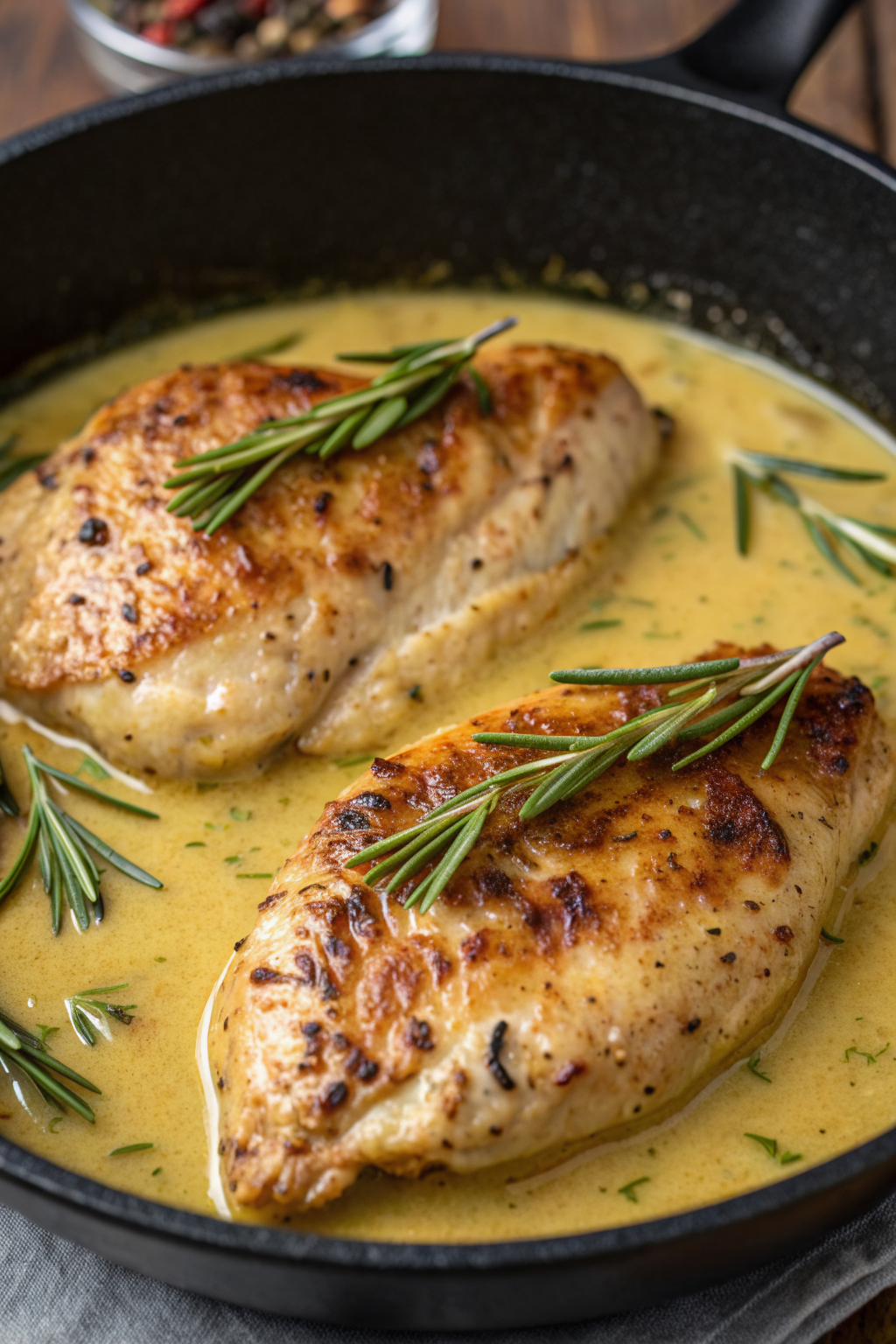
Rosemary Dijon Chicken Recipe
Ingredients
Instructions
- In a small bowl, whisk together Dijon mustard, whole grain mustard, olive oil, minced garlic, lemon juice, honey or maple syrup, chopped fresh rosemary, kosher salt, black pepper, and smoked or sweet paprika until the mixture is smooth and creamy.
- Pat the chicken thighs dry with paper towels. Place them in a shallow dish or zip-top bag. Pour about two thirds of the mustard mixture over the chicken and turn to coat all sides. Reserve the remaining mixture in the bowl for the sauce.
- Cover and refrigerate the chicken for 15 to 60 minutes to marinate. Refrigerate the reserved mustard mixture as well.
- Heat a large skillet over medium-high heat and add a drizzle of olive oil if needed. When the oil shimmers, add the marinated chicken in a single layer without crowding. Sear for 4 to 5 minutes on the first side until deep golden and it releases easily from the pan.
- Flip the chicken and cook for another 4 to 6 minutes, or until the thickest part of each piece reaches 165°F and the chicken is cooked through. Adjust the heat to medium if it browns too quickly. Transfer the cooked chicken to a plate and tent loosely with foil.
- Reduce the heat to medium-low. Pour the chicken broth or water into the skillet and scrape up the browned bits from the bottom of the pan. Add the reserved mustard mixture and stir until it blends with the broth and begins to simmer.
- Let the sauce bubble gently for 3 to 5 minutes, stirring often, until slightly thickened and it coats the back of a spoon. Stir in the butter, if using, until melted and the sauce looks glossy. Taste and adjust with a pinch of salt or a little extra lemon juice if desired.
- Return the chicken and any accumulated juices to the skillet. Spoon the sauce over the chicken to coat. Let simmer together for 1 to 2 minutes so the flavors meld. Garnish with extra chopped rosemary or parsley and serve hot with lemon wedges on the side if you like.
Notes
Approximate per serving (1/6 of recipe, made with chicken thighs, olive oil, and butter): 320 calories; fat 19 g; saturated fat 5 g; carbohydrates 7 g; fiber 0 g; sugars 4 g; protein 30 g; sodium 540 mg. Values will vary based on exact ingredients, brands, and portion size.