
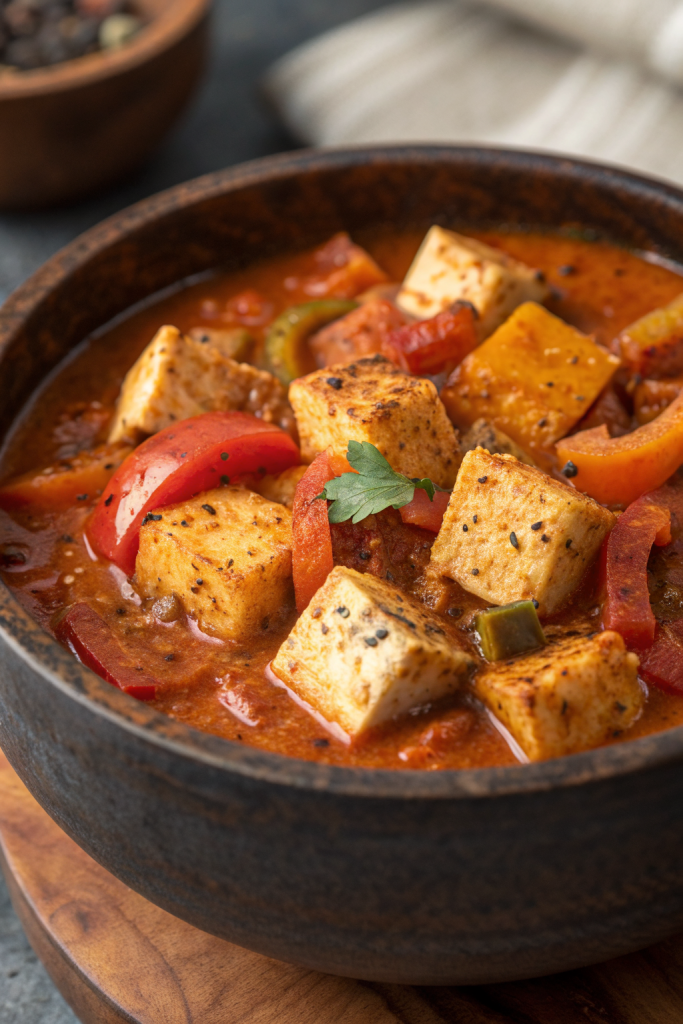
Vegan Paprikash Recipe tastes rich, smoky, and creamy with a cozy hug of paprika in every bite, and it works perfectly for weeknights since it takes about 40 minutes start to finish. This version suits vegans, vegetarians, and anyone who loves hearty comfort food without feeling heavy afterward. I first tested it on a very skeptical uncle who loves sour cream and chicken, and he went back for seconds before I told him it was vegan.
Why Make This Vegan Paprikash Recipe at Home
Homemade vegan paprikash gives you deep flavor from good paprika, caramelized onions, and a silky cashew or plant cream sauce. You control the salt, the richness, and the spice level, so the dish can taste mild and kid friendly or extra smoky and bold.
You also skip weird additives and keep the ingredient list clean and pantry friendly. Leftovers taste even better the next day, which makes this recipe perfect for meal prep or cozy lunches.
“This Vegan Paprikash Recipe tastes just as rich and comforting as the classic version, only lighter and kinder, and it easily earns a weekly spot on my dinner rotation. ★★★★★”
Ingredients You Need
Core ingredients
- Neutral oil (avocado, sunflower, or light olive oil)
- Yellow onions, thinly sliced
- Red bell peppers, sliced into strips
- Carrots, sliced into coins or half moons
- Garlic, minced
- Sweet Hungarian paprika (use a fresh, good quality brand; old paprika tastes dusty)
- Smoked paprika (adds depth and a hint of “cooked over fire” flavor)
- Tomato paste
- Vegetable broth or stock (low sodium so you control seasoning)
- Soy sauce or tamari (adds umami and replaces some of the depth that meat usually brings)
- Bay leaf
- Dried thyme or marjoram
Creamy element
Pick one of these, based on what you keep in your kitchen.
- Raw cashews, soaked in hot water, then blended with broth for a cashew cream
- Full fat canned coconut milk (use a brand with minimal gums for best texture)
- Plain unsweetened vegan sour cream or thick plain vegan yogurt
- Barista style oat cream or soy cream
Cashew cream gives the most neutral, classic flavor. Coconut milk adds a faint coconut note, so pair it with extra smoked paprika and garlic to balance. Vegan sour cream or yogurt adds tang and a slightly lighter body.
Protein and bulk
You can keep it veggie only, or add one of these.
- Extra firm tofu, pressed and cubed, then pan seared
- Tempeh, cubed and browned
- Canned chickpeas, drained and rinsed
- Sliced mushrooms, browned until they release and reabsorb their juices
Tofu or tempeh make the dish feel closest to a “main course” stew. Chickpeas give a quick pantry shortcut when you feel tired or short on time.
Acid and seasoning
- Fresh lemon juice or apple cider vinegar
- Salt and freshly ground black pepper
- Optional pinch of sugar or maple syrup if your tomato paste tastes very sharp
The acid at the end brightens the sauce and keeps it from tasting flat. Do not skip it, even if you feel tempted.
Garnishes
- Fresh parsley, chopped
- Extra dollop of vegan sour cream or yogurt
- Extra sprinkle of smoked paprika
These small touches make the bowl look restaurant level and add fresh flavor.
Pantry shortcuts and brand notes
- Use jarred roasted red peppers if you feel short on time; pat them dry and slice.
- Use pre minced garlic from a jar if you cook on a busy weeknight, but double the amount for stronger flavor.
- Use boxed vegetable broth from brands like Pacific or Imagine low sodium; homemade stock also works beautifully.
- Use a good Hungarian paprika such as Szeged or Pride of Szeged; cheap generic paprika often tastes weak.
Equipment list
- Large heavy pot or Dutch oven
- Sharp chef’s knife and cutting board
- Wooden spoon or silicone spatula
- Measuring cups and spoons
- Blender (high speed if you use cashew cream)
- Small bowl and whisk if you use vegan sour cream or yogurt
Tips & Mistakes
- Slice onions thinly so they caramelize and soften instead of sitting in big crunchy chunks.
- Toast paprika gently over low heat for 30 to 60 seconds and stir constantly so it blooms in flavor and does not burn.
- Add creamy ingredients off the heat or over very low heat so they stay silky and do not curdle.
- Taste your paprika before you cook; if it smells weak, add an extra teaspoon or two.
- Brown tofu, tempeh, or mushrooms separately so they keep texture and do not steam in the sauce.
- Salt in layers while you cook instead of dumping it in at the end so the flavors stay balanced.
- Stir the pot often, especially after you add tomato paste, so it does not stick to the bottom.
- Thin the sauce with a splash of broth if it thickens too much; the sauce should coat a spoon but still feel pourable.
- Add lemon juice or vinegar at the end and taste again; adjust with a pinch of salt if the flavor still feels dull.
- Cool leftovers before you refrigerate so condensation does not water down the sauce.
How to Make Vegan Paprikash Recipe
Step 1: Sauté veggies and aromatics
Heat oil in a large stock pot or Dutch oven over medium heat. Add onions and carrots and cook until soft and lightly golden, about 8 to 10 minutes, and stir often. Add red bell peppers and cook another 5 to 7 minutes until they soften and start to sweeten.
Add garlic and cook 1 minute until fragrant. Keep the heat at medium so the garlic does not burn.
Step 2: Build the paprika base
Push the veggies to the sides of the pot and clear a small spot in the center. Add tomato paste to that spot and cook it for 2 to 3 minutes, stirring, until it darkens slightly and smells sweet. Sprinkle sweet Hungarian paprika, smoked paprika, thyme or marjoram, salt, and pepper over the veggies.
Stir everything together and cook 30 to 60 seconds so the spices bloom. Keep the heat gentle so the paprika does not scorch, since burnt paprika tastes bitter.
Step 3: Add liquid and simmer
Pour in vegetable broth and a splash of soy sauce or tamari and stir well, scraping up any browned bits from the bottom of the pot. Add the bay leaf. Bring the mixture to a gentle simmer, then lower the heat so it bubbles softly.
Simmer 15 to 20 minutes until the carrots turn tender and the flavors meld. Taste and adjust salt and pepper as needed.
Step 4: Prepare the creamy element
While the pot simmers, prepare your creamy base. If you use cashews, drain the soaked nuts and blend them with some warm broth from the pot until very smooth and silky. If you use coconut milk, vegan sour cream, or oat cream, whisk it in a small bowl with a ladle of hot broth to warm and loosen it.
This step helps prevent curdling and keeps the sauce glossy. Set the cream mixture aside until the veggies finish cooking.
Step 5: Cook or warm the protein
If you use tofu or tempeh, heat a little oil in a skillet over medium high heat. Add cubes in a single layer and cook until golden on most sides, about 6 to 8 minutes, and season with salt and pepper. If you use mushrooms, sauté them in a separate pan until they release their liquid and then brown.
If you use chickpeas, simply rinse and drain them and keep them ready. You can stir chickpeas directly into the simmering sauce during the last 5 minutes.
Step 6: Finish with cream and adjust
Turn the heat under the pot to low and remove the bay leaf. Stir in your cashew cream, coconut milk, or vegan sour cream mixture. Let the sauce warm gently for 2 to 3 minutes until it thickens and turns glossy.
Add the cooked tofu, tempeh, mushrooms, or chickpeas and stir to coat. Squeeze in lemon juice or add a splash of apple cider vinegar, then taste and adjust seasoning with more salt, pepper, or paprika.
Step 7: Garnish and serve
Turn off the heat and sprinkle chopped fresh parsley over the top. Add a small extra spoonful of vegan sour cream or yogurt in the center if you like. Finish with a light dusting of smoked paprika for color and aroma.
Let the pot sit 5 minutes before serving so the sauce settles and clings to the veggies and protein. Then serve hot with your favorite side.
Variations I've Tried
I often make a mushroom heavy version with cremini and oyster mushrooms, which gives a deep, almost meaty texture that satisfies big appetites. I also like a chickpea and spinach version where I stir in a few handfuls of baby spinach at the end until it wilts. A tofu and potato version tastes extra hearty; I parboil small potato cubes, then simmer them in the sauce for the last 10 minutes.
On busy nights, I skip the separate protein and just load up on peppers, onions, and carrots, then serve the paprikash over whole wheat noodles. I also tried a smoky version with extra smoked paprika and a pinch of chili flakes, which works great for spice lovers. If you cook gluten free, you can serve it over rice, quinoa, or gluten free pasta without any changes to the sauce.
How to Serve Vegan Paprikash Recipe
Serve this Vegan Paprikash Recipe over wide noodles, spaetzle style dumplings, fluffy rice, or creamy mashed potatoes for peak comfort. You can also spoon it over cauliflower mash or zucchini noodles if you want a lighter base. Add a crisp green salad or simple cucumber salad on the side to balance the richness.
Warm crusty bread or garlic bread works perfectly to scoop up the extra sauce. I also like to top each bowl with extra parsley and a small dollop of vegan sour cream so every bite tastes bright and creamy.
How to store
- Cool the paprikash to room temperature, then store it in airtight containers in the fridge for up to 4 days.
- Freeze portions in freezer safe containers or bags for up to 2 months, and label them with the date.
- Reheat on the stove over low to medium heat and add a splash of water or broth to loosen the sauce as it warms.
- You can also reheat single portions in the microwave in short bursts, stirring between each burst so the sauce heats evenly and stays creamy.