
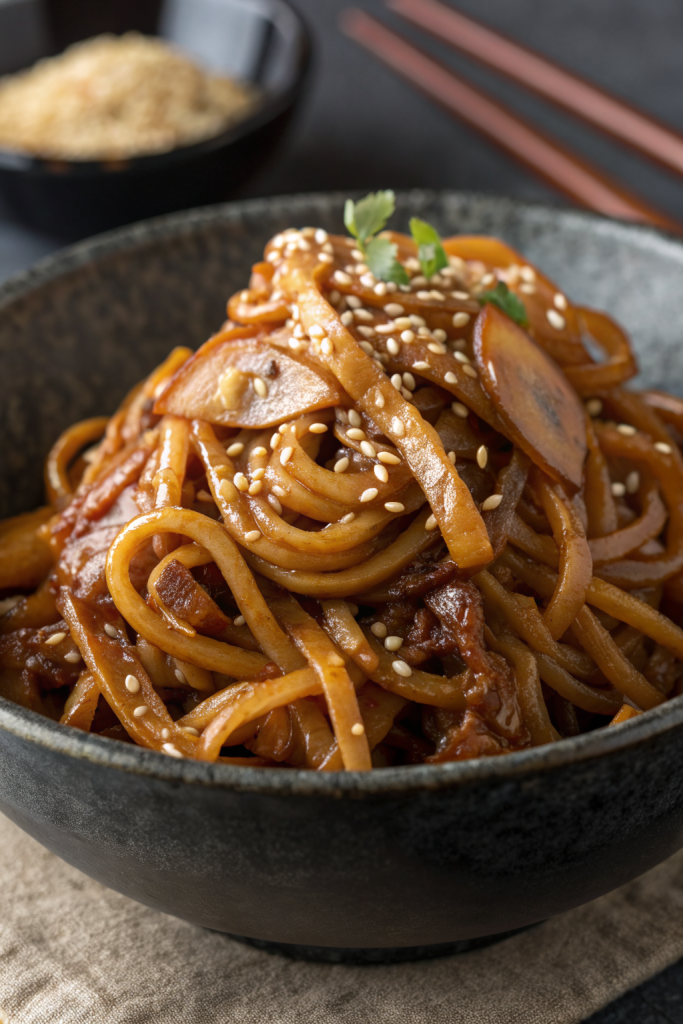
Soy sauce udon Recipe tastes savory, slightly sweet, and super slurpy, perfect for anyone who loves chewy noodles and big umami flavor in under 25 minutes. This Soy sauce udon Recipe works well for busy weeknights, beginner cooks, or anyone who wants a cozy bowl without babysitting a pot all evening. I first made this on a Tuesday when my brain felt like overcooked pasta, and it instantly became my “I deserve noodles” dinner.
Why Make This Soy sauce udon Recipe at Home
Homemade Soy sauce udon Recipe gives you control over salt, sweetness, and spice, so the bowl fits your taste instead of a restaurant’s guess. You also use better oil, more veggies, and higher quality soy sauce, which makes the flavor deeper and cleaner.
You also save money and time, since frozen or shelf-stable udon cooks in just a few minutes. Clean-up stays simple, because you only use one pan and a pot for the noodles.
“This Soy sauce udon Recipe tastes like takeout-level noodles with way more flavor and way less grease, and it comes together faster than delivery. ★★★★★”
Ingredients You Need
Udon noodles
- 14 to 16 ounces udon noodles
- Fresh or frozen udon: best chewy texture and quick cooking.
- Shelf-stable udon: works well too; just avoid brands that taste too soft or mushy.
- Gluten-free option: use thick gluten-free noodles or rice udon-style noodles and a gluten-free soy sauce.
Sauce base
- 3 tablespoons soy sauce
- Use regular or light soy sauce for most flavor.
- Use low-sodium soy sauce if you watch salt; taste and adjust at the end.
- 1 tablespoon dark soy sauce (optional, for color and deeper flavor)
- 1 to 1½ tablespoons oyster sauce
- Vegan option: use mushroom stir-fry sauce instead.
- 1 tablespoon mirin or mild rice cooking wine substitute (non-alcoholic)
- If you avoid any alcohol, use 1 tablespoon water plus ½ teaspoon sugar.
- 1 to 1½ teaspoons sugar, to balance saltiness
- ½ to 1 teaspoon toasted sesame oil, added at the end for aroma
Aromatics and veggies
- 2 tablespoons neutral oil (canola, avocado, or light olive oil)
- 3 cloves garlic, minced
- 1 teaspoon grated fresh ginger
- 3 to 4 green onions, sliced (white and green parts separated)
- 1 small onion, thinly sliced
- 1 small carrot, cut into matchsticks or thin half-moons
- 1 cup shredded cabbage or thinly sliced bok choy
- 1 small bell pepper, thinly sliced (any color)
Protein options (pick one or mix)
- 6 to 8 ounces thinly sliced chicken thigh or breast
- 6 to 8 ounces thinly sliced beef or pork
- 6 to 8 ounces extra-firm tofu, pressed and cubed
- 2 eggs, lightly beaten, for a soft scramble in the pan
- Or keep it veggie-only and add more mushrooms or greens
Flavor boosters
- ½ to 1 teaspoon chili flakes, chili crisp, or a mild Asian chili sauce
- 1 teaspoon sesame seeds, for garnish
- Extra soy sauce and sugar at the end, to fine-tune seasoning
Pantry shortcuts
- Use pre-chopped stir-fry veggie mix from the store to save time.
- Use frozen pre-cooked chicken strips or tofu cubes if you feel tired or rushed.
- Use bottled minced garlic and ginger if you do not want to chop; flavor stays strong enough for this Soy sauce udon Recipe.
Equipment
- Large pot to boil udon noodles
- Large skillet, sauté pan, or wok
- Tongs or chopsticks to toss noodles
- Small bowl for mixing the sauce
Tips & Mistakes
- Boil udon just until chewy, then rinse quickly under cool water so the noodles do not clump or overcook.
- Mix the soy sauce, oyster sauce, mirin substitute, sugar, and chili in a bowl before you start cooking so you do not scramble at the stove.
- Heat the pan well before you add oil and veggies so they sear instead of steam.
- Add garlic and ginger after onions soften so they do not burn and turn bitter.
- Do not drown the noodles in sauce; coat them lightly first, then add more only if they taste bland.
- Taste before adding extra soy sauce, since oyster sauce and dark soy sauce already bring plenty of salt.
- Slice veggies and protein thin so they cook quickly and match the noodle texture.
- Add sesame oil at the end so it keeps its nutty aroma and does not taste flat.
- If noodles clump, loosen them with a splash of hot water in the pan instead of more oil.
- Do not walk away from the pan; this recipe cooks fast, and overcooked noodles turn soft and sad.
How to Make Soy sauce udon Recipe
Step 1: Mix the sauce
Add soy sauce, dark soy sauce, oyster sauce, mirin substitute, sugar, and chili flakes to a small bowl. Whisk until the sugar dissolves and the sauce looks smooth. Taste a tiny bit and adjust sweetness or salt to your liking. Set the bowl near the stove.
Step 2: Cook the udon noodles
Bring a large pot of water to a boil. Add udon noodles and cook according to package directions until they feel chewy and bouncy. Drain, rinse quickly under cool water to stop cooking, then drain again. Toss with a tiny drizzle of oil so they do not stick while you cook the veggies.
Step 3: Sauté veggies and aromatics
Heat oil in a large skillet or wok over medium-high heat. Add sliced onion and carrot; cook until they soften slightly and pick up a bit of color, about 4 to 5 minutes. Add bell pepper and cabbage or bok choy; cook 2 to 3 minutes until they turn tender-crisp. Add garlic, ginger, and the white parts of the green onions; cook 30 to 45 seconds until fragrant.
Step 4: Cook the protein
Push the veggies to one side of the pan. Add a small drizzle of oil to the empty side, then add your chosen protein in a single layer. Cook, stirring occasionally, until the meat cooks through or the tofu browns on the edges. If you use eggs, pour beaten eggs into the empty side and scramble gently until just set, then mix with the veggies.
Step 5: Combine noodles and sauce
Add cooked udon noodles to the pan. Pour the sauce over the noodles, aiming mostly for the noodles instead of the pan bottom. Toss with tongs or chopsticks until the noodles, veggies, and protein mix evenly and the sauce coats everything. If the noodles look dry, add 1 to 2 tablespoons water and toss again.
Step 6: Finish and taste
Turn off the heat. Drizzle sesame oil over the noodles and toss once more. Sprinkle in the green parts of the green onions and sesame seeds. Taste and adjust with a splash of soy sauce or a pinch of sugar if you want more punch or balance.
Variations I've Tried
Spicy Soy sauce udon Recipe: Add extra chili flakes, a spoon of chili crisp, or a mild Asian chili sauce to the bowl of sauce. Toss in extra green onions and maybe some thinly sliced jalapeño for heat lovers.
Garlic butter Soy sauce udon Recipe: Add 1 tablespoon butter at the end along with sesame oil and an extra clove of garlic. This version tastes rich and cozy, almost like a mash-up of Japanese and Italian comfort food.
Mushroom-loaded Soy sauce udon Recipe: Sauté 1 to 2 cups mixed mushrooms with the onions until they brown and shrink. Use mushroom stir-fry sauce instead of oyster sauce for a deep, earthy flavor that still feels light.
Veggie-packed Soy sauce udon Recipe: Double the cabbage, carrots, and bell peppers and skip meat. Add edamame or snap peas for extra protein and crunch, and you get a very satisfying meatless dinner.
Creamy Soy sauce udon Recipe: Stir in 2 to 3 tablespoons of unsweetened soy milk or oat milk at the end with the sauce. The noodles turn slightly creamy while still tasting savory and light.
How to Serve Soy sauce udon Recipe
Serve Soy sauce udon Recipe hot in wide bowls so the noodles spread out and cool just enough to slurp. Top with extra green onions, sesame seeds, and a little chili oil or chili flakes if you enjoy spice. Add a side of steamed broccoli, cucumber salad, or miso-style soup for a full meal. Kids often enjoy this with extra carrots and a touch more sugar in the sauce for a milder flavor.
How to store
- Store leftovers in an airtight container in the fridge for up to 3 days.
- Reheat in a skillet over medium heat with a splash of water until hot and steamy; toss often so the noodles loosen.
- You can freeze portions in freezer-safe containers for up to 1 month, though the noodles may soften slightly.
- Reheat frozen portions straight from the freezer in a covered skillet with a few tablespoons of water, stirring often until hot.

Soy Sauce Udon Recipe
Ingredients
Instructions
- In a small bowl, whisk together soy sauce, dark soy sauce (if using), oyster sauce, mirin or substitute, sugar, and chili flakes or chili crisp until the sugar dissolves and the sauce is smooth. Adjust sweetness or salt to taste and set near the stove.
- Bring a large pot of water to a boil. Add the udon noodles and cook according to package directions until chewy and bouncy. Drain, rinse quickly under cool water to stop the cooking, drain again, and toss with a tiny drizzle of oil to prevent sticking.
- Heat the neutral oil in a large skillet or wok over medium-high heat. Add the sliced onion and carrot and cook for 4–5 minutes, stirring, until slightly softened and lightly colored. Add the bell pepper and cabbage or bok choy and cook for 2–3 minutes more until tender-crisp. Stir in the garlic, ginger, and white parts of the green onions and cook for 30–45 seconds until fragrant.
- Push the veggies to one side of the pan. Add a small drizzle of oil to the empty side, then add your chosen protein in a single layer. Cook, stirring occasionally, until the meat is cooked through or tofu is browned on the edges. If using eggs, pour the beaten eggs into the empty side and gently scramble until just set, then mix into the veggies.
- Add the cooked udon noodles to the pan. Pour the sauce over the noodles, aiming mostly for the noodles rather than the pan bottom. Toss with tongs or chopsticks until the noodles, veggies, and protein are evenly combined and coated. If the noodles look dry, add 1–2 tablespoons of water and toss again.
- Turn off the heat. Drizzle toasted sesame oil over the noodles and toss once more. Sprinkle with the green parts of the green onions and sesame seeds. Taste and adjust with a splash of soy sauce or a pinch of sugar if needed, then serve hot in wide bowls.