
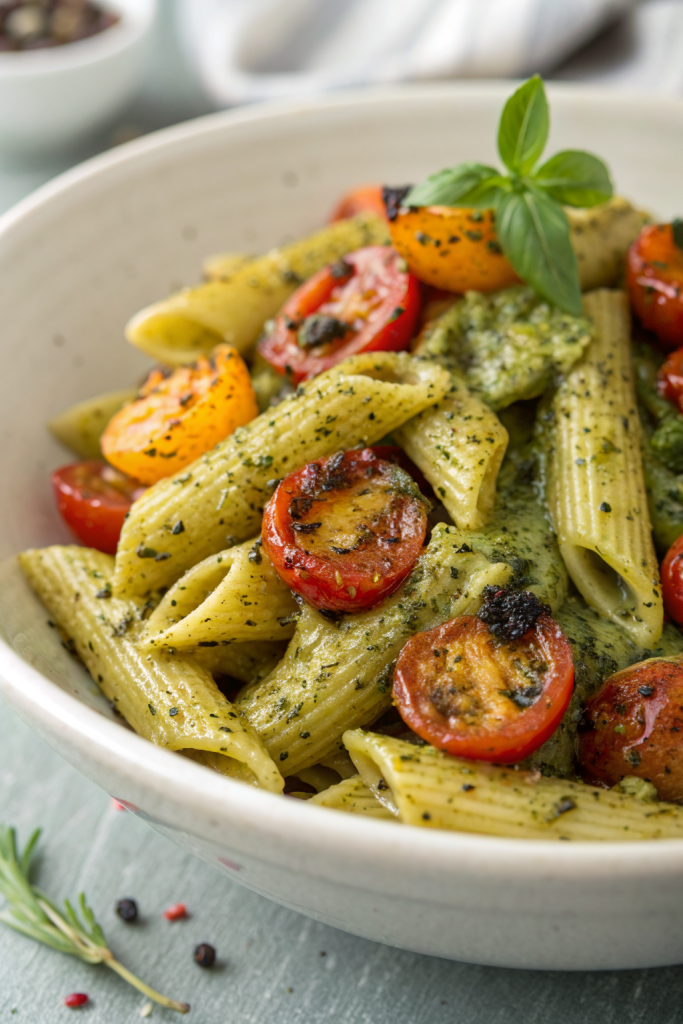
Pesto Pasta With Roasted Vegetables tastes bright, herby, a little nutty, and perfectly cozy from caramelized veggies and warm pasta. It works well for busy weeknights, meal prep lunches, or a casual dinner with friends, and you can get it on the table in about 40 minutes. I first threw this together on a “clean out the fridge” night, and my family now requests it like it came from a fancy restaurant.
Why You Should Try This Pesto Pasta With Roasted Vegetables
This pesto pasta with roasted vegetables hits that sweet spot between comfort food and “hey, I ate some vegetables.” The pesto coats every noodle, the roasted veggies add sweetness and texture, and a squeeze of lemon keeps everything bright instead of heavy.
You can customize it with whatever you have in the crisper drawer, so it works well in every season. Kids usually go for the pasta and cheese, adults appreciate the roasted flavor and basil, and everyone wins.
“This pesto pasta with roasted vegetables tastes like something from a cozy café, but it comes together in under an hour at home. ★★★★★”
Ingredients You’ll Need
Pasta
- 12 ounces short pasta
- I like rotini, fusilli, penne, or shells because they hold pesto in all the little ridges.
- Use whole wheat or chickpea pasta if you want extra fiber and protein.
Vegetables
- 1 small red onion, sliced
- 1 red bell pepper, sliced into strips
- 1 yellow bell pepper, sliced into strips
- 1 small zucchini, cut into half moons
- 1 small yellow squash, cut into half moons
- 1 heaping cup cherry or grape tomatoes, left whole
- 1 cup broccoli florets, bite size
- 2 tablespoons olive oil
- 1 teaspoon kosher salt
- ½ teaspoon black pepper
- ½ teaspoon dried Italian seasoning or oregano
You can swap in asparagus, mushrooms, green beans, or Brussels sprouts. Just cut everything into similar sizes so they roast at the same rate.
Pesto
- 2 packed cups fresh basil leaves
- ¼ cup fresh parsley leaves (optional, adds freshness and keeps color)
- ⅓ cup grated Parmesan or Pecorino Romano
- ¼ cup toasted pine nuts
- Use walnuts, almonds, or pistachios as a budget shortcut.
- 2 small garlic cloves
- ½ teaspoon kosher salt, plus more to taste
- ¼ teaspoon black pepper
- ½ cup extra virgin olive oil
- Juice of ½ lemon, plus more to taste
If you feel tired or short on time, use a good jarred pesto. I like to stir in a squeeze of lemon and a little extra grated cheese to wake up store bought pesto.
Finishing touches
- ¼ to ½ cup reserved hot pasta water
- Extra grated Parmesan, for serving
- Crushed red pepper flakes, to taste
- Extra lemon wedges, optional
Equipment
- Large rimmed baking sheet
- Large pot for boiling pasta
- Colander
- Food processor or high speed blender for pesto
- Cutting board and sharp knife
- Wooden spoon or tongs
- Measuring cups and spoons
Tips & Tricks
- Roast vegetables in a single layer so they caramelize instead of steam.
- Cut vegetables into similar sizes so they cook evenly and finish at the same time.
- Salt the pasta water generously; it should taste like the sea so the pasta carries flavor.
- Scoop out a mug of pasta water before draining; the starch helps pesto cling to the noodles.
- Toss hot pasta with pesto off the heat so the basil stays bright and the cheese does not clump.
- Use room temperature pesto for easier mixing; cold pesto from the fridge can seize on hot pasta.
- Add lemon juice at the end and taste; acidity balances the richness from cheese and oil.
- Roast extra vegetables and stash them in the fridge; they work well in omelets, grain bowls, or quesadillas.
- Toast nuts for pesto in a dry skillet until fragrant; this small step adds big flavor.
- If you use jarred pesto, stir in a spoonful of pasta water and extra Parmesan to give it a fresher taste.
How to Make Pesto Pasta With Roasted Vegetables
Step 1: Roast the vegetables
Preheat your oven to 425°F and line a large baking sheet with parchment for easy cleanup. Add the onion, bell peppers, zucchini, yellow squash, tomatoes, and broccoli to the sheet. Drizzle with olive oil, sprinkle with salt, pepper, and Italian seasoning, then toss with your hands until everything looks evenly coated.
Spread the vegetables into a single layer with a little space between pieces. Roast for 20 to 25 minutes, tossing once halfway, until the edges turn golden and the tomatoes start to burst. Set the tray aside while you finish the pasta and pesto.
Step 2: Cook the pasta
Bring a large pot of salted water to a boil. Add the pasta and cook until al dente, following package directions but checking a minute early so you do not overcook it. Scoop out about 1 cup of the starchy pasta water and keep it nearby.
Drain the pasta in a colander. Leave it there for a minute while you finish the pesto. If it sits longer, toss it with a tiny drizzle of olive oil so the noodles do not stick.
Step 3: Make the pesto
Add basil, parsley, Parmesan, pine nuts, garlic, salt, and pepper to a food processor. Pulse a few times until everything looks finely chopped. With the machine running, stream in the olive oil until the mixture turns into a thick, glossy sauce.
Squeeze in the lemon juice and pulse again. Taste and adjust with more salt, pepper, or lemon as needed. If the pesto looks very thick, thin it with a tablespoon of pasta water so it blends more easily with the pasta.
Step 4: Toss pasta, pesto, and roasted vegetables
Return the drained pasta to the still warm pot and turn the heat off. Add the pesto and a splash of hot pasta water, then toss until every piece of pasta looks coated and silky. Start with ¼ cup water and add more a little at a time until the sauce clings to the noodles without pooling at the bottom.
Tip the roasted vegetables and any juices from the pan into the pot. Gently toss again so the vegetables nestle into the pasta instead of sinking. Taste and adjust with extra salt, pepper, or lemon juice.
Step 5: Serve and garnish
Spoon the pesto pasta with roasted vegetables into bowls. Shower each serving with extra Parmesan and a pinch of red pepper flakes if you like a little heat. Add a lemon wedge on the side for anyone who wants more brightness.
Serve it hot for peak comfort, or let it cool slightly for a pasta salad vibe. Either way, it tastes great and reheats nicely.
What to Serve with Pesto Pasta With Roasted Vegetables
This pesto pasta with roasted vegetables pairs well with a simple green salad tossed with a light vinaigrette. Add some garlic bread or warm ciabatta to soak up any extra pesto in the bowl. A side of roasted or grilled chicken works nicely if you want more protein, and chickpeas or white beans mix in well for a vegetarian boost.
Serve it with sparkling water, iced tea, or flavored seltzer for a refreshing drink. I also like to pack leftovers in lunch containers with a handful of arugula on top, which wilts slightly when you reheat the pasta and adds a peppery bite.
Storage Options
- Store leftovers in an airtight container in the fridge for up to 4 days.
- Reheat gently on the stovetop over low heat with a splash of water or broth, or warm in the microwave in short bursts, stirring between each.
- If the pasta looks dry after chilling, stir in a teaspoon of olive oil or a spoonful of extra pesto to bring back the gloss.
- Freeze portions in freezer safe containers for up to 2 months, then thaw overnight in the fridge and reheat with a bit of water and fresh Parmesan on top.
Pesto Pasta With Roasted Vegetables
Ingredients
Instructions
- Preheat the oven to 425°F (220°C) and line a large rimmed baking sheet with parchment paper.
- Add the red onion, bell peppers, zucchini, yellow squash, tomatoes, and broccoli to the baking sheet.
- Drizzle with olive oil, then sprinkle with kosher salt, black pepper, and Italian seasoning. Toss with your hands until everything is evenly coated.
- Spread the vegetables into a single layer with a little space between pieces. Roast for 20 to 25 minutes, tossing once halfway through, until the edges are golden and the tomatoes begin to burst. Set aside.
- Bring a large pot of generously salted water to a boil.
- Add the pasta and cook until al dente according to package directions, checking a minute early so it does not overcook.
- Reserve about 1 cup of the starchy pasta water, then drain the pasta in a colander. If it sits for more than a minute, toss with a tiny drizzle of olive oil to prevent sticking.
- Add the basil, parsley (if using), Parmesan, toasted pine nuts, garlic, kosher salt, and black pepper to a food processor.
- Pulse until everything is finely chopped.
- With the machine running, slowly stream in the olive oil until the mixture becomes a thick, glossy sauce.
- Add the lemon juice and pulse again. Taste and adjust with more salt, pepper, or lemon as needed. If the pesto seems very thick, blend in 1 tablespoon of hot pasta water.
- Return the drained pasta to the still-warm pot and turn the heat off.
- Add the pesto and about 1/4 cup of hot pasta water. Toss until all the pasta is evenly coated and the sauce looks silky, adding a little more pasta water as needed so it clings without pooling.
- Add the roasted vegetables and any juices from the pan to the pot. Gently toss until the vegetables are evenly distributed through the pasta. Taste and adjust seasoning with extra salt, pepper, or lemon juice.
- Spoon the pesto pasta with roasted vegetables into bowls.
- Top with extra grated Parmesan and a pinch of red pepper flakes if desired.
- Serve with lemon wedges on the side and enjoy hot, or let cool slightly for a more pasta-salad-style dish.
Notes
Approximate per serving (1/4 of recipe): 540 calories; fat 30 g; saturated fat 6 g; carbohydrates 54 g; fiber 5 g; sugars 8 g; protein 15 g; sodium 620 mg. Values are estimates and will vary based on specific products, added cheese, and portion size.