
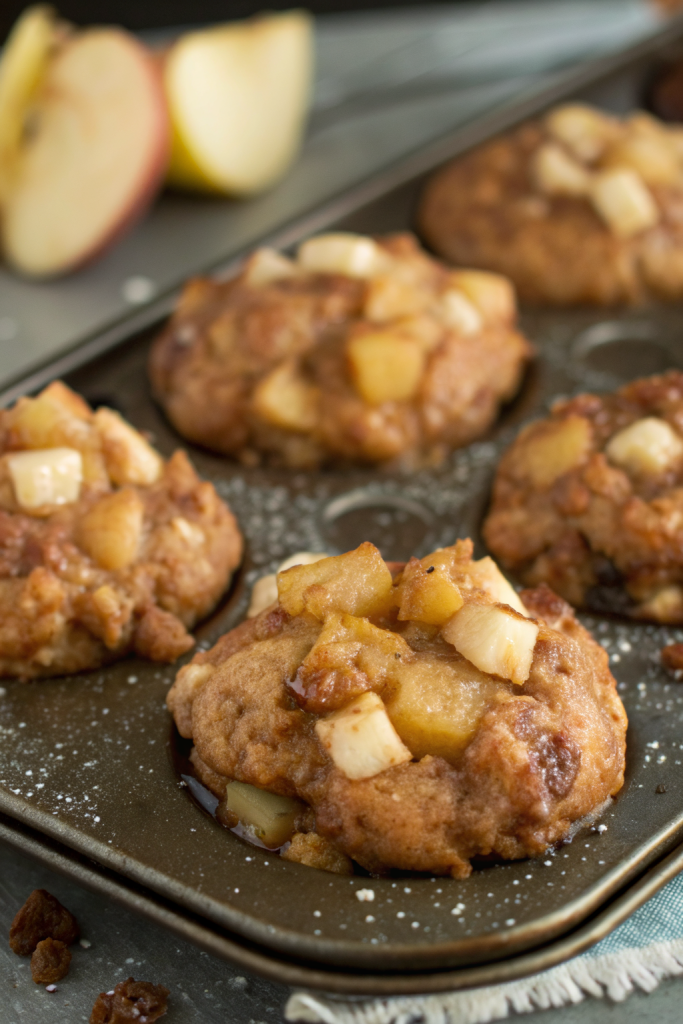
Baked Apple Fritters with Glaze taste like apple pie and a doughnut had a cozy little brunch, and I happily third-wheeled. They work perfectly for anyone who wants bakery-style fritters in about 45 minutes without deep frying or fancy equipment. I tested these on a sleepy Sunday in my tiny kitchen while my dog judged my apple peeling skills from the doorway.
Why Make This Baked Apple Fritters with Glaze at Home
Baked apple fritters skip the deep fryer, so your kitchen smells like a fall bakery, not a diner after a rush. You still get crisp edges, tender centers, and plenty of cinnamon-spiced apples, but with less oil and less mess.
You also control the sweetness, the spice level, and the glaze thickness. That means you can go lighter for breakfast or full dessert mode with extra glaze and ice cream.
“These Baked Apple Fritters with Glaze taste like they came from a fancy bakery, but I made them in yoga pants and slippers. ★★★★★”
Ingredients You Need
For the baked apple fritters
-
All-purpose flour
- Use a standard unbleached flour like King Arthur or Gold Medal.
- Avoid cake flour, since it softens the structure too much.
-
Granulated sugar
- White sugar keeps the crumb light and lets the apple flavor shine.
-
Brown sugar
- Light or dark both work; dark brown adds deeper caramel notes.
-
Baking powder
- This lifts the fritters so they puff nicely in the oven.
- Check the date on the can; fresh baking powder gives better rise.
-
Fine sea salt
- Salt sharpens the flavors and balances the sweetness.
-
Ground cinnamon
- Cinnamon pairs with apples and gives that classic fritter flavor.
- Use a fresh jar; old spice tastes flat.
-
Ground nutmeg (optional)
- A pinch adds warmth and a bakery-style aroma.
-
Whole milk or 2% milk
- Whole milk gives richer flavor, but 2% still works well.
- You can swap with unsweetened oat or almond milk if needed.
-
Large eggs
- Use room temperature eggs so the batter mixes smoothly.
-
Unsalted butter, melted and slightly cooled
- Butter adds flavor and tenderness.
- You can use a neutral oil like canola in a pinch, but butter tastes better.
-
Vanilla extract
- Real vanilla gives deeper flavor than imitation.
-
Apples
- Use firm, tart-sweet apples like Honeycrisp, Pink Lady, or Granny Smith.
- Peel, core, and chop into small dice so they soften quickly in the oven.
-
Lemon juice
- Toss the chopped apples with lemon juice to keep them bright and add a little tang.
For the glaze
-
Powdered sugar
- Sift it if it looks clumpy so the glaze turns out smooth.
-
Milk or cream
- Milk gives a thinner glaze; cream makes it richer and slightly thicker.
-
Vanilla extract
- Adds flavor so the glaze tastes like more than just sugar.
-
Pinch of salt
- A tiny bit keeps the glaze from tasting one-note sweet.
Pantry shortcuts and swaps
- Use pre-chopped apples from the produce section if you feel short on time.
- Use bottled lemon juice if you do not have fresh lemons.
- Add a spoonful of store-bought caramel sauce on top of the glaze for a caramel apple fritter vibe.
- Sprinkle cinnamon sugar over the fritters right after glazing if you love extra crunch.
Equipment list
- Large mixing bowl
- Medium mixing bowl
- Whisk
- Rubber spatula or wooden spoon
- Small skillet or saucepan (to lightly cook the apples, if you prefer them softer)
- Baking sheet
- Parchment paper or silicone baking mat
- Cooling rack
- Small bowl and spoon for the glaze
- Measuring cups and spoons
- Ice cream scoop or large spoon for portioning the batter
Tips & Mistakes
- Use firm apples so they hold shape; soft apples turn mushy and bleed too much moisture.
- Dice apples small, about pea to blueberry size, so they cook through in the oven.
- Pat the apples dry after you toss them with lemon juice; excess moisture makes soggy fritters.
- Do not overmix the batter; stir until no dry flour shows, then stop to keep the fritters tender.
- Line the pan with parchment; this prevents sticking and helps the bottoms brown evenly.
- Space the fritters apart on the baking sheet; crowding makes them steam instead of crisp.
- Bake until the edges turn deep golden; pale fritters taste doughy and bland.
- Let the fritters cool a few minutes before glazing; hot fritters melt the glaze into a thin puddle.
- Adjust glaze thickness with tiny amounts of liquid; a few extra drops of milk change it quickly.
- Eat them the same day if you can; baked fritters taste best within a few hours of glazing.
How to Make Baked Apple Fritters with Glaze
Step 1: Prep the apples
Peel, core, and dice the apples into small pieces. Toss them with lemon juice in a bowl so they stay bright and flavorful. If you like softer apples, sauté them in a small skillet with a teaspoon of butter and a spoonful of brown sugar for 3 to 4 minutes, then cool slightly.
Step 2: Mix the dry ingredients
In a large mixing bowl, whisk together flour, granulated sugar, brown sugar, baking powder, salt, cinnamon, and nutmeg. Break up any brown sugar clumps with your fingers or the whisk. Set the bowl aside while you mix the wet ingredients.
Step 3: Mix the wet ingredients
In a medium bowl, whisk the eggs until smooth. Add milk, melted butter, and vanilla, then whisk until the mixture looks creamy and combined. Make sure the butter feels warm, not hot, so it does not scramble the eggs.
Step 4: Combine batter and apples
Pour the wet mixture into the dry ingredients. Stir gently with a spatula until the flour disappears and the batter looks thick and slightly lumpy. Fold in the diced apples so they spread evenly through the batter.
Step 5: Portion and shape the fritters
Line a baking sheet with parchment paper or a silicone mat. Use an ice cream scoop or large spoon to drop mounds of batter onto the sheet, leaving space between each fritter. Gently flatten and nudge the mounds into rough, craggy rounds so they bake with those classic fritter edges.
Step 6: Bake until golden
Heat the oven to 400°F while you shape the fritters. Bake the fritters for 14 to 18 minutes, until the edges turn deep golden and a toothpick in the center comes out with a few moist crumbs. Move the fritters to a cooling rack and let them cool for about 10 minutes.
Step 7: Mix the glaze
In a small bowl, whisk powdered sugar, vanilla, a pinch of salt, and a tablespoon of milk or cream. Add more liquid a teaspoon at a time until the glaze flows slowly off the spoon like thick syrup. Taste and adjust the salt or vanilla if you want more flavor.
Step 8: Glaze the fritters
Place the cooling rack over the used baking sheet to catch drips. Spoon glaze over each fritter or dip the tops directly into the bowl, then let the excess drip off. Let the glaze set for 5 to 10 minutes, then serve while the fritters still feel slightly warm.
Variations I've Tried
I swap half the apples with diced pears for a softer, slightly floral fritter that tastes great with extra cinnamon. I add a handful of chopped toasted pecans or walnuts to the batter when I want more crunch. I stir a little maple syrup into the glaze and sprinkle flaky salt on top for a maple apple fritter twist.
I also add a pinch of cardamom with the cinnamon when I crave a bakery-style spice blend. In fall, I swap some of the milk with apple cider and add extra cinnamon for a cider fritter version. When kids help, I drizzle the glaze in zigzags and let them sprinkle a tiny bit of cinnamon sugar on top.
How to Serve Baked Apple Fritters with Glaze
Serve baked apple fritters warm or at room temperature, with the glaze just set and slightly crackly. Pair them with hot coffee, chai, or a big mug of cocoa for a cozy breakfast or snack. Add a scoop of vanilla ice cream or cinnamon ice cream on the side if you want a full dessert plate. For a brunch spread, stack them on a platter and tuck in a few apple slices and cinnamon sticks for a simple garnish.
How to store
- Store leftover fritters in an airtight container at room temperature for up to 1 day for best texture.
- Keep them in the fridge for up to 3 days; the glaze may firm up, but the fritters stay tasty.
- Freeze unglazed fritters on a baking sheet until solid, then move them to a freezer bag for up to 2 months.
- Reheat fritters in a 325°F oven or toaster oven for 6 to 8 minutes until warm and slightly crisp, then glaze right before serving or refresh the existing glaze with a light extra drizzle.
Baked Apple Fritters with Glaze
Ingredients
Instructions
- Peel, core, and finely dice the apples. Toss them with the lemon juice in a bowl to keep them bright and flavorful, then pat dry to remove excess moisture.
- In a large mixing bowl, whisk together the flour, granulated sugar, brown sugar, baking powder, salt, cinnamon, and nutmeg, breaking up any brown sugar clumps.
- In a medium bowl, whisk the eggs until smooth. Add the milk, melted (but not hot) butter, and vanilla, and whisk until creamy and fully combined.
- Pour the wet mixture into the dry ingredients. Stir gently with a spatula just until no dry flour remains and the batter is thick and slightly lumpy. Fold in the diced apples until evenly distributed.
- Line a baking sheet with parchment paper or a silicone baking mat. Heat the oven to 400°F (200°C).
- Use an ice cream scoop or large spoon to drop mounds of batter onto the prepared baking sheet, leaving space between each fritter. Gently flatten and nudge each mound into a rough, craggy round for classic fritter texture.
- Bake for 14 to 18 minutes, or until the edges are deep golden and a toothpick inserted in the center of a fritter comes out with a few moist crumbs. Transfer the fritters to a cooling rack and let cool for about 10 minutes.
- In a small bowl, whisk together the powdered sugar, vanilla, pinch of salt, and 2 tablespoons of milk or cream. Add more liquid a teaspoon at a time until the glaze flows slowly off the spoon like thick syrup.
- Place the cooling rack over the used baking sheet to catch drips. Spoon the glaze over each warm fritter, or dip the tops into the glaze and let the excess drip off. Let the glaze set for 5 to 10 minutes, then serve while the fritters are still slightly warm.
Notes
Approximate per fritter (1 of 12): 230 calories; fat 8 g; saturated fat 4 g; carbohydrates 36 g; fiber 1 g; sugars 22 g; protein 4 g; sodium 170 mg. Values will vary based on exact ingredients, brands, and portion size.