
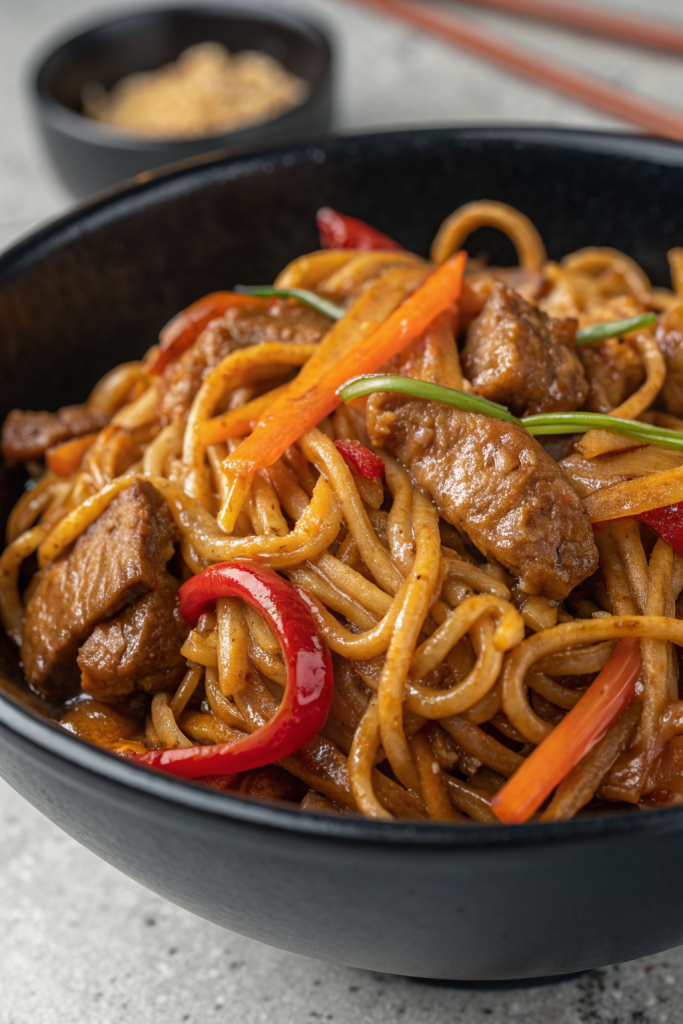
Beef Udon Noodles Recipe hits every comfort-food note: bouncy noodles, tender beef, and a savory broth that tastes rich but still feels light enough for a weeknight. It suits busy home cooks who want a cozy bowl of Japanese-style noodles on the table in about 35–40 minutes. I first cooked this on a rainy Tuesday, and my family still brings up “that noodle night” like it counts as a holiday.
Why Make This Beef Udon Noodles Recipe at Home
You control everything at home: the salt level, the spice, the amount of beef, and how many noodles you pile into the bowl. Restaurant bowls taste great, but they often skimp on the good stuff or taste too salty.
You also use pantry shortcuts and frozen udon, so the whole recipe fits into a weeknight schedule. Once you cook it once, you basically keep the method in your back pocket and riff on it whenever cravings hit.
“This Beef Udon Noodles Recipe tastes like a cozy noodle bar at home, with tender beef, chewy udon, and deep savory broth in under 40 minutes ★★★★★”
Ingredients You Need
Udon and Beef
-
Frozen udon noodles
- I like Sanuki-style frozen udon for the best chewy texture.
- Use 2 to 3 bricks (about 24 ounces total) depending on how noodle-heavy you like your bowl.
- You can use shelf-stable udon in a pinch, but frozen gives a better bite.
-
Beef
- 1 pound thinly sliced beef: ribeye, sirloin, or hot pot / shabu-shabu style slices.
- Ask the butcher to slice it thin, or partially freeze a steak and slice it yourself.
- You can use ground beef if needed, but sliced beef gives a nicer slurpable texture.
Vegetables
-
Onion
- 1 medium yellow onion, thinly sliced.
- Sweet onion also works and adds a mild sweetness to the broth.
-
Carrots
- 1 large carrot, cut into matchsticks or thin half-moons.
- Pre-shredded carrots save time and work fine.
-
Mushrooms
- 6 to 8 ounces shiitake or cremini, sliced.
- Dried shiitakes add deep umami if you soak them first and use the soaking liquid in the broth.
-
Greens
- 2 cups baby spinach or chopped bok choy.
- Napa cabbage or regular green cabbage also work and hold texture well.
-
Green onions
- 4 to 5 stalks, thinly sliced, white and green parts separated.
- Use the white parts in the sauté and the green parts as garnish.
Aromatics and Flavor Base
-
Garlic
- 3 to 4 cloves, minced.
- Garlic paste from a tube works when you feel tired; use 1 to 1½ teaspoons.
-
Ginger
- 1 tablespoon fresh ginger, minced or grated.
- Ginger paste from a tube works; I use the Gourmet Garden style often.
-
Neutral oil
- 1 to 2 tablespoons canola, grapeseed, or avocado oil.
- Avoid strong oils like extra virgin olive oil, which can fight the broth flavor.
Broth and Seasoning
-
Beef broth or stock
- 6 cups low-sodium beef broth.
- Low-sodium gives you room to season with soy sauce and mirin without over-salting.
-
Soy sauce
- ¼ cup regular soy sauce.
- Use low-sodium soy if your broth already tastes salty; start with 3 tablespoons and adjust.
-
Mirin
- 3 tablespoons mirin for gentle sweetness and gloss.
- If you cannot find mirin, use 2 tablespoons sugar plus 1 tablespoon rice vinegar.
-
Oyster sauce
- 1 to 2 tablespoons for depth and umami.
- Hoisin sauce works in a pinch but tastes sweeter, so use a lighter hand.
-
Sesame oil
- 1 teaspoon toasted sesame oil at the end for aroma.
- A little goes a long way, so measure instead of pouring straight from the bottle.
-
Salt and black pepper
- Season to taste at the end.
- Taste the broth after it simmers with soy and mirin before you add extra salt.
Optional Heat
-
Chili crisp or chili oil
- Add to individual bowls for spice lovers.
- This keeps the main pot kid friendly.
-
Shichimi togarashi (Japanese seven-spice)
- Sprinkle on top for a citrusy, peppery kick.
Toppings
- Extra sliced green onions
- Toasted sesame seeds
- Soft-boiled egg or jammy egg halves
- Nori strips or furikake
- A small knob of grated ginger on top for extra brightness
Equipment List
- Large stock pot or Dutch oven
- Tongs or chopsticks for handling noodles and beef
- Ladle for serving broth
- Cutting board and sharp knife
- Small pot for pre-cooking udon if the package calls for it
- Fine mesh strainer if you use dried mushrooms and want to strain the soaking liquid
Tips & Mistakes
-
Slice beef very thin so it cooks quickly and stays tender.
-
Partially freeze the beef for 20 to 30 minutes to make thin slicing easier.
-
Do not boil the beef hard; simmer gently so it stays juicy.
-
Add beef near the end of cooking to avoid tough, overcooked meat.
-
Use low-sodium broth so you control the salt with soy sauce and mirin.
-
Taste the broth before you add more soy; you can always add more, but you cannot take it out.
-
Skim any foam from the top of the broth for a cleaner flavor.
-
Avoid too much sesame oil; a small drizzle at the end adds aroma without overpowering.
-
Cook frozen udon just until they loosen and separate, then drain.
-
Do not overcook udon or they turn mushy and lose that signature chew.
-
Rinse cooked udon briefly under warm water to remove excess starch.
-
Add noodles to bowls first, then pour hot broth over them so they keep a better texture.
-
Slice vegetables thin so they cook quickly and stay tender-crisp.
-
Add delicate greens like spinach at the very end so they wilt gently.
-
Do not crowd the pot when you sauté onions and mushrooms; give them space so they brown instead of steam.
-
Stir aromatics constantly so garlic and ginger do not burn.
-
Keep spice optional by serving chili oil or shichimi on the side.
-
Prep toppings while the broth simmers so you plate everything quickly.
-
Use what you have in the fridge; this recipe forgives small swaps like cabbage for bok choy.
-
Store noodles and broth separately so leftovers stay closer to fresh.
How to Make Beef Udon Noodles Recipe
Step 1: Sauté veggies and aromatics
Heat oil in a large stock pot or Dutch oven over medium heat. Once hot, add onions and carrots; cook until soft, about 8 minutes. Stir in garlic, ginger, and the white parts of the green onions; cook 2 minutes, until everything smells fragrant. Season lightly with salt and a pinch of black pepper.
Step 2: Build the broth
Add mushrooms to the pot and cook 3 to 4 minutes until they soften and release some liquid. Pour in beef broth and bring it up to a gentle boil, then lower to a steady simmer. Stir in soy sauce, mirin, and oyster sauce. Let the broth simmer 10 to 15 minutes so the flavors deepen and the vegetables turn tender.
Step 3: Cook the udon noodles
While the broth simmers, cook frozen udon according to package directions. Most brands just need a quick boil of 1 to 2 minutes until the bricks loosen and separate. Stir gently with chopsticks or tongs so the noodles do not break. Drain the noodles and rinse briefly under warm water, then set aside.
Step 4: Cook the beef
Taste the broth and adjust seasoning with more soy sauce or a pinch of salt if needed. Increase heat slightly so the broth simmers more actively, then add the sliced beef in loose handfuls. Stir gently and cook 2 to 3 minutes until the beef turns just cooked through and still looks tender. Add spinach or bok choy and cook 1 to 2 minutes until the greens wilt.
Step 5: Finish and assemble
Turn off the heat and stir in toasted sesame oil. Divide udon noodles among serving bowls. Ladle hot beef and vegetable broth over the noodles, making sure each bowl gets plenty of beef and veggies. Top with sliced green onion greens, sesame seeds, and any extra toppings like soft-boiled egg or chili crisp.
Variations I've Tried
-
Spicy Beef Udon Noodles Recipe
Stir in 1 to 2 tablespoons chili paste or a spoonful of chili crisp with the aromatics. Add a pinch of shichimi to each bowl for extra heat. Keep a mild pot and spice individual bowls if you cook for kids. -
Miso Beef Udon Noodles Recipe
Whisk 2 to 3 tablespoons white or yellow miso with a ladle of hot broth in a small bowl. Stir that mixture back into the pot at the very end with the heat off. This keeps the miso flavor bright and adds a creamy, savory note. -
Veggie-heavy Beef Udon Noodles Recipe
Load the pot with extra mushrooms, cabbage, and bok choy, and use a bit less beef. Add thinly sliced bell peppers or snap peas in the last few minutes for crunch. This version tastes lighter but still feels hearty. -
One-pot shortcut version
Cook udon directly in the broth in the last 3 to 4 minutes if you plan to eat everything right away. Stir often so noodles do not stick. I only use this method when no leftovers stay on the table, since noodles soak up broth in the fridge. -
Lean beef swap
Use thinly sliced flank steak or top round and marinate it 15 minutes in 1 tablespoon soy sauce and 1 teaspoon cornstarch. This quick marinade helps the lean cuts stay tender. Add the marinated beef at the end just like the regular version.
How to Serve Beef Udon Noodles Recipe
Serve Beef Udon Noodles Recipe piping hot in deep bowls so the broth stays warm and cozy. Add noodles first, then beef, veggies, and finally ladle broth over everything so the toppings sit nicely on top. Offer a tray of toppings at the table: sliced green onions, sesame seeds, chili oil, shichimi, nori strips, and soft-boiled eggs. Pair the bowls with simple sides like cucumber salad, steamed edamame, or a small plate of pickled veggies to round out the meal.
How to store
- Fridge, noodles and broth separate: Store broth with beef and veggies in an airtight container up to 3 days, and keep cooked udon in a separate container with a tiny drizzle of oil to prevent sticking.
- Fridge, noodles in broth: If you already mixed everything, store up to 2 days and expect softer noodles.
- Freezer: Freeze only the broth with beef and veggies up to 2 months; cook fresh udon when you reheat.
- Reheating on stove: Heat broth to a gentle simmer in a pot, add noodles, and warm 1 to 2 minutes until hot.
- Reheating in microwave: Place noodles and broth in a microwave-safe bowl, cover loosely, and heat in 60-second bursts, stirring between each, until steaming hot.