
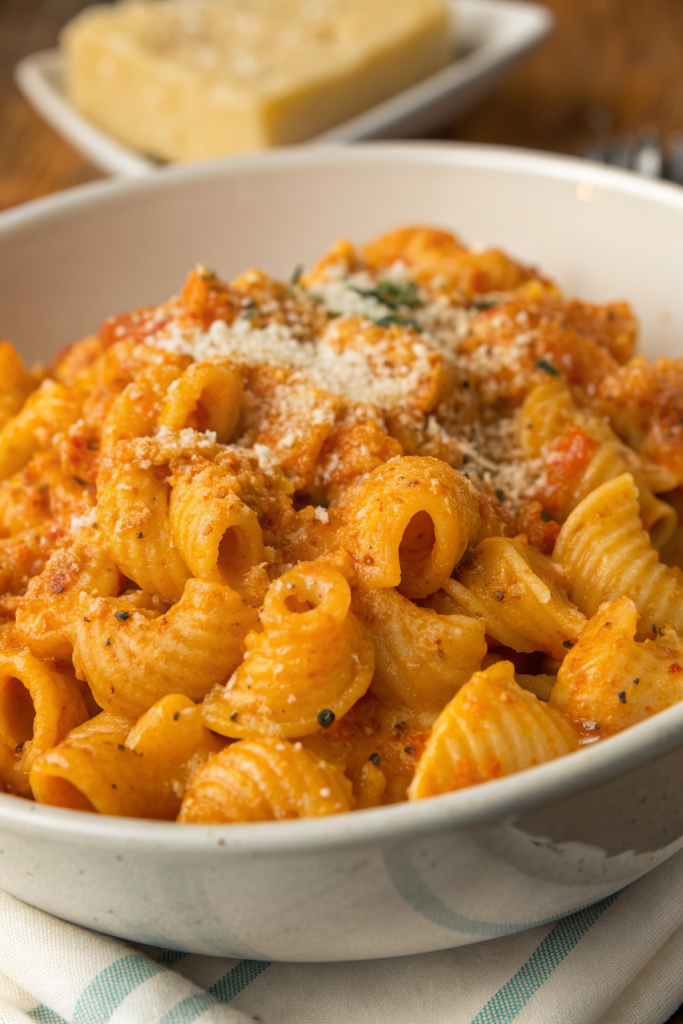
Butternut Squash Pasta Sauce Recipe tastes creamy, cozy, and slightly sweet with a savory backbone that hugs every noodle. It works perfectly for busy weeknights because you can finish it in about 40 minutes, start to finish. I first made this on a chilly Tuesday when my kids asked for “mac and cheese but not orange powder,” and this sauce saved the evening.
Why Make This Butternut Squash Pasta Sauce Recipe at Home
Homemade butternut squash pasta sauce tastes richer and cleaner than anything from a jar. You control the salt, the sweetness, and the texture, so it fits your taste instead of the other way around.
You also sneak in a pile of vegetables while everyone at the table thinks they eat a bowl of creamy comfort. The sauce freezes well, so you cook once and enjoy several easy dinners later.
“This Butternut Squash Pasta Sauce Recipe tastes like a cozy fall hug in a bowl, and nobody guessed it had zero cream in it. ★★★★★”
Ingredients You Need
Main ingredients
- 1 medium butternut squash, about 2 to 2½ pounds, peeled, seeded, and cubed
- Frozen butternut squash works great and saves time; choose plain, not seasoned.
- 2 tablespoons olive oil or avocado oil
- 1 medium yellow onion, diced
- 1 medium carrot, peeled and diced
- 3 to 4 garlic cloves, minced
- 1 teaspoon grated fresh ginger
- 1 to 2 teaspoons harissa paste
- Use mild harissa if you cook for kids; swap with ½ teaspoon smoked paprika if you prefer no heat.
- 1 teaspoon ground coriander
- ½ teaspoon ground turmeric
- ½ teaspoon dried thyme or Italian seasoning
- 3 cups low sodium vegetable broth or chicken broth
- I like Better Than Bouillon because it gives strong flavor without cluttering the pantry with cartons.
- ¼ to ½ cup canned coconut milk or half-and-half
- Use full-fat coconut milk for dairy free creaminess.
- 2 tablespoons grated Parmesan cheese, plus more for serving
- Use a wedge and grate it fresh; it melts smoother than pre-shredded.
- 1 to 2 teaspoons maple syrup or honey, to taste
- This balances the natural squash flavor without turning the sauce into dessert.
- 1 to 2 tablespoons butter (optional, for extra richness)
- Salt and black pepper, to taste
- 12 to 16 ounces pasta of choice
- Short shapes like rigatoni, penne, or shells hold the sauce best; whole wheat or chickpea pasta also work.
Optional flavor boosters
- Pinch of red pepper flakes, for extra heat
- ¼ teaspoon nutmeg, for a cozy note
- 1 tablespoon miso paste, for deeper umami
- Fresh sage or rosemary, finely chopped, stirred in at the end
Pantry shortcuts
- Use pre-cut fresh squash or frozen squash to skip peeling and chopping.
- Use jarred minced garlic and ginger if you feel tired or rushed.
- Use boxed broth or bouillon paste; just taste and adjust salt at the end.
Equipment
- Large stock pot or Dutch oven
- Sharp chef’s knife and vegetable peeler
- Cutting board
- Wooden spoon or spatula
- Blender: immersion blender (easiest) or countertop blender
- Large pot for boiling pasta
- Colander
- Measuring cups and spoons
Tips & Mistakes
- Salt in layers while you cook instead of dumping it all in at the end.
- Cut squash and carrots into similar size pieces so they cook at the same rate.
- Sauté the onion until it turns soft and lightly golden to build flavor; do not rush this step.
- Toast the spices in the oil for a minute so they bloom and taste deeper.
- Add broth gradually if you want a thicker sauce; thin it later if needed.
- Blend the sauce until silky; leave a few tiny bits if you like a rustic texture.
- Taste before you add sweetener; squash varies in sweetness and sometimes needs only a tiny drizzle.
- Stir in dairy or coconut milk off the heat so it stays smooth and does not curdle.
- Reserve a cup of starchy pasta water and use it to loosen the sauce so it clings to the pasta.
- Do not overcook the pasta; stop at al dente so it holds up under the creamy sauce.
How to Make Butternut Squash Pasta Sauce Recipe
Step 1: Sauté veggies and aromatics
Heat oil in a large stock pot or Dutch oven over medium heat. Once hot, add onions and carrots and cook until soft, about 8 minutes, while you stir occasionally. Add garlic and ginger and cook 1 to 2 minutes until they smell fragrant but not burnt.
Stir in harissa, coriander, turmeric, and dried thyme. Cook about 1 minute so the spices toast and deepen in flavor. Sprinkle with a pinch of salt and pepper.
Step 2: Add squash and simmer
Add the cubed butternut squash to the pot and stir to coat it in the spiced oil mixture. Pour in the broth until it just covers the vegetables; you can hold back a little if you prefer a thicker sauce. Bring the mixture to a gentle boil over medium-high heat.
Lower the heat to maintain a steady simmer. Cook 15 to 20 minutes, until the squash and carrots feel very tender when you poke them with a fork. Taste the broth and adjust salt and pepper so the base already tastes good.
Step 3: Blend the sauce
Turn off the heat. Use an immersion blender directly in the pot and blend until the sauce turns very smooth and velvety. If you use a countertop blender, work in batches, fill it only halfway, vent the lid slightly, and cover with a towel so hot liquid does not escape.
Blend until no chunks remain. If the sauce looks too thick for your taste, add a splash of broth or water and blend again. Return the sauce to low heat if it cooled down too much.
Step 4: Add creaminess and balance
Stir in coconut milk or half-and-half, starting with ¼ cup and adding more if you want a richer sauce. Add Parmesan cheese and butter if you use them, then stir until everything melts and blends. Taste and add 1 to 2 teaspoons maple syrup or honey to balance the flavors.
Adjust salt, pepper, and heat level with more harissa or red pepper flakes if you like. If the sauce tastes flat, add a small squeeze of lemon juice or a teaspoon of miso to brighten it. Keep the sauce on low heat while you cook the pasta.
Step 5: Cook the pasta
Bring a large pot of salted water to a boil. Add your pasta and cook until al dente, following the package time but checking a minute early. Scoop out about 1 cup of pasta water and set it aside.
Drain the pasta. Add the hot pasta directly into the pot of butternut squash sauce. Toss gently and add splashes of pasta water until the sauce coats every piece of pasta in a glossy layer.
Step 6: Finish and serve
Taste one noodle with sauce and adjust seasoning one last time. Add extra Parmesan and a drizzle of olive oil on top if you want more richness. Sprinkle with chopped fresh herbs like sage, parsley, or rosemary.
Serve the butternut squash pasta hot in warm bowls. Add a side of garlic bread or a crisp salad to round out the meal. Watch it disappear faster than boxed mac and cheese.
Variations I've Tried
-
Extra cheesy version: Stir in an extra ½ cup Parmesan and ½ cup shredded mozzarella after blending. The sauce turns stretchy and feels closer to a butternut squash Alfredo. Kids usually ask for seconds of this version.
-
Vegan butternut squash pasta sauce: Use vegetable broth, coconut milk, and skip the Parmesan and butter. Add 1 tablespoon nutritional yeast and 1 teaspoon miso paste for cheesy, savory flavor. Finish with toasted pumpkin seeds on top for crunch.
-
Smoky chipotle version: Swap harissa for 1 minced chipotle pepper in adobo and 1 teaspoon of the adobo sauce. Add smoked paprika and a squeeze of lime at the end. This version tastes amazing with black bean pasta or whole wheat shells.
-
Herby sage version: Sizzle 6 to 8 fresh sage leaves in a tablespoon of butter or oil until crisp. Crumble the sage into the finished sauce and drizzle the browned butter or oil on top. This version tastes great with short pasta and a simple green salad.
-
Protein-packed version: Stir in cooked Italian chicken sausage, ground turkey, or white beans after you blend the sauce. Simmer a few minutes so the flavors mingle. This turns the dish into a full one-pot dinner.
How to Serve Butternut Squash Pasta Sauce Recipe
Serve this butternut squash pasta sauce over hot pasta and top it with extra Parmesan and a sprinkle of fresh herbs. Add a simple green salad with lemony dressing or a chopped salad with crunchy veggies to balance the creamy sauce. Garlic bread, focaccia, or warm crusty bread also pair nicely and help scoop up every last bit of sauce. Kids usually enjoy it with a side of steamed broccoli or peas, which tuck right into the saucy pasta.
How to store
- Cool the sauce completely before you pack it up.
- Store leftover sauce (without pasta) in an airtight container in the fridge for up to 4 days.
- Store leftover sauced pasta in the fridge for 3 days; add a splash of broth or water when you reheat it.
- Freeze the sauce (without pasta) in freezer-safe containers or bags for up to 3 months; leave a little space at the top for expansion.
- Reheat gently on the stove over low heat, adding a splash of broth, water, or milk to loosen the texture and stirring often.
- Reheat single portions in the microwave in short bursts, stirring between each burst so the sauce heats evenly and stays creamy.
Butternut Squash Pasta Sauce Recipe
Ingredients
Instructions
- Heat the olive oil or avocado oil in a large stock pot or Dutch oven over medium heat. Add the diced onion and carrot and cook, stirring occasionally, until soft, about 8 minutes.
- Add the minced garlic and grated ginger and cook for 1 to 2 minutes, until fragrant but not browned.
- Stir in the harissa paste, ground coriander, turmeric, and dried thyme or Italian seasoning. Cook for about 1 minute to toast the spices, then season with a pinch of salt and black pepper.
- Add the cubed butternut squash to the pot and stir to coat in the spiced oil mixture. Pour in enough broth to just cover the vegetables. Bring to a gentle boil over medium-high heat, then reduce to a steady simmer.
- Simmer for 15 to 20 minutes, until the squash and carrots are very tender when pierced with a fork. Taste the broth and adjust salt and pepper so the base is well seasoned.
- Turn off the heat and use an immersion blender to blend the mixture directly in the pot until completely smooth and velvety. If using a countertop blender, blend in batches, venting the lid slightly and covering with a towel. Add a splash of broth or water if the sauce seems too thick.
- Return the smooth sauce to low heat if needed. Stir in 1/4 to 1/2 cup coconut milk or half-and-half, the grated Parmesan cheese, and butter if using. Stir until melted and combined, then add 1 to 2 teaspoons maple syrup or honey to balance the flavors. Adjust salt, pepper, and heat level to taste.
- Meanwhile, bring a large pot of salted water to a boil. Cook the pasta according to package directions until al dente. Reserve about 1 cup of starchy pasta water, then drain the pasta.
- Add the hot pasta directly to the pot of butternut squash sauce and toss gently, adding splashes of reserved pasta water as needed so the sauce coats the pasta in a glossy layer.
- Taste and adjust seasoning one last time. Serve hot, topped with extra Parmesan cheese, a drizzle of olive oil if desired, and chopped fresh herbs such as sage, parsley, or rosemary.
Notes
Approximate per serving (1/6 of recipe, using 12 ounces pasta, vegetable broth, 1/4 cup half-and-half, and 2 tablespoons Parmesan): 390 calories; fat 12 g; saturated fat 4 g; carbohydrates 62 g; fiber 6 g; sugars 8 g; protein 13 g; sodium 520 mg. Values will vary based on brands, pasta type, dairy choice, and portion size.