
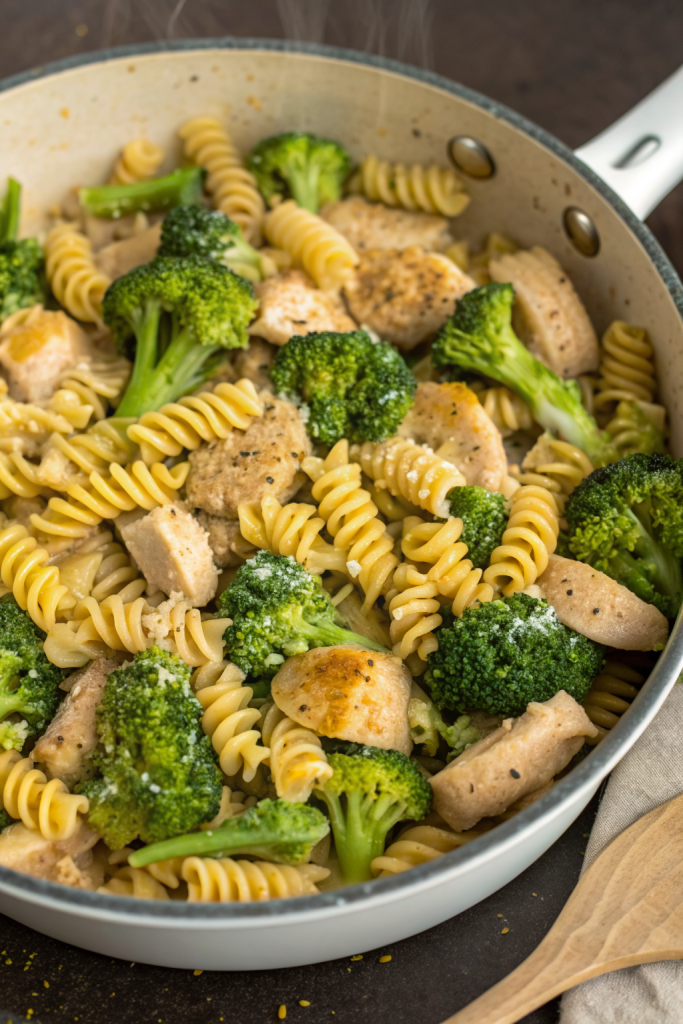
Chicken and Broccoli Pasta Recipe brings tender chicken, crisp-tender broccoli, and a creamy garlic parmesan sauce together in one cozy bowl. It works perfectly for busy weeknights, feeds picky eaters and pasta lovers, and lands on the table in about 30–35 minutes. I’ve cooked some version of this dish since my broke-college-kid days, and it still shows up in my regular dinner rotation.
Why You Should Try This Chicken and Broccoli Pasta Recipe
This chicken and broccoli pasta recipe tastes creamy, garlicky, and cheesy, with just enough lemon and seasoning to keep it from feeling heavy. The broccoli adds freshness and crunch, so the bowl feels comforting without knocking you into a food coma.
You cook everything in stages in one pot and one skillet, so cleanup stays easy. The recipe uses simple ingredients you probably already keep around, which makes it a weeknight hero.
“This Chicken and Broccoli Pasta Recipe tastes like something from a cozy Italian restaurant, but it comes together faster than takeout and disappears just as fast. ★★★★★”
Ingredients You’ll Need
You can adjust amounts a bit to taste, but these measurements give you a generous 4 servings.
Pasta & Protein
- 12 ounces short pasta
- Penne, rotini, fusilli, or farfalle all work well.
- Whole wheat pasta or chickpea pasta also work if you want more fiber or protein.
- 1 pound boneless skinless chicken breast, cut into bite-size pieces
- Chicken thighs stay extra juicy and also work nicely.
- 1 teaspoon kosher salt, divided, plus more to taste
- ½ teaspoon black pepper, divided
- ½ teaspoon Italian seasoning or dried oregano
Vegetables
- 3 cups small broccoli florets, fresh or frozen
- If you use frozen broccoli, do not thaw; add straight from the freezer and cook a bit longer.
- 3 cloves garlic, minced
- ¼ teaspoon crushed red pepper flakes (optional, for a gentle kick)
Sauce
- 2 tablespoons olive oil
- 1 tablespoon butter
- 1½ cups low-sodium chicken broth
- Boxed broth works fine; I often use Better Than Bouillon mixed with water.
- 1 cup heavy cream
- Half-and-half works if you want it a bit lighter; the sauce will just feel slightly thinner.
- ¾ cup freshly grated parmesan cheese, plus extra for serving
- Use a wedge and grate it yourself; the pre-shredded kind can turn the sauce grainy.
- 1 teaspoon Dijon mustard
- This does not make the sauce taste like mustard; it just adds depth and tang.
- Zest of ½ lemon
- 1–2 teaspoons lemon juice, to taste
Optional Add-ins
- ½ cup frozen peas
- ¼ cup sun-dried tomatoes, finely chopped
- 2 tablespoons chopped fresh parsley or basil for garnish
Pantry Shortcuts
- Use pre-cut broccoli florets from a bag to save chopping time.
- Use pre-minced garlic from a jar if you feel tired; just add a little extra for more flavor.
- Rotisserie chicken works if you want to skip cooking raw chicken; shred about 2 cups and add near the end.
Equipment
- Large pot for boiling pasta
- Large deep skillet or sauté pan
- Tongs or a slotted spoon
- Measuring cups and spoons
- Wooden spoon or silicone spatula
- Microplane or small grater for lemon zest and parmesan
Tips & Tricks
- Salt the pasta water generously so the pasta and broccoli taste seasoned from the inside out.
- Cut the chicken into even, small pieces so it cooks quickly and stays juicy.
- Brown the chicken in a single layer and avoid crowding the pan so it develops flavor instead of steaming.
- Cook the broccoli until crisp-tender; pull it off the heat while it still looks bright green.
- Reserve at least 1 cup of starchy pasta water before draining; it helps adjust sauce thickness.
- Add parmesan off the heat and stir constantly so it melts smoothly and does not clump.
- Taste the sauce before serving and adjust salt, pepper, and lemon juice so the flavors pop.
- Stir the pasta gently in the sauce so the noodles stay intact and the broccoli does not break apart.
- Use a nonstick or well-seasoned pan if cheese tends to stick in your kitchen.
- If the sauce thickens too much, loosen it with warm pasta water a splash at a time.
How to Make Chicken and Broccoli Pasta Recipe
Step 1: Boil the Pasta and Broccoli
- Bring a large pot of water to a boil and salt it generously.
- Add the pasta and cook it until just shy of al dente, usually 1–2 minutes less than the package suggests.
- During the last 2–3 minutes of pasta cooking, add the broccoli florets to the same pot.
- Scoop out 1 cup of pasta water, then drain the pasta and broccoli together and set them aside.
Step 2: Cook the Chicken
- While the pasta cooks, heat 1 tablespoon olive oil in a large skillet over medium-high heat.
- Pat the chicken pieces dry with paper towels, then season them with ½ teaspoon salt, ¼ teaspoon pepper, and Italian seasoning.
- Add the chicken to the hot skillet in a single layer and let it sear without moving for 2–3 minutes.
- Stir and cook another 3–4 minutes until the chicken pieces cook through and show golden spots.
- Transfer the cooked chicken to a plate and keep it nearby.
Step 3: Build the Garlic Cream Sauce
- Lower the heat to medium and add the remaining 1 tablespoon olive oil and 1 tablespoon butter to the same skillet.
- Add the minced garlic and red pepper flakes and stir for about 30 seconds until the garlic smells fragrant.
- Pour in the chicken broth and scrape up any browned bits from the bottom of the pan with a wooden spoon.
- Stir in the Dijon mustard and bring the mixture to a gentle simmer.
- Add the heavy cream and stir again, then let the sauce bubble lightly for 3–4 minutes so it thickens slightly.
Step 4: Add Cheese and Seasonings
- Turn the heat to low so the sauce stops bubbling hard.
- Stir in the lemon zest.
- Add the grated parmesan in small handfuls, stirring constantly until it melts and the sauce turns smooth.
- Taste the sauce and season it with the remaining ½ teaspoon salt and ¼ teaspoon pepper, adjusting as needed.
- Add 1 teaspoon lemon juice, taste again, and add more lemon juice if you want extra brightness.
Step 5: Combine Pasta, Chicken, and Broccoli
- Add the cooked chicken, drained pasta, and broccoli to the skillet with the sauce.
- Toss everything together gently until the pasta and broccoli coat evenly and the chicken nestles throughout.
- If the sauce looks too thick, add a splash of reserved pasta water and stir until it reaches your favorite consistency.
- If you use peas or sun-dried tomatoes, stir them in now and heat them through for 1–2 minutes.
- Turn off the heat and let the pasta sit for 2–3 minutes so the sauce clings to the noodles.
Step 6: Garnish and Serve
- Sprinkle extra parmesan over the top.
- Add chopped fresh parsley or basil for color and freshness.
- Serve the chicken and broccoli pasta hot, straight from the skillet or in warm bowls.
- Add a final squeeze of lemon at the table if you like a brighter flavor.
What to Serve with Chicken and Broccoli Pasta Recipe
This chicken and broccoli pasta recipe already covers protein, veggies, and carbs, so you can keep sides simple. A crisp green salad with romaine or mixed greens, cucumbers, and a light vinaigrette balances the creamy sauce nicely. Garlic bread or warm crusty rolls make every bit of sauce disappear from the plate. Pair it with sparkling water, flavored seltzer, or iced tea with lemon for a refreshing drink.
Storage Options
- Store leftovers in an airtight container in the fridge for up to 3–4 days.
- Add a splash of milk, cream, or chicken broth before reheating so the sauce loosens and turns creamy again.
- Reheat gently on the stovetop over low to medium heat, stirring often, or in the microwave in short bursts, stirring between each.
- Freeze portions in freezer-safe containers for up to 2 months, then thaw overnight in the fridge before reheating with a bit of extra liquid.
Chicken and Broccoli Pasta Recipe
Ingredients
Instructions
- Bring a large pot of water to a boil and salt it generously.
- Add the pasta and cook until just shy of al dente, about 1–2 minutes less than package directions.
- During the last 2–3 minutes of cooking, add the broccoli florets to the same pot.
- Reserve 1 cup of pasta water, then drain the pasta and broccoli together and set aside.
- While the pasta cooks, heat 1 tablespoon of the olive oil in a large skillet over medium-high heat.
- Pat the chicken pieces dry, then season with 1/2 teaspoon salt, 1/4 teaspoon pepper, and the Italian seasoning.
- Add the chicken to the hot skillet in a single layer and sear without moving for 2–3 minutes.
- Stir and continue cooking for another 3–4 minutes, until the chicken is cooked through and browned in spots.
- Transfer the chicken to a plate and keep nearby.
- Reduce the heat to medium and add the remaining 1 tablespoon olive oil and the butter to the same skillet.
- Add the minced garlic and red pepper flakes and cook, stirring, for about 30 seconds until fragrant.
- Pour in the chicken broth and scrape up any browned bits from the bottom of the pan.
- Stir in the Dijon mustard and bring the mixture to a gentle simmer.
- Add the heavy cream, stir, and let the sauce bubble lightly for 3–4 minutes to thicken slightly.
- Lower the heat to low so the sauce is no longer boiling hard.
- Stir in the lemon zest.
- Add the grated parmesan cheese in small handfuls, stirring constantly until melted and smooth.
- Season the sauce with the remaining 1/2 teaspoon salt and 1/4 teaspoon pepper, adjusting to taste.
- Stir in 1 teaspoon lemon juice, taste, and add up to 1 teaspoon more if you prefer a brighter flavor.
- Add the cooked chicken, drained pasta, and broccoli to the skillet with the sauce.
- Toss gently until everything is evenly coated and the chicken is distributed throughout.
- If the sauce seems too thick, add a splash of reserved pasta water at a time until it reaches your desired consistency.
- If using peas or sun-dried tomatoes, stir them in and heat through for 1–2 minutes.
- Turn off the heat and let the pasta sit for 2–3 minutes so the sauce clings to the noodles, then garnish with extra parmesan and fresh parsley or basil before serving.
Notes
Approximate per serving (1 of 4): 720 calories; fat 35 g; saturated fat 16 g; carbohydrates 56 g; fiber 4 g; sugars 5 g; protein 47 g; sodium 780 mg. Values are estimates and will vary based on specific brands, pasta shape, and any optional add-ins used.