
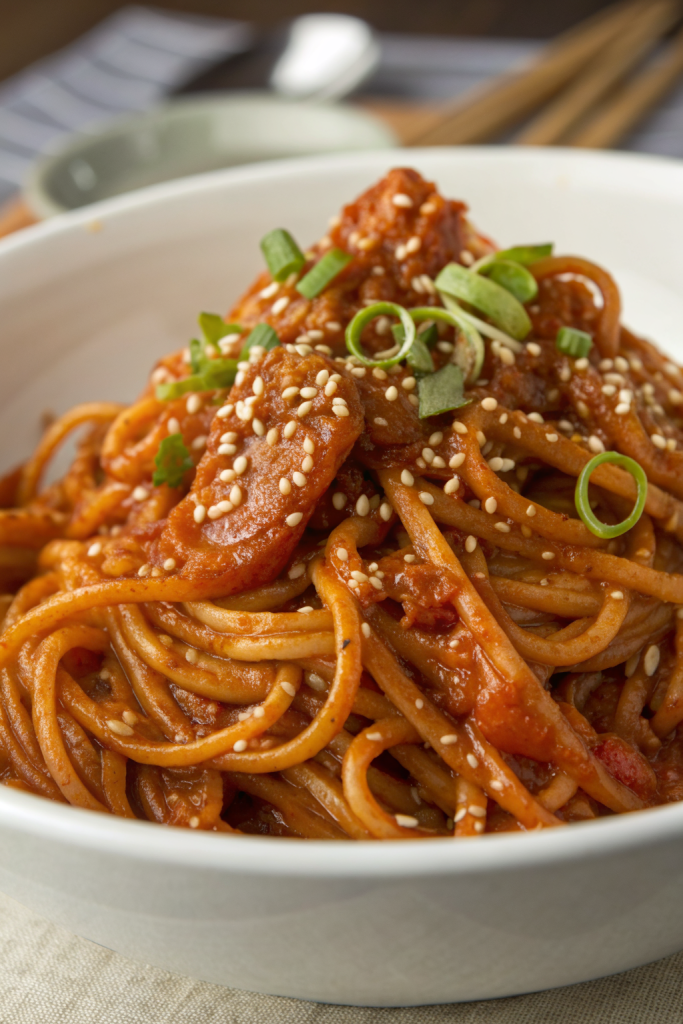
Chilli Garlic Udon Recipe hits all the cravings: chewy noodles, glossy spicy sauce, and a big punch of garlic in under 25 minutes. It suits busy weeknights, spice lovers, and anyone who wants takeout flavor without leaving the couch. I tested this on a Monday when my brain felt like overcooked pasta, and it still came out amazing, so you’re in safe hands.
Why Make This Chilli Garlic Udon Recipe at Home
You get restaurant-style chewy udon with bold chilli garlic flavor, but you control the heat, oil, and salt. The sauce coats every strand, tastes rich and savory, and still feels light enough for a weeknight dinner.
You also use mostly pantry ingredients and frozen udon, so the whole thing comes together faster than delivery. Cleanup stays easy, and you only need one pan plus a pot for the noodles.
“This chilli garlic udon tastes like my favorite noodle bar special, but cleaner and brighter, and it hits the table in under half an hour. ★★★★★”
Ingredients You Need
Udon & Base
-
Frozen udon noodles (2 packs, about 400–450 g total)
- I prefer frozen over dried because they cook quickly and keep that bouncy, chewy texture.
- Use shelf-stable udon if needed; just cook 1–2 minutes less than the package suggests so they stay firm.
-
Neutral oil (2–3 tablespoons)
- Use canola, avocado, sunflower, or peanut oil.
- Avoid extra virgin olive oil because the flavor fights the chilli garlic sauce.
Aromatics & Veggies
-
Garlic (6–8 large cloves, finely minced or grated)
- This recipe leans heavily on garlic, so go generous.
- Use pre-minced jarred garlic in a pinch, but fresh gives a cleaner flavor.
-
Ginger (1 tablespoon, finely minced or grated)
- Adds warmth and brightness that balances the chilli.
- Use ginger paste from a tube if you want a shortcut.
-
Green onions / scallions (4–5, sliced; separate white and green parts)
- White parts go in the pan early, green parts finish the dish.
- Chives work as a backup, but scallions taste best.
-
Veggies of choice (about 2 cups total, sliced thin)
- Great options: bell peppers, carrots, snap peas, cabbage, mushrooms, or baby spinach.
- Use a frozen stir fry mix if you want zero chopping.
Chilli Garlic Sauce
-
Chilli crisp or chilli oil with crunchy bits (2–3 tablespoons, to taste)
- I like Lao Gan Ma or Fly By Jing, but any favorite brand works.
- Adjust the amount based on your heat tolerance.
-
Soy sauce (2–3 tablespoons)
- Use regular or light soy sauce; low-sodium works if you watch salt.
- Avoid dark soy as the only soy; it tastes too intense and colors the noodles too much.
-
Oyster sauce (1–1½ tablespoons)
- Adds deep savory flavor and a slight sweetness.
- Use vegetarian mushroom oyster sauce for a meatless version.
-
Rice vinegar (1–1½ teaspoons)
- Balances the richness and chilli oil.
- Substitute apple cider vinegar if needed; use a touch less since it tastes sharper.
-
Brown sugar or honey (1–2 teaspoons)
- Softens the heat and rounds out the sauce.
- Use maple syrup or regular sugar if that is what you have.
-
Sesame oil (1 teaspoon, added at the end)
- Adds nutty aroma; a little goes a long way.
- Do not cook it too long over high heat or it loses flavor.
-
Water or low-sodium vegetable / chicken broth (2–4 tablespoons)
- Loosens the sauce so it coats the udon instead of clumping.
- Use broth if you want a richer, more savory flavor.
Optional Protein Add-ins
-
Eggs
- Soft scrambled, fried, or jammy boiled eggs sit nicely on top.
- Crack eggs directly into the pan after the veggies if you want them mixed in.
-
Tofu (firm or extra firm, cubed)
- Pan-fry in a little oil until golden, then toss with the noodles.
- Press the tofu first so it browns better.
-
Cooked chicken, shrimp, or beef strips
- Add near the end so they just warm through and stay tender.
- Leftover rotisserie chicken works great here.
Toppings
-
Toasted sesame seeds
- Add crunch and a nutty note.
-
Extra chilli crisp
- For spice fans who always want more heat.
-
Lime wedges
- A squeeze of lime brightens the whole bowl.
-
Extra sliced scallions and cilantro
- Add freshness and color.
Equipment List
- Large nonstick skillet, wok, or wide sauté pan
- Medium pot for boiling udon
- Tongs or chopsticks for tossing noodles
- Cutting board and sharp knife
- Small bowl for mixing sauce ingredients
Tips & Mistakes
- Use frozen udon when possible; it keeps the best chewy texture and avoids mushy noodles.
- Do not overcook the udon; pull them as soon as they loosen and stay slightly firm.
- Mix the sauce ingredients in a bowl before cooking; this keeps the noodles from overcooking while you adjust flavors.
- Keep the heat at medium to medium-high; very high heat can burn garlic and chilli, which turns them bitter.
- Add garlic after the onions soften; garlic burns faster than onions.
- Thinly slice veggies so they cook quickly and stay crisp-tender.
- Dry the noodles lightly after boiling; excess water can dilute the sauce.
- Taste the sauce before adding noodles; adjust salt, sugar, and chilli to your liking.
- Add sesame oil at the end; long cooking dulls its aroma.
- Do not crowd the pan; if you double the recipe, cook in two batches so the noodles fry instead of steam.
How to Make Chilli Garlic Udon Recipe
Step 1: Prep noodles and sauce
Bring a pot of water to a boil and add the frozen udon. Gently separate the strands with chopsticks or tongs as they loosen, then cook just until tender and chewy, usually 1–2 minutes. Drain, rinse quickly with warm water to stop cooking, and set aside.
In a small bowl, whisk together soy sauce, oyster sauce, rice vinegar, brown sugar or honey, chilli crisp, and 2 tablespoons of water or broth. Taste and adjust: add more chilli crisp for heat, more sugar for balance, or a splash more vinegar for brightness.
Step 2: Sauté veggies and aromatics
Heat neutral oil in a large skillet or wok over medium heat. Add the white parts of the scallions and your chosen veggies (start with firm ones like carrots and peppers, then add quick-cooking ones like spinach later). Stir and cook until the veggies turn crisp-tender, about 3–5 minutes.
Add minced garlic and ginger to the pan. Stir constantly and cook about 30–60 seconds until fragrant, so the garlic softens but does not brown. If you use quick-cooking greens like spinach, add them now and stir until they wilt.
Step 3: Add noodles and sauce
Add the drained udon noodles to the pan with the veggies. Pour the sauce over the top. Use tongs to toss everything together, lifting and turning the noodles so the sauce coats every strand.
If the noodles look dry or clump together, splash in another tablespoon or two of water or broth. Keep tossing over medium heat for 2–3 minutes until the sauce thickens slightly and clings to the noodles. Drizzle in sesame oil, toss once more, and turn off the heat.
Step 4: Add protein and finish
If you use pre-cooked protein (tofu, chicken, shrimp, beef), add it now and toss until it warms through. Taste and adjust seasoning with a bit more soy sauce or chilli crisp if you want stronger flavor. Sprinkle with sesame seeds, the green parts of the scallions, and any herbs you like.
Plate the chilli garlic udon in warm bowls. Top with a fried or soft-boiled egg if you like a richer bowl. Serve with lime wedges and extra chilli crisp on the side.
Variations I've Tried
-
Extra garlicky version: Double the garlic and add a small spoon of garlic paste to the sauce mix. This version suits serious garlic fans and tastes amazing with a squeeze of lime. Keep breath mints nearby.
-
Veggie-loaded version: Use a full skillet of veggies: shredded cabbage, carrots, mushrooms, and baby spinach. This version feels like a noodle stir fry and works well when you need to clear out the fridge.
-
Creamy chilli garlic udon: Add 2–3 tablespoons of heavy cream or coconut milk to the sauce. The cream softens the heat and gives the noodles a silky coating that tastes rich and cozy.
-
Peanut chilli garlic udon: Whisk 1–2 tablespoons of peanut butter into the sauce until smooth. This adds nutty depth and makes the dish more filling, almost like a cross between satay noodles and chilli garlic udon.
-
Low-heat family version: Cut the chilli crisp in half and add more brown sugar or honey. Kids usually enjoy this milder version, and adults can always add extra chilli at the table.
How to Serve Chilli Garlic Udon Recipe
Serve chilli garlic udon hot in wide bowls so the noodles spread out and cool slightly. Add toppings like scallions, sesame seeds, cilantro, and a fried egg for extra richness. Pair it with simple sides such as cucumber salad, steamed edamame, or a quick miso-style soup. Keep extra chilli crisp and lime wedges on the table so everyone can adjust heat and brightness to their taste.
How to store
- Fridge: Cool leftovers completely, then store in an airtight container in the fridge for up to 3 days.
- Freezer: Freeze portions in freezer-safe containers or bags for up to 1 month; expect slightly softer noodles after thawing.
- Reheating on stovetop: Add a splash of water or broth to a skillet, add the noodles, and warm over medium heat while tossing until hot and saucy again.
- Reheating in microwave: Place noodles in a microwave-safe bowl, sprinkle with a bit of water, cover loosely, and heat in 45–60 second bursts, stirring between each, until hot.