
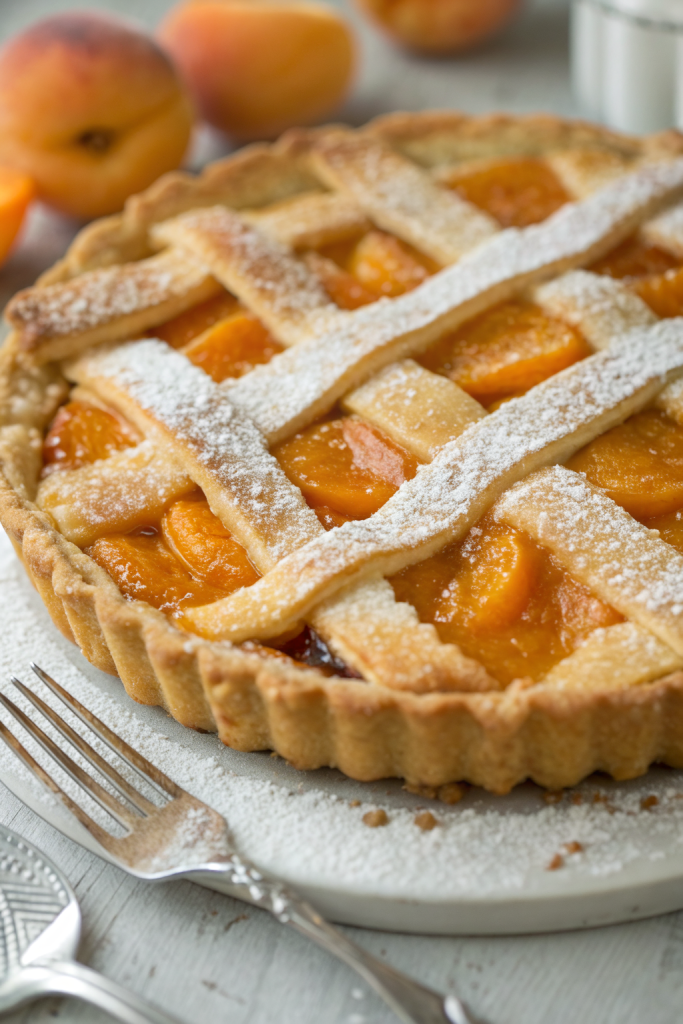
Classic Apricot Pie with Flaky Butter Crust tastes bright, buttery, and just tart enough to keep each bite interesting, with jammy fruit tucked into crisp, shattering layers of pastry. It suits anyone who loves old-school fruit pies and wants a showstopper dessert in about 2 ½ hours total, including chill and bake time. I grew up in a house that treated stone fruit season like a sport, so this pie feels like my home turf.
Why Make This Classic Apricot Pie with Flaky Butter Crust at Home
Homemade apricot pie tastes fresher and more vivid than anything you buy in a box. The fruit keeps a little texture, the crust stays tender and crisp, and the whole thing perfumes your kitchen in the best way.
You also control sweetness, spice, and how thick or saucy you like the filling. The recipe uses simple ingredients, so you stretch a basket of apricots into a dessert that looks bakery-level without fancy skills.
“This Classic Apricot Pie with Flaky Butter Crust tastes like a summer bakery special that somehow snuck out of a professional kitchen and into my oven, and I would bake it every week if I could. ★★★★★”
Ingredients You Need
For the flaky butter crust
- 2 ½ cups (300 g) all-purpose flour
- Use a standard unbleached flour like King Arthur or Gold Medal.
- 1 tablespoon granulated sugar
- 1 teaspoon fine sea salt
- 1 cup (2 sticks / 226 g) cold unsalted butter, cut into ½ inch cubes
- Choose a good-quality butter with at least 82% butterfat for extra flavor.
- ½ cup (120 ml) ice water, plus 1–2 tablespoons more as needed
- Keep it very cold; add a few ice cubes and measure from that.
For the apricot filling
- 2 ¼ to 2 ½ pounds fresh apricots, pitted and sliced into wedges
- Slightly firm, fragrant fruit works best; avoid mushy or very green apricots.
- ⅔ to ¾ cup granulated sugar
- Use ⅔ cup for sweeter apricots, ¾ cup if they taste very tart.
- 3 tablespoons cornstarch
- Cornstarch sets the juices without a cloudy taste; you can swap with 4 ½ tablespoons tapioca starch.
- 1 tablespoon lemon juice
- 1 teaspoon lemon zest (optional but brightens the flavor)
- ¼ teaspoon almond extract
- Almond pairs beautifully with apricot; use a good brand like Nielsen-Massey for clean flavor.
- ¼ teaspoon ground cinnamon (optional, for a cozy note)
- Pinch of fine sea salt
- 1 tablespoon cold unsalted butter, cut into tiny pieces, to dot over the filling
For finishing
- 1 large egg
- 1 tablespoon milk or heavy cream
- 1–2 teaspoons coarse sugar (turbinado or raw sugar) for sprinkling
Pantry shortcuts and substitutions
- Use a good-quality store-bought pie crust if you feel short on time, though the butter crust in this recipe tastes richer and flakes better.
- If you cannot find fresh apricots, use frozen sliced apricots, thawed and well drained, and increase cornstarch to 4 tablespoons.
- Replace up to one third of the apricots with sliced peaches or nectarines if you need to stretch what you have.
- Swap almond extract with vanilla extract if you avoid nut flavors.
Equipment list
- 9-inch standard pie dish (glass or metal)
- Large mixing bowls
- Pastry cutter, food processor, or two forks
- Rolling pin
- Measuring cups and spoons
- Microplane or fine grater for lemon zest
- Small bowl and pastry brush for egg wash
- Baking sheet lined with parchment to catch drips
- Sharp knife or small cookie cutters for venting the top crust
- Cooling rack
Tips & Mistakes
- Chill the butter and keep it firm; warm butter turns the crust tough instead of flaky.
- Stop mixing the dough as soon as it holds together; overworking it develops too much gluten and makes it chewy.
- Rest the dough in the fridge at least 1 hour; this relaxes the gluten and prevents shrinking in the oven.
- Taste a slice of apricot before you mix the filling; adjust sugar based on how tart the fruit tastes.
- Toss the filling gently; rough stirring crushes the fruit and turns the texture mushy.
- Avoid a soggy bottom by baking on a lower rack and preheating a metal baking sheet; the direct heat crisps the base.
- Vent the top crust generously; tight vents trap steam and cause overflow at the edges.
- Watch the crust color; tent the edges with foil if they brown too fast, and keep the pie in until the center bubbles thickly.
- Let the pie cool at least 3 hours; cutting too early lets the juices run and collapse the slices.
- Use a sharp, thin knife for slicing; a dull knife drags through the crust and tears it.
How to Make Classic Apricot Pie with Flaky Butter Crust
Step 1: Mix the dry ingredients for the crust
Add flour, sugar, and salt to a large bowl. Whisk to combine so the salt and sugar distribute evenly. This step keeps the seasoning consistent through the crust.
Step 2: Cut in the cold butter
Add the cold butter cubes to the flour mixture. Use a pastry cutter, two forks, or quick pulses in a food processor and cut the butter into the flour until you see pea-sized pieces with some larger, flat bits. Those flat shards of butter create flaky layers, so keep some visible.
Step 3: Add ice water and bring the dough together
Sprinkle in ½ cup ice water and toss gently with a fork. Add extra water 1 tablespoon at a time until the dough holds together when you squeeze a handful, with no dry flour at the bottom. Gather the dough into a rough ball; it should feel slightly shaggy, not sticky.
Step 4: Divide and chill the dough
Split the dough into two equal portions. Shape each piece into a flat disk, wrap tightly in plastic or reusable wrap, and chill for at least 1 hour and up to 2 days. Chilling firms the butter and gives the flour time to hydrate.
Step 5: Prepare the apricot filling
Place the sliced apricots in a large bowl. Add sugar, cornstarch, lemon juice, lemon zest, almond extract, cinnamon if you use it, and a pinch of salt. Toss gently until every slice looks lightly coated and the mixture looks glossy.
Let the filling sit 10–15 minutes while you roll the crust. The fruit will release some juices, and the cornstarch will start to hydrate. This short rest helps the filling thicken more evenly in the oven.
Step 6: Roll out the bottom crust
Lightly flour your work surface and rolling pin. Roll one dough disk into a circle about 12 inches wide and about ⅛ inch thick. Rotate the dough a quarter turn every few rolls and dust lightly with flour as needed so it does not stick.
Lift the dough gently and place it in the 9-inch pie dish, easing it into the corners without stretching. Let the excess hang over the edges. Chill the lined dish in the fridge while you roll the top crust.
Step 7: Roll out the top crust
Roll the second dough disk into another 12-inch circle for a full top crust. If you want a lattice, cut the rolled dough into strips about ½ to ¾ inch wide with a knife or pastry wheel. Keep the rolled top crust or strips on a parchment-lined sheet in the fridge while you fill the pie.
Step 8: Fill the pie
Give the apricot filling a quick stir. Pour it into the chilled bottom crust and spread it into an even layer. Sprinkle any juices from the bowl over the fruit, then dot the top with the tiny pieces of butter.
Step 9: Add the top crust and crimp
Place the full top crust over the filling or weave the lattice strips across the top. Trim the excess dough so it hangs about ½ inch past the rim of the dish. Fold the edges under themselves to build a thicker border, then crimp with your fingers or a fork.
If you use a full top crust, cut several slits in the center to vent steam. Chill the assembled pie in the fridge 20–30 minutes while you preheat the oven. This quick chill helps the crust hold its shape.
Step 10: Preheat the oven
Place a metal baking sheet on the lower-middle rack of your oven. Preheat the oven to 425°F (220°C). The hot sheet heats the bottom of the pie dish quickly and gives you a crisp, flaky base.
Step 11: Egg wash and sugar
Beat the egg with the milk or cream in a small bowl. Brush the top crust and edges lightly with the egg wash; avoid puddles, which can burn. Sprinkle coarse sugar over the top for sparkle and crunch.
Step 12: Bake the pie
Set the pie on the preheated baking sheet. Bake at 425°F (220°C) for 20 minutes. Reduce the oven temperature to 375°F (190°C) and continue baking 30–40 minutes, until the crust looks deep golden and the filling bubbles thickly through the vents or lattice.
If the edges brown too quickly, cover them loosely with strips of foil. The filling needs visible bubbling in the center area, not just at the edges, so keep the pie in until you see that action. That bubbling signals that the cornstarch activated and thickened the juices.
Step 13: Cool before slicing
Transfer the pie to a cooling rack. Let it cool at least 3 hours at room temperature. The filling will set as it cools, which gives you clean slices instead of a fruity slide show.
If you prefer slightly warm pie, cool it most of the way, then warm individual slices briefly before serving. The crust stays flaky and the filling holds its shape.
Variations I've Tried
-
Honey-kissed apricot pie: Replace ¼ cup of the sugar with 3 tablespoons honey and reduce the remaining sugar slightly. The honey adds floral notes that match the apricots nicely. Add a tiny extra pinch of salt to balance the sweetness.
-
Apricot almond crumble top: Skip the top crust and use a crumble topping with ¾ cup flour, ½ cup brown sugar, ½ cup sliced almonds, and 6 tablespoons cold butter. Mix until clumpy and scatter over the filling. This version tastes like a mashup of pie and crisp.
-
Apricot ginger pie: Add 1–2 tablespoons finely chopped crystallized ginger to the filling and a pinch of ground ginger. The warm spice gives the pie a little kick without overpowering the fruit. This version tastes great with vanilla ice cream.
-
Apricot berry mix: Swap 1 cup of the apricots with blueberries or raspberries. Increase cornstarch by 1 tablespoon to handle the extra juice. The color turns gorgeous and the flavor leans more tart-sweet.
How to Serve Classic Apricot Pie with Flaky Butter Crust
Serve Classic Apricot Pie with Flaky Butter Crust slightly warm or at room temperature so the filling tastes bright and the crust stays crisp. Add a scoop of vanilla, honey, or almond ice cream, or a spoonful of lightly sweetened whipped cream. Pair slices with cold milk, iced tea, or sparkling water with lemon for a refreshing contrast. I also love a plain slice for breakfast with hot coffee, which feels like a small victory every time.
How to store
- Room temperature: Keep the pie loosely covered at room temperature for up to 1 day if your kitchen stays cool; this keeps the crust crisp.
- Fridge: Store leftover slices in an airtight container or tightly wrapped in the fridge for up to 4 days; cool the pie completely before you cover it.
- Freezer (whole pie): Wrap the fully cooled pie tightly in plastic, then in foil, and freeze up to 2 months; label with the date.
- Freezer (slices): Wrap individual slices in plastic, place them in a freezer bag, and freeze up to 2 months for easy single servings.
- Reheating slices: Warm slices in a 350°F (175°C) oven or toaster oven for 10–15 minutes until the crust crisps and the filling heats through.
- Reheating a whole pie: Reheat a chilled or thawed whole pie at 325°F (165°C) for 20–30 minutes, loosely tented with foil, until the center feels warm.
Classic Apricot Pie with Flaky Butter Crust
Ingredients
Instructions
- In a large bowl, whisk together the flour, granulated sugar, and fine sea salt.
- Add the cold butter cubes and cut them into the flour with a pastry cutter, two forks, or a food processor until you see pea-sized pieces with some larger, flat bits remaining.
- Sprinkle in 1/2 cup ice water and toss gently with a fork. Add more water 1 tablespoon at a time until the dough holds together when squeezed, with no dry flour at the bottom.
- Gather the dough into a rough ball, divide into two equal portions, shape each into a flat disk, wrap tightly, and chill for at least 1 hour and up to 2 days.
- Place the sliced apricots in a large bowl. Add the sugar, cornstarch, lemon juice, lemon zest if using, almond extract, cinnamon if using, and a pinch of salt.
- Toss gently until the apricots are evenly coated and the mixture looks glossy. Let the filling rest for 10–15 minutes while you roll out the crust.
- On a lightly floured surface, roll one dough disk into a 12-inch circle about 1/8 inch thick. Rotate the dough as you roll and dust with flour as needed to prevent sticking.
- Transfer the rolled dough to a 9-inch pie dish, easing it into the corners without stretching, and let the excess hang over the edges. Chill the lined dish while you roll the top crust.
- Roll the second dough disk into another 12-inch circle for a full top crust, or cut it into 1/2- to 3/4-inch strips for a lattice. Keep the rolled top crust or strips chilled until needed.
- Stir the apricot filling once more and pour it into the chilled bottom crust, spreading it into an even layer. Sprinkle any juices from the bowl over the fruit and dot the top with the tiny pieces of butter.
- Place the full top crust over the filling or arrange the lattice strips on top. Trim the dough so it overhangs by about 1/2 inch, fold the edges under, and crimp with your fingers or a fork. If using a full top crust, cut several slits in the center to vent steam.
- Chill the assembled pie for 20–30 minutes while you preheat the oven.
- Place a metal baking sheet on the lower-middle rack of the oven and preheat to 425°F (220°C).
- In a small bowl, beat the egg with the milk or cream. Brush the top crust and edges lightly with the egg wash and sprinkle with coarse sugar.
- Set the pie on the preheated baking sheet and bake at 425°F (220°C) for 20 minutes.
- Reduce the oven temperature to 375°F (190°C) and continue baking for 30–40 minutes, until the crust is deep golden and the filling bubbles thickly through the vents or lattice near the center.
- If the crust edges brown too quickly, cover them loosely with strips of foil and continue baking until the filling is visibly bubbling in the center.
- Transfer the baked pie to a cooling rack and let it cool at room temperature for at least 3 hours so the filling can set.
- Slice with a sharp, thin knife and serve slightly warm or at room temperature, plain or with ice cream or whipped cream.
Notes
Approximate per serving (1 of 8): 360 calories; fat 18 g; saturated fat 11 g; carbohydrates 46 g; fiber 3 g; sugars 24 g; protein 5 g; sodium 260 mg. Values are estimates and will vary based on exact ingredients, brands, and portion size.