
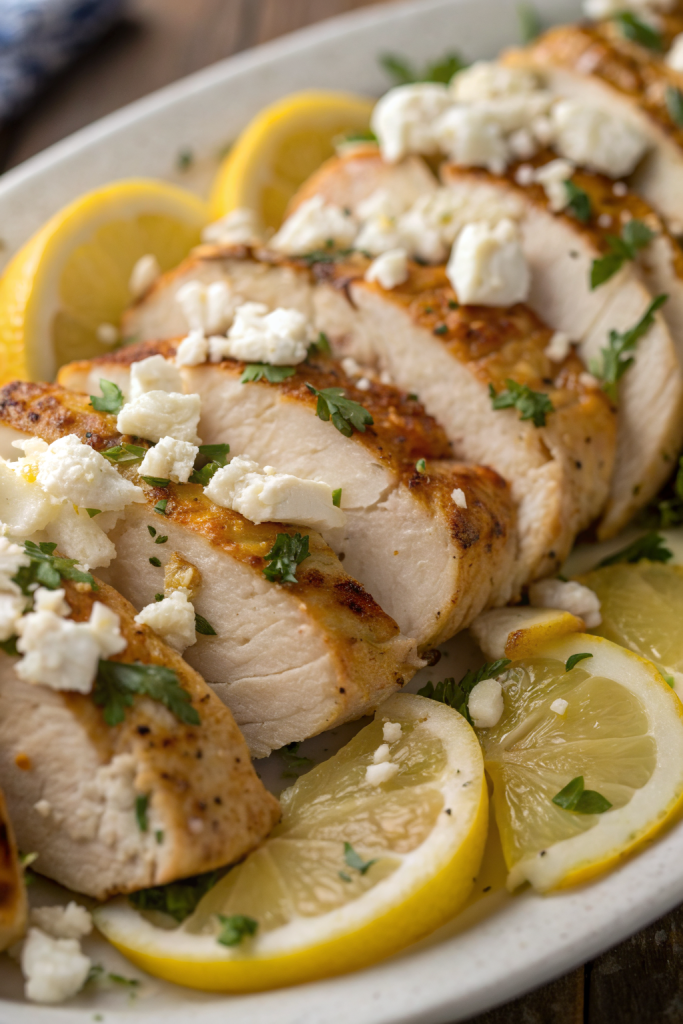
Greek Chicken with Lemon and Feta Recipe tastes bright, garlicky, and herby with juicy chicken and little salty pops of cheese in every bite. It works perfectly for busy weeknights or casual dinners with friends, and you can have it on the table in about 40 minutes. I first cooked a version of this in a tiny apartment kitchen with one sad skillet, so if I managed it there, you can absolutely nail it at home.
Why You Should Try This Greek Chicken with Lemon and Feta Recipe
This Greek Chicken with Lemon and Feta Recipe gives you big restaurant flavor with simple, everyday ingredients. You get tender chicken, crispy golden edges, and a sauce that tastes rich yet still feels light.
The lemon, garlic, and oregano keep everything fresh, while the feta adds creamy, salty contrast. You can serve it with rice, potatoes, or salad, so it fits whatever you already have in your kitchen.
“This Greek Chicken with Lemon and Feta Recipe tastes like a vacation on a plate and still fits into a weeknight schedule. ★★★★★”
Ingredients You’ll Need
Chicken
- 2 pounds boneless skinless chicken thighs
- Use thighs for juicy, forgiving results.
- Swap with boneless skinless chicken breasts if you prefer, and pound them to even thickness.
- 1 teaspoon kosher salt
- ½ teaspoon black pepper
Marinade & Sauce
- ¼ cup extra virgin olive oil
- Use a decent mid-range brand; no need for fancy finishing oil.
- 3 tablespoons fresh lemon juice (about 1 to 2 lemons)
- 1 tablespoon lemon zest
- Zest adds strong lemon flavor without extra acidity.
- 4 cloves garlic, minced or pressed
- Jarred minced garlic works in a pinch, use about 1½ teaspoons.
- 1½ teaspoons dried oregano
- Greek or Mediterranean oregano tastes best, but any dried oregano works.
- ½ teaspoon dried thyme
- ½ teaspoon smoked paprika or sweet paprika
- ½ teaspoon onion powder
- ½ teaspoon crushed red pepper flakes (optional, for a little heat)
- 1 teaspoon honey or sugar
- Balances the lemon and keeps the chicken from tasting too sharp.
Finishing Ingredients
- ¾ cup crumbled feta cheese
- Use block feta in brine if possible; it tastes creamier and less chalky than pre-crumbled.
- ¼ cup chicken broth or water
- Boxed low-sodium broth works great.
- 2 tablespoons chopped fresh parsley
- 1 tablespoon chopped fresh dill (optional but very tasty)
- 1 small lemon, sliced into thin rounds or wedges, for garnish
Pantry Shortcuts & Substitutions
- Use bottled lemon juice if you must, but mix in extra zest to keep the flavor bright.
- Replace fresh herbs with extra dried oregano if your fridge looks empty.
- Use pre-crumbled feta and pre-minced garlic on busy nights; the dish still tastes great.
- Swap chicken with turkey cutlets or pork tenderloin slices and adjust cooking time slightly.
Equipment List
- Large mixing bowl or zip-top bag for marinating
- Cutting board and sharp knife
- Microplane or small grater for lemon zest
- Large oven-safe skillet or sauté pan
- Cast iron or stainless steel browns the chicken nicely.
- Tongs or spatula
- Measuring cups and spoons
- Instant-read thermometer (helps you avoid dry chicken)
Tips & Tricks
- Pat the chicken dry before seasoning so it browns instead of steaming.
- Zest the lemon before you juice it, since zesting a squished lemon feels annoying.
- Marinate the chicken at least 20 minutes, and up to 8 hours in the fridge, for deeper flavor.
- Use thighs if you want maximum juiciness and a little wiggle room on cook time.
- Heat the pan until the oil shimmers so the chicken gets a good sear.
- Avoid crowding the pan; cook in batches if needed so the chicken browns nicely.
- Crumble the feta in larger chunks so it softens gently instead of melting into nothing.
- Taste the sauce at the end and adjust with a pinch of salt, a squeeze of lemon, or a drizzle of honey.
- Let the chicken rest a few minutes before slicing so the juices stay inside.
- Save extra marinade flavor by simmering it briefly in the pan with broth so it cooks fully and thickens.
How to Make Greek Chicken with Lemon and Feta Recipe
Step 1: Prep the Chicken
Place the chicken thighs on a cutting board and trim any large pieces of excess fat. Pat them dry with paper towels so the seasoning sticks. Sprinkle both sides with salt and pepper, then set the chicken aside while you mix the marinade.
Step 2: Mix the Lemon Herb Marinade
In a large bowl, whisk together olive oil, lemon juice, lemon zest, garlic, dried oregano, dried thyme, paprika, onion powder, red pepper flakes if using, and honey. Taste a tiny bit and adjust the seasoning with a pinch of salt or extra lemon if you like. The mixture should taste bright, garlicky, and slightly tangy with a hint of sweetness.
Step 3: Marinate the Chicken
Add the chicken to the bowl and toss until every piece coats evenly with the marinade. Cover the bowl or transfer everything to a zip-top bag and press out extra air. Chill in the fridge for at least 20 minutes and up to 8 hours, and flip the chicken once or twice if it sits longer.
Step 4: Preheat the Pan
When you feel ready to cook, remove the chicken from the fridge and let it sit at room temperature for about 10 to 15 minutes. Place a large oven-safe skillet over medium-high heat and drizzle in a little extra olive oil if the pan looks dry. Heat until the oil shimmers and a drop of marinade sizzles on contact.
Step 5: Sear the Chicken
Lift the chicken from the marinade and let excess drip back into the bowl. Lay the pieces in the hot skillet in a single layer, and keep the leftover marinade for the sauce. Sear the chicken for about 4 to 5 minutes on the first side until it looks golden brown, then flip and cook another 3 to 4 minutes.
Step 6: Build the Sauce
Reduce the heat to medium. Pour the reserved marinade into the skillet along with the chicken broth or water. Scrape the bottom of the pan with a wooden spoon to pick up the browned bits, since they hold tons of flavor.
Step 7: Finish Cooking the Chicken
Let the chicken simmer gently in the sauce for about 5 to 8 minutes. Check the internal temperature with an instant-read thermometer; it should reach 165°F in the thickest part. If the sauce looks thin, keep simmering for another couple of minutes until it thickens slightly and coats the chicken.
Step 8: Add Feta and Herbs
Sprinkle the crumbled feta over the chicken while it still sits in the hot pan. The cheese will soften and turn creamy around the edges. Scatter chopped parsley and dill over the top, then tuck lemon slices or wedges around the chicken for a fresh look and extra citrus aroma.
Step 9: Rest and Serve
Turn off the heat and let the chicken rest in the pan for about 5 minutes. Spoon the lemony feta sauce over the top so every piece gets coated. Serve the Greek Chicken with Lemon and Feta Recipe straight from the skillet or transfer it to a platter and pour the sauce over everything.
What to Serve with Greek Chicken with Lemon and Feta Recipe
This Greek Chicken with Lemon and Feta Recipe pairs nicely with fluffy rice, orzo, or simple roasted potatoes that soak up the lemony juices. A crisp cucumber and tomato salad with red onion and olives adds crunch and freshness on the side. You can also serve it with warm pita, hummus, or tzatziki for a more complete Mediterranean-style spread. For drinks, try sparkling water with lemon, iced tea, or a light citrusy mocktail.
Storage Options
- Cool leftovers to room temperature within about 30 minutes, then store them in an airtight container in the fridge for up to 3 to 4 days.
- Freeze portions of chicken with some sauce in freezer-safe containers or bags for up to 2 months.
- Reheat gently on the stovetop over low to medium heat with a splash of water or broth until hot, then add a little fresh lemon and extra feta if you have it.
- Use the microwave in short bursts, stirring the sauce and flipping the chicken pieces so they heat evenly and stay juicy.
Greek Chicken with Lemon and Feta Recipe
Ingredients
Instructions
- Place the chicken thighs on a cutting board, trim any large pieces of excess fat, and pat dry with paper towels. Season both sides with the kosher salt and black pepper, then set aside.
- In a large bowl, whisk together the olive oil, lemon juice, lemon zest, garlic, dried oregano, dried thyme, paprika, onion powder, crushed red pepper flakes if using, and honey or sugar until well combined.
- Add the seasoned chicken thighs to the bowl and toss until all pieces are evenly coated in the lemon herb marinade. Cover the bowl or transfer to a zip-top bag, then refrigerate for at least 20 minutes and up to 8 hours, turning the chicken once or twice if marinating longer.
- When ready to cook, remove the chicken from the refrigerator and let it sit at room temperature for 10 to 15 minutes. Heat a large oven-safe skillet over medium-high heat and add a light drizzle of olive oil if the pan looks dry.
- Lift the chicken from the marinade, allowing the excess to drip back into the bowl, and reserve the marinade. Arrange the chicken in a single layer in the hot skillet. Sear for 4 to 5 minutes on the first side until golden brown, then flip and cook for another 3 to 4 minutes.
- Reduce the heat to medium. Pour the reserved marinade and the chicken broth or water into the skillet. Use a wooden spoon to scrape up the browned bits from the bottom of the pan and stir them into the sauce.
- Let the chicken simmer gently in the sauce for 5 to 8 minutes, or until the internal temperature reaches 165°F (74°C) in the thickest part. If the sauce seems thin, continue to simmer for a few more minutes until slightly thickened and able to coat the chicken.
- Sprinkle the crumbled feta over the hot chicken in the skillet so it softens and turns creamy around the edges. Scatter the chopped parsley and dill over the top, then tuck the lemon slices or wedges around the chicken for garnish and extra citrus aroma.
- Turn off the heat and let the chicken rest in the pan for about 5 minutes. Spoon the lemony feta sauce over the chicken, then serve directly from the skillet or transfer to a platter and pour the sauce over the top.
Notes
Approximate per serving (1/6 of recipe): 340 calories; fat 23 g; saturated fat 7 g; carbohydrates 5 g; fiber 0 g; sugars 3 g; protein 29 g; sodium 640 mg. Values are estimates and will vary based on specific ingredients, brands, and portion size.