
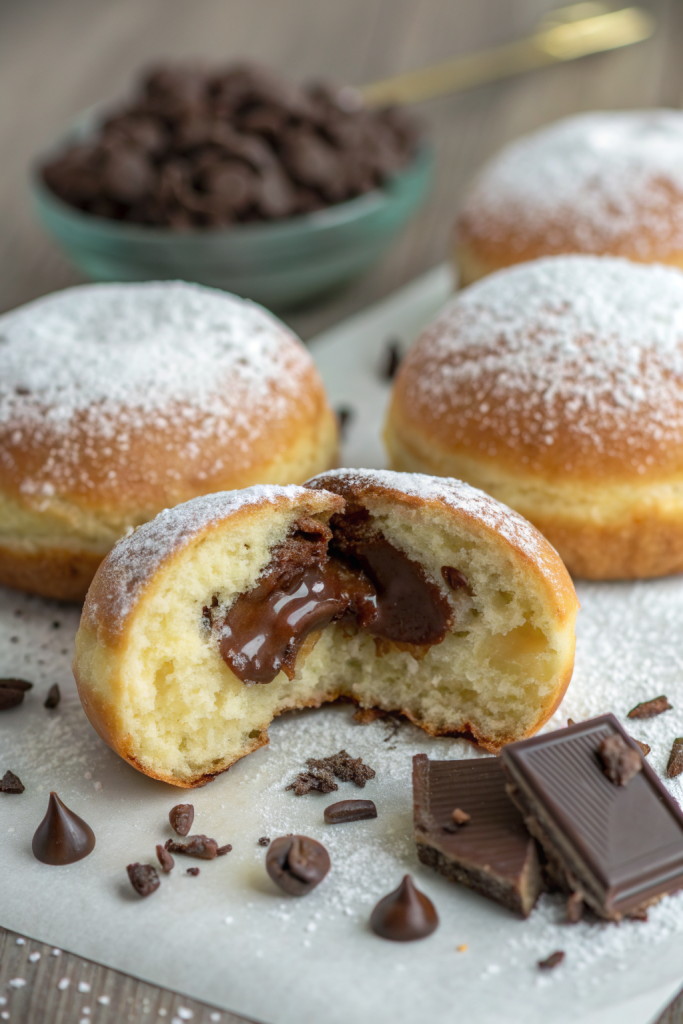
Hazelnut Cream Beignets Recipe tastes like a cross between a Nutella-filled cloud and the best doughnut you ever ate on vacation, only lighter and a little fancier. It suits weekend bakers who want a bakery-style treat in about 2 hours total, including dough rising and frying time. I tested this version so many times that my neighbors started “just happening” to walk by my kitchen window on Saturday mornings.
Why You Should Try This Hazelnut Cream Beignets Recipe
These hazelnut cream beignets hit that perfect balance of crisp edges, fluffy centers, and silky nutty filling. The dough fries up light and airy, while the hazelnut cream adds a rich chocolate-hazelnut flavor that tastes indulgent without feeling heavy.
You can shape and fry them in small batches, so they work for brunch, dessert, or a late-night snack. The recipe uses simple pantry ingredients and a few smart shortcuts, so you get bakery-level results without pastry-school stress.
“These Hazelnut Cream Beignets taste like a fancy café treat that somehow wandered into my kitchen and decided to stay forever.” ★★★★★
Ingredients You’ll Need
For the beignet dough
- 3 cups (360 g) all-purpose flour
- Use a reliable brand like King Arthur or Gold Medal for consistent texture.
- 1 packet (2 ¼ tsp) active dry yeast
- Instant yeast also works; you can mix it directly into the flour.
- ¼ cup (50 g) granulated sugar
- ¾ tsp fine sea salt
- ¾ cup (180 ml) warm whole milk, about 105–110°F
- Use 2% in a pinch, but whole milk gives better flavor and tenderness.
- 2 large eggs, room temperature
- 4 tbsp (56 g) unsalted butter, melted and slightly cooled
- 1 tsp pure vanilla extract
- Neutral oil for frying (about 4–6 cups)
- Use canola, peanut, or vegetable oil; avoid olive oil for this recipe.
For the hazelnut cream filling
- ¾ cup (180 ml) heavy cream, cold
- 4 oz (115 g) mascarpone cheese, cold
- Cream cheese works as a backup, but mascarpone gives a smoother, more delicate flavor.
- ½ cup (150 g) chocolate hazelnut spread
- Nutella or any good-quality store brand works.
- 2 tbsp powdered sugar, sifted
- ½ tsp vanilla extract
- Pinch of fine sea salt
For finishing
- 1 to 1 ½ cups powdered sugar, for dusting
- Optional: 2 tbsp finely chopped toasted hazelnuts, for sprinkling on top
Equipment list
- Stand mixer with dough hook
- You can knead by hand, but the mixer keeps the dough soft and airy.
- Large mixing bowl (if kneading by hand)
- Rubber spatula or dough scraper
- Plastic wrap or clean kitchen towel
- Rolling pin
- Bench scraper or sharp knife
- Deep, heavy-bottomed pot or Dutch oven
- Deep-fry thermometer or instant-read thermometer
- Slotted spoon or spider skimmer
- Wire rack set over a sheet pan or paper towels
- Piping bag with small round tip (or zip-top bag with a small corner snipped)
- Small paring knife or wooden skewer to make filling holes
Tips & Tricks
- Warm the milk gently and test it with your finger; it should feel warm but not hot, like a comfortable bath.
- Let the eggs and butter come to room temperature so the dough rises more evenly.
- Mix the dough until it feels soft, slightly tacky, and stretchy; add flour only if it sticks aggressively to the bowl.
- Oil your hands lightly when handling the dough so it does not cling and tear.
- Keep the oil between 350–365°F; hotter oil browns the outside before the inside cooks, cooler oil makes greasy beignets.
- Fry a small test piece of dough first to check timing and color.
- Fill the beignets while they still feel slightly warm; the hazelnut cream settles in more smoothly.
- Chill the hazelnut cream before piping so it holds its shape and does not run.
- Dust with powdered sugar right before serving so the tops stay pretty and not soggy.
- Work in small batches when frying so the oil temperature stays steady and the beignets cook evenly.
How to Make Hazelnut Cream Beignets Recipe
Step 1: Mix and proof the dough
In the bowl of a stand mixer, whisk together warm milk, yeast, and 1 tablespoon of the sugar. Let the mixture sit 5–10 minutes until the surface looks foamy and creamy. If nothing happens, toss it and start again with fresh yeast.
Add the remaining sugar, eggs, melted butter, vanilla, salt, and 2 cups of flour. Attach the dough hook and mix on low speed until the mixture comes together into a shaggy dough. Add the remaining 1 cup of flour gradually, a few tablespoons at a time, until the dough pulls away from the sides of the bowl but still feels soft.
Knead with the mixer on medium-low speed for 5–7 minutes until the dough feels smooth and elastic. If you knead by hand, turn the dough out onto a lightly floured surface and knead about 8–10 minutes. The dough should stretch without tearing when you pull a small piece between your fingers.
Lightly oil a clean bowl, place the dough inside, and turn it once to coat. Cover the bowl with plastic wrap or a clean towel. Let the dough rise in a warm, draft-free spot for about 1 to 1 ½ hours, until it doubles in size.
Step 2: Make the hazelnut cream filling
While the dough rises, prepare the hazelnut cream. In a chilled mixing bowl, add cold heavy cream and beat with a hand mixer or stand mixer until soft peaks form. The cream should hold its shape but still look slightly droopy at the tip.
In a separate bowl, whisk together mascarpone, chocolate hazelnut spread, powdered sugar, vanilla, and a pinch of salt until smooth. Gently fold the whipped cream into the hazelnut mixture in two or three additions. Fold until no streaks remain and the mixture looks light and fluffy.
Cover the hazelnut cream and chill it in the fridge for at least 30 minutes. The filling will thicken slightly as it chills, which makes it easier to pipe into the beignets. Taste and adjust the sweetness with a tiny bit more powdered sugar if you prefer.
Step 3: Shape the beignets
Lightly flour your work surface. Turn the risen dough out onto the surface and gently press it into a rectangle to knock out large air bubbles. Use a rolling pin to roll the dough to about ½ inch thickness.
Use a bench scraper or sharp knife to cut the dough into squares or rectangles, about 2 to 2 ½ inches wide. You can also use a round cutter if you want circular beignets. Transfer the cut pieces to a parchment-lined baking sheet, leaving a little space between each one.
Cover the shaped dough lightly with a towel. Let the pieces rise again for 30–40 minutes, until they look puffy and slightly larger. They should feel airy when you lift one gently.
Step 4: Heat the oil
Pour enough neutral oil into a heavy pot or Dutch oven to reach a depth of at least 2 inches. Clip a thermometer to the side of the pot, making sure the tip sits in the oil but not on the bottom. Heat the oil over medium heat until it reaches 350–365°F.
Adjust the heat as needed to keep the temperature in that range. If the oil climbs too high, lower the heat and wait a minute before adding dough. If it drops too low, give it a moment to recover between batches.
Step 5: Fry the beignets
Gently place 3–5 pieces of dough into the hot oil, depending on the size of your pot. Do not crowd the pot, since that drops the temperature and causes greasy results. The beignets should puff quickly and float to the surface.
Fry each side about 1 ½ to 2 minutes, until deep golden brown. Use a slotted spoon or spider to flip them halfway through. Adjust the heat as needed to keep the oil in the right temperature range.
Transfer the fried beignets to a wire rack set over a sheet pan or to a paper towel–lined tray. Repeat with the remaining dough, letting the oil come back to temperature between batches. Let the beignets cool until they feel warm but not hot before you fill them.
Step 6: Fill with hazelnut cream
Spoon the chilled hazelnut cream into a piping bag fitted with a small round tip. If you use a zip-top bag, push the filling into one corner and snip a small opening. Keep the bag in the fridge while you work if your kitchen feels warm.
Use a small paring knife or wooden skewer to poke a small hole in the side of each beignet. Insert the piping tip into the hole and gently squeeze hazelnut cream inside until you feel the beignet plump in your hand. Wipe any excess filling from the outside with a clean finger or paper towel.
Work through the batch, refilling the piping bag as needed. Try to keep the amount of filling consistent so each beignet delivers the same hazelnut payoff. If you have extra hazelnut cream, serve it on the side as a dipping sauce.
Step 7: Finish and serve
Place the filled beignets on a clean tray or the same wire rack. Use a fine-mesh sieve to dust them generously with powdered sugar. If you like, sprinkle a few with finely chopped toasted hazelnuts for a little crunch and visual flair.
Serve the hazelnut cream beignets while they still feel warm and pillowy. The contrast between the hot dough and cool hazelnut filling tastes especially good in the first hour. I rarely see leftovers when I set a plate of these on the table.
What to Serve with Hazelnut Cream Beignets Recipe
These hazelnut cream beignets pair beautifully with hot coffee, espresso, or a strong cup of black tea to balance the sweetness. Kids love them with cold milk or hot chocolate, especially on a weekend morning. You can serve them alongside a simple fruit salad with berries and orange segments to cut through the richness.
If you plan a brunch spread, add scrambled eggs, breakfast potatoes, or a veggie frittata so the meal feels balanced. Stack the beignets on a platter, dust them at the last minute, and watch them vanish faster than you can fry the next batch.
Storage Options
- Store leftover hazelnut cream beignets in an airtight container in the fridge for up to 2 days.
- Chill any extra hazelnut cream separately in a covered container for up to 3 days.
- Reheat beignets in a 325°F oven or toaster oven for 6–8 minutes until warm; dust with fresh powdered sugar after reheating.
- Freeze unfried dough squares on a baking sheet, then transfer to a freezer bag for up to 1 month; thaw in the fridge overnight, let them puff at room temperature, then fry as usual.
- Avoid microwaving filled beignets, since the filling can overheat and the dough can turn chewy.
Hazelnut Cream Beignets Recipe
Ingredients
Instructions
- In the bowl of a stand mixer, whisk together the warm milk, yeast, and 1 tablespoon of the sugar. Let sit for 5–10 minutes until the surface looks foamy and creamy. If it does not foam, discard and start again with fresh yeast.
- Add the remaining sugar, eggs, melted butter, vanilla, salt, and 2 cups of the flour. Attach the dough hook and mix on low speed until a shaggy dough forms.
- Add the remaining 1 cup of flour gradually, a few tablespoons at a time, until the dough pulls away from the sides of the bowl but still feels soft.
- Knead with the mixer on medium-low speed for 5–7 minutes, or knead by hand on a lightly floured surface for 8–10 minutes, until the dough is smooth, elastic, and stretches without tearing.
- Lightly oil a clean bowl, place the dough inside, and turn once to coat. Cover with plastic wrap or a clean towel and let rise in a warm, draft-free spot for 1 to 1 1/2 hours, until doubled in size.
- While the dough rises, pour the cold heavy cream into a chilled mixing bowl and beat with a mixer until soft peaks form; the cream should hold its shape but the tip should still look slightly droopy.
- In a separate bowl, whisk together the mascarpone, chocolate hazelnut spread, powdered sugar, vanilla, and a pinch of salt until smooth.
- Gently fold the whipped cream into the hazelnut mixture in two or three additions, folding just until no streaks remain and the mixture looks light and fluffy.
- Cover and chill the hazelnut cream in the refrigerator for at least 30 minutes to thicken before piping.
- Lightly flour your work surface and turn the risen dough out onto it. Gently press the dough into a rectangle to release large air bubbles.
- Use a rolling pin to roll the dough to about 1/2 inch thickness.
- Cut the dough into 2- to 2 1/2-inch squares or rectangles with a bench scraper, knife, or round cutter if you prefer circular beignets.
- Transfer the pieces to a parchment-lined baking sheet, leaving space between them. Cover lightly with a towel and let rise for 30–40 minutes, until puffy and slightly larger.
- Pour enough neutral oil into a heavy pot or Dutch oven to reach a depth of at least 2 inches. Attach a thermometer so the tip is in the oil but not touching the bottom.
- Heat the oil over medium heat until it reaches 350–365°F, adjusting the heat as needed to maintain this range.
- Carefully add 3–5 pieces of dough to the hot oil without crowding. The beignets should puff and float quickly.
- Fry for about 1 1/2 to 2 minutes per side, turning with a slotted spoon or spider, until deep golden brown.
- Transfer fried beignets to a wire rack set over a sheet pan or to a paper towel–lined tray. Let the oil return to temperature between batches and repeat with the remaining dough.
- Let the beignets cool until warm but not hot before filling. Spoon the chilled hazelnut cream into a piping bag fitted with a small round tip, or into a zip-top bag with a small corner snipped.
- Use a small paring knife or wooden skewer to poke a small hole in the side of each beignet. Insert the piping tip into the hole and gently squeeze in hazelnut cream until the beignet feels plump.
- Place the filled beignets on a tray or wire rack and dust generously with powdered sugar using a fine-mesh sieve. Sprinkle with finely chopped toasted hazelnuts if using.
- Serve the hazelnut cream beignets while still slightly warm for the best contrast between the crisp exterior, soft interior, and cool, silky filling.
Notes
Approximate per 1 beignet (about 12 servings total): 260 calories; fat 17 g; saturated fat 6 g; carbohydrates 24 g; fiber 1 g; sugars 8 g; protein 5 g; sodium 160 mg. Values are estimates and will vary based on brands, actual oil absorption, and portion size.