
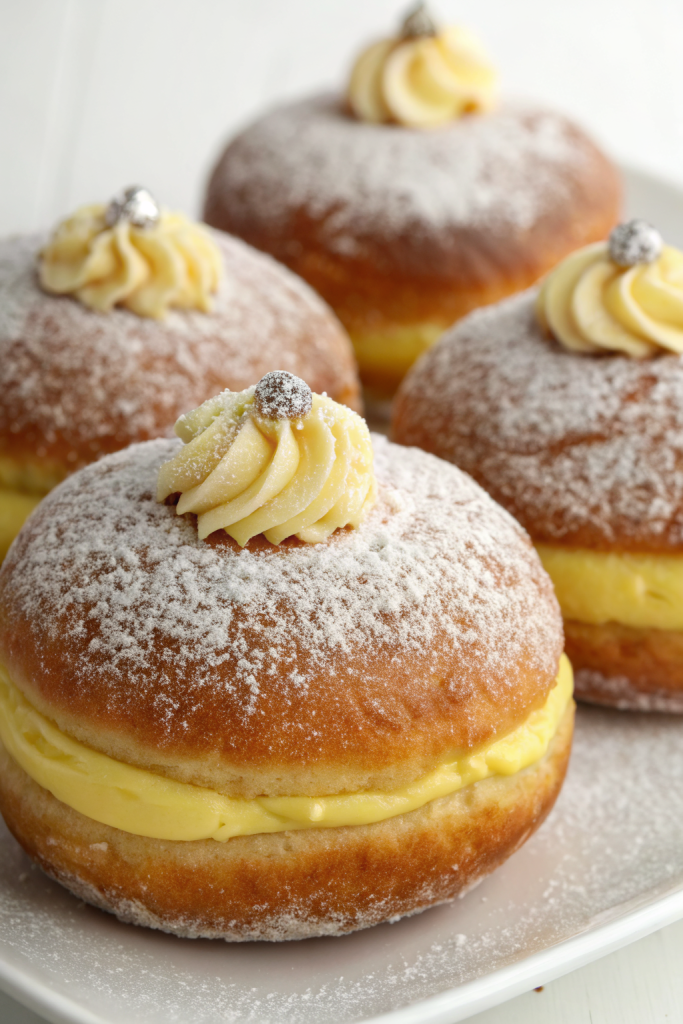
Vanilla Cream-Filled Doughnuts Recipe tastes like a bakery treat with a soft, fluffy interior, golden exterior, and cool, silky vanilla custard in every bite. It suits weekend bakers, holiday brunch planners, and anyone who wants a from-scratch doughnut recipe in about 2½ to 3 hours total time, including rising. I grew up in a small Midwest town with exactly one doughnut shop, so I learned to make my own when the craving hit on a random Tuesday night.
Why Make This Vanilla Cream-Filled Doughnuts Recipe at Home
Homemade vanilla cream-filled doughnuts taste fresher than anything from a box or drive-thru. You control the ingredients, the sweetness, and the amount of filling, which usually means more cream and happier people.
You also get a fun kitchen project that feels fancy but uses basic pantry staples. Kids, partners, and roommates tend to show up right when you start frying, so you gain instant fans and maybe a few dish helpers.
“These vanilla cream-filled doughnuts taste like a fancy bakery treat, only warmer, softer, and way more generous with the filling. ★★★★★”
Ingredients You Need
Doughnut Dough
- 3 cups (360 g) all-purpose flour, plus extra for dusting
- Use a reliable brand like King Arthur or Gold Medal for consistent texture.
- ¼ cup (50 g) granulated sugar
- 2¼ teaspoons (1 packet, 7 g) instant yeast
- Instant yeast mixes straight into the flour and saves time.
- ½ teaspoon fine sea salt
- ¾ cup (180 ml) whole milk, warm to about 105–110°F
- Use 2% in a pinch, but whole milk gives softer doughnuts.
- 2 large eggs, room temperature
- ¼ cup (60 g) unsalted butter, very soft
- Salted butter works if you reduce the added salt slightly.
- 1 teaspoon pure vanilla extract
Vanilla Cream Filling
- 2 cups (480 ml) whole milk
- ½ cup (100 g) granulated sugar
- 4 large egg yolks
- ¼ cup (30 g) cornstarch
- ¼ teaspoon fine sea salt
- 2 tablespoons (28 g) unsalted butter
- 2 teaspoons pure vanilla extract
- Use real vanilla, not imitation, for deeper flavor.
- Vanilla bean paste also works and adds pretty specks.
Coating
- ½ to ¾ cup (100–150 g) granulated sugar
- Use superfine sugar if you want a lighter, more delicate coating.
Oil For Frying
- Neutral oil with high smoke point, about 6–8 cups
- Canola, peanut, or vegetable oil all work well.
- Avoid olive oil; it adds strong flavor and smokes too quickly.
Pantry Shortcuts & Substitutions
- Use instant vanilla pudding mix as a backup filling if you feel short on time.
- Use store-bought pastry cream if you find a good bakery brand.
- Swap half the milk in the filling with heavy cream for richer texture.
- Use bread flour for slightly chewier doughnuts; add 1–2 tablespoons extra milk if the dough feels stiff.
Equipment List
- Stand mixer with dough hook (optional but helpful)
- Large mixing bowls
- Whisk and heatproof spatula
- Medium saucepan
- Candy or deep-fry thermometer
- Rolling pin
- 2½ to 3 inch round cutter or drinking glass
- Baking sheets lined with parchment
- Slotted spoon or spider skimmer
- Wire rack set over a sheet pan
- Piping bag with small round tip, or zip-top bag with corner snipped
Tips & Mistakes
- Use warm, not hot, milk so the yeast stays active and does not die.
- Measure flour by weight or lightly spoon it into the cup and level it, so the dough stays soft and not dense.
- Knead until the dough feels smooth and slightly tacky; under-kneaded doughnuts turn out heavy.
- Let the dough rise in a warm, draft-free spot; cold kitchens slow the rise and affect texture.
- Chill the pastry cream until thick and cold; warm filling will ooze out and feel runny.
- Keep oil between 350–365°F; cooler oil makes greasy doughnuts, hotter oil browns the outside too fast.
- Fry a test doughnut first to check timing and color before you commit the whole batch.
- Do not crowd the pot; too many doughnuts drop the oil temperature and cause uneven cooking.
- Drain doughnuts on a wire rack, not paper towels, so the bottoms stay crisp.
- Fill doughnuts while still slightly warm; cold doughnuts resist the filling and can split.
How to Make Vanilla Cream-Filled Doughnuts Recipe
Step 1: Mix and Knead the Dough
Add flour, sugar, instant yeast, and salt to a large mixing bowl. Whisk to combine.
In a separate bowl, whisk warm milk, eggs, soft butter, and vanilla until mostly smooth. Pour the wet mixture into the dry ingredients and stir with a wooden spoon or use a stand mixer on low speed until a shaggy dough forms.
Knead by hand on a lightly floured surface for 8–10 minutes, or use a mixer with dough hook on medium-low for 6–8 minutes. Aim for a soft, slightly tacky dough that pulls away from the bowl but still feels tender. Add a tablespoon of flour at a time if the dough sticks heavily, but keep it on the softer side for fluffier doughnuts.
Step 2: First Rise
Shape the dough into a smooth ball and place it in a lightly oiled bowl. Turn the dough once to coat it with a thin layer of oil. Cover the bowl with plastic wrap or a clean kitchen towel.
Let the dough rise in a warm spot until it doubles in size, about 1 to 1½ hours. If your kitchen runs cool, place the bowl near the oven with the light on or near a sunny window to keep the yeast happy.
Step 3: Cook the Vanilla Cream Filling
While the dough rises, prepare the vanilla cream. Add sugar, cornstarch, and salt to a medium saucepan. Whisk to combine.
In a bowl, whisk egg yolks and milk until smooth. Pour the milk mixture into the saucepan and whisk until no lumps remain. Set the pan over medium heat and whisk constantly as the mixture heats.
The mixture will start to steam, then thicken. Keep whisking until it bubbles and thickens to a pudding-like consistency, about 4–6 minutes. Once it thickens, cook 1 minute more to cook out the cornstarch flavor.
Remove the pan from heat and whisk in butter and vanilla until smooth and glossy. Pour the cream into a shallow dish, press plastic wrap directly on the surface to prevent a skin, and chill in the fridge until cold and firm.
Step 4: Shape the Doughnuts
Punch down the risen dough to release extra gas. Turn it out onto a lightly floured surface and roll it to about ½ inch thickness. Use a 2½ to 3 inch round cutter or glass to cut circles.
Place the dough rounds on parchment-lined baking sheets, leaving space between each one. Gently re-roll scraps once and cut more rounds; avoid repeated re-rolling, which toughens the dough. Cover the trays lightly with a clean towel.
Let the doughnuts rise again until puffy and slightly jiggly, about 30–45 minutes. They should look airy and feel light when you lift one gently.
Step 5: Heat the Oil
Pour oil into a large, heavy pot, filling it about 2 to 3 inches deep. Clip a thermometer to the side, with the tip in the oil but not touching the bottom. Heat the oil over medium heat until it reaches 350–365°F.
Adjust the heat as needed to keep the temperature steady. Too much fluctuation affects texture and color, so watch the thermometer like you watch your phone during a playoff game.
Step 6: Fry the Doughnuts
Carefully lift a few dough rounds and slide them into the hot oil, smooth side up. Do not crowd the pot; 3–4 at a time usually works. Fry until the bottom turns deep golden, about 1½ to 2 minutes.
Flip with a slotted spoon and fry the other side for another 1½ to 2 minutes. The doughnuts should look golden brown with a pale ring around the center. Remove them to a wire rack set over a sheet pan.
Let the oil return to 350–365°F between batches. Repeat with remaining dough rounds until you fry them all.
Step 7: Coat in Sugar
While the doughnuts still feel warm but cool enough to handle, roll them in granulated sugar. The warmth helps the sugar cling to the surface. Coat all sides for even coverage.
If you prefer a lighter coating, sprinkle sugar over the tops instead of rolling. Let the sugared doughnuts cool to room temperature before you fill them.
Step 8: Fill with Vanilla Cream
Transfer the chilled vanilla cream to a piping bag fitted with a small round tip. If you use a zip-top bag, snip a small corner. Stir the cream first to loosen it slightly, but keep it thick.
Use a small knife or the tip of the piping nozzle to poke a hole in the side of each doughnut. Wiggle gently to create a small pocket inside. Insert the piping tip and squeeze cream into the center until you feel the doughnut plump up.
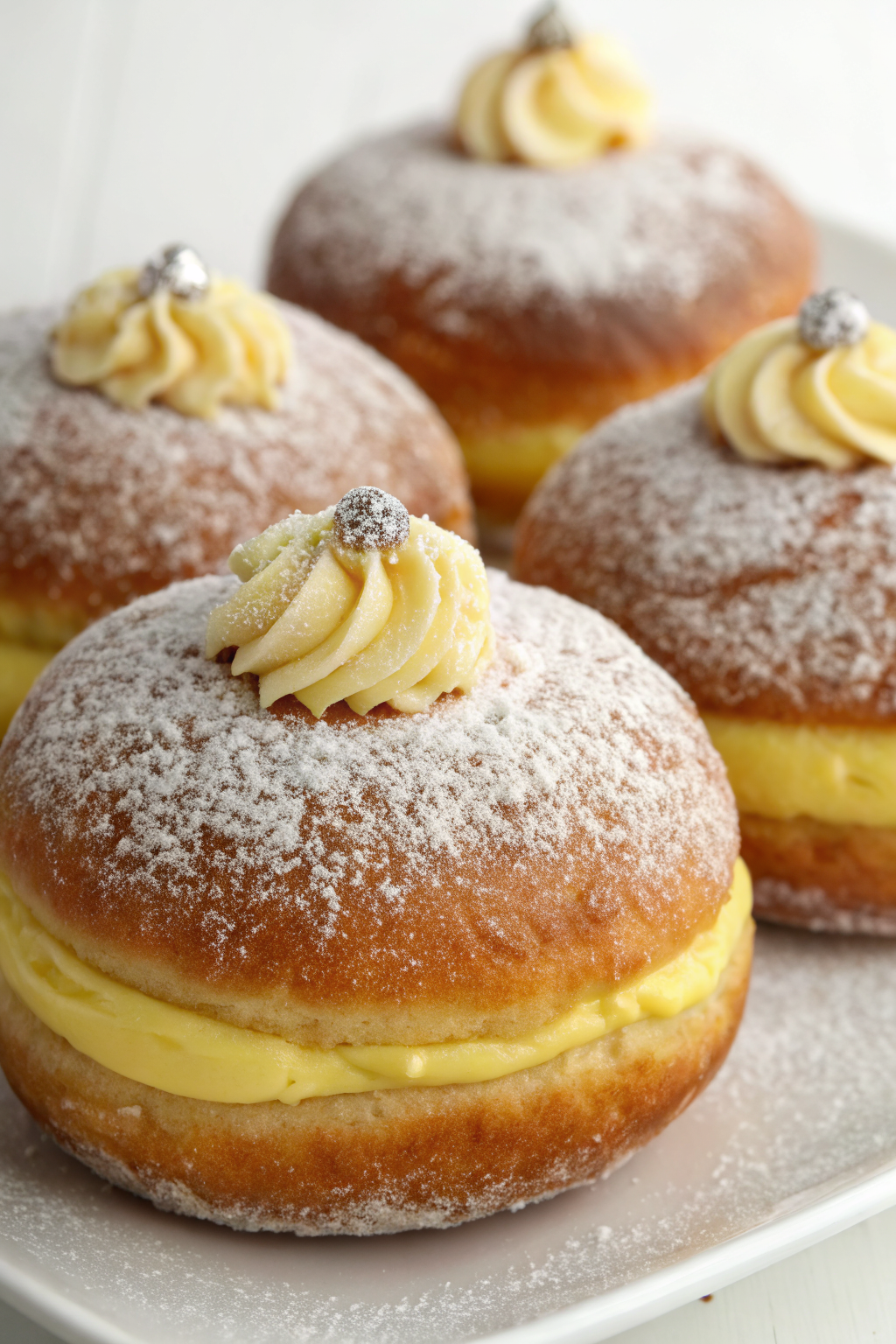
Stop before the cream bursts out the sides. Wipe any extra cream from the outside and line the filled doughnuts back on the rack. At this point, they look bakery-level fancy and smell even better.
Variations I've Tried
- Chocolate-topped vanilla cream doughnuts: Dip the tops in a simple chocolate glaze made with melted chocolate chips, a splash of milk, and powdered sugar. The combo tastes like a custard-filled chocolate frosted doughnut from a classic shop.
- Cinnamon sugar doughnuts: Swap plain sugar for a mix of sugar and cinnamon for the coating. The warm spice pairs perfectly with the cool vanilla cream.
- Lemon-vanilla cream: Add 1–2 teaspoons of fresh lemon zest and a tablespoon of lemon juice to the filling. The citrus cuts the richness and gives a bright, fresh flavor.
- Baked version: Bake the shaped doughnuts at 350°F for about 10–12 minutes until lightly golden, then coat with melted butter and sugar. The texture feels more like a soft roll, but the vanilla cream still tastes amazing inside.
How to Serve Vanilla Cream-Filled Doughnuts Recipe
Serve vanilla cream-filled doughnuts slightly warm or at room temperature so the filling stays silky and the dough stays soft. Pair them with hot coffee, cold brew, tea, or a big glass of cold milk. They work well for brunch, dessert, or a “we survived the week” treat.
You can dust them with a little powdered sugar right before serving if you want extra sweetness and a bakery-style look. Add fresh berries on the side for a nice color contrast and a bit of freshness.
How to store
- Room temperature: Keep unfilled, cooled doughnuts in an airtight container for up to 1 day; fill them the same day you plan to serve.
- Fridge (filled doughnuts): Store filled doughnuts in a single layer in an airtight container in the fridge for up to 2 days; the sugar softens but the flavor stays great.
- Freezer (unfilled): Freeze unfrosted, unfille d doughnuts on a tray until solid, then transfer to a freezer bag for up to 2 months; thaw at room temperature and refresh in a 300°F oven for 5–7 minutes.
- Freezer (filling): Store extra vanilla cream in an airtight container in the fridge for 3 days or in the freezer for up to 1 month; thaw in the fridge and whisk until smooth.
- Reheating: Warm doughnuts in a 275–300°F oven for 5–8 minutes until just warm; avoid the microwave since it turns them chewy and tough.
Vanilla Cream-Filled Doughnuts Recipe
Ingredients
Instructions
- In a large mixing bowl, whisk together the flour, granulated sugar, instant yeast, and fine sea salt.
- In a separate bowl, whisk the warm milk, eggs, very soft butter, and vanilla until mostly smooth.
- Pour the wet mixture into the dry ingredients and stir with a wooden spoon or use a stand mixer on low speed until a shaggy dough forms.
- Knead the dough by hand on a lightly floured surface for 8–10 minutes, or in a stand mixer with a dough hook on medium-low for 6–8 minutes, until the dough is smooth, soft, and slightly tacky, adding a little flour only if it is very sticky.
- Shape the dough into a smooth ball and place it in a lightly oiled bowl, turning once to coat.
- Cover the bowl with plastic wrap or a clean kitchen towel and let the dough rise in a warm, draft-free spot until doubled in size, about 1 to 1 1/2 hours.
- While the dough rises, add the sugar, cornstarch, and salt to a medium saucepan and whisk to combine.
- In a separate bowl, whisk together the egg yolks and milk until smooth, then pour this mixture into the saucepan and whisk until no lumps remain.
- Set the saucepan over medium heat and cook, whisking constantly, until the mixture steams, thickens, and then bubbles, 4–6 minutes.
- Once thick and pudding-like, cook for 1 minute more to remove the cornstarch taste, then remove from the heat and whisk in the butter and vanilla until smooth and glossy.
- Pour the cream into a shallow dish, press plastic wrap directly onto the surface, and chill in the refrigerator until cold and firm.
- Punch down the risen dough to release excess gas, then turn it out onto a lightly floured surface.
- Roll the dough to about 1/2 inch thickness and cut out rounds with a 2 1/2 to 3 inch round cutter or glass.
- Place the dough rounds on parchment-lined baking sheets, leaving some space between them. Gently re-roll the scraps once to cut more rounds.
- Cover the doughnuts lightly with a clean towel and let them rise until puffy and slightly jiggly, about 30–45 minutes.
- Pour 2 to 3 inches of oil into a large, heavy pot and heat over medium heat to 350–365°F, monitoring with a deep-fry thermometer.
- Working in batches of 3–4 doughnuts at a time, carefully slide the dough rounds into the hot oil, smooth side up, and fry until the bottoms are deep golden, about 1 1/2 to 2 minutes.
- Flip the doughnuts and fry the second side for another 1 1/2 to 2 minutes, until golden brown with a pale ring around the center.
- Remove the doughnuts with a slotted spoon or spider and drain on a wire rack set over a baking sheet, allowing the oil to return to temperature between batches.
- While the doughnuts are still warm but cool enough to handle, roll them in granulated sugar to coat all sides, then let them cool to room temperature.
- Transfer the chilled vanilla cream to a piping bag fitted with a small round tip (or a zip-top bag with a small corner snipped) and stir the cream briefly to loosen it.
- Use the piping tip or a small knife to poke a hole in the side of each doughnut and gently create a small pocket inside.
- Insert the piping tip into each doughnut and squeeze in vanilla cream until the doughnut feels plump, stopping before the filling bursts out. Wipe away any excess and serve.
Notes
Approximate per 1 doughnut (about 12 servings total): 320 calories; fat 18 g; saturated fat 6 g; carbohydrates 34 g; fiber 1 g; sugars 13 g; protein 6 g; sodium 210 mg. Values are estimates and will vary based on exact oil absorption, brands, and portion size.
Leave a Reply