
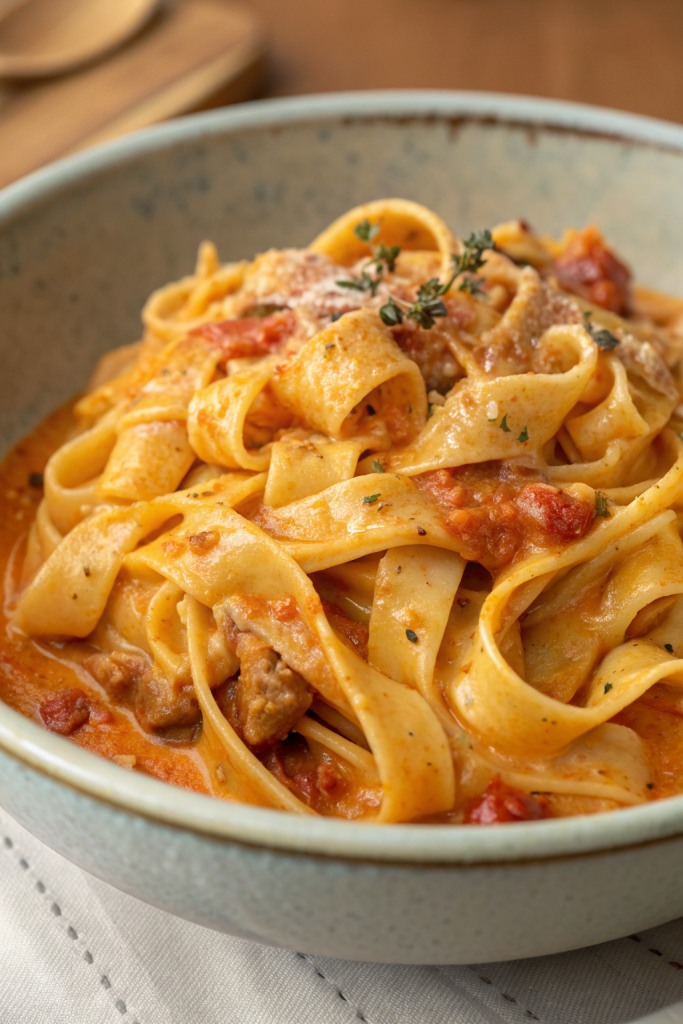
French Onion Pasta Recipe tastes like your favorite cozy bowl of French onion soup collided with a silky, cheesy pasta in the best way possible. It works for busy weeknights, date nights at home, or when you want comfort food in about 45–55 minutes. I tested versions of this on a Tuesday in sweatpants, so you are in good company.
Why Make This French Onion Pasta Recipe at Home
You control the depth of flavor, the amount of cheese, and the salt level, which restaurant versions often overdo. Homemade French Onion Pasta Recipe also lets you use good broth and real onions instead of mystery soup mix.
You also save money and skip takeout while still eating something that feels a little fancy. Plus, the whole thing cooks in one pot, so your sink does not stage a revolt.
“This French Onion Pasta Recipe tastes like a cozy bistro dinner in sweatpants form, and I scraped my bowl clean. ★★★★★”
Ingredients You Need
Onions & Aromatics
- Yellow onions, thinly sliced (about 3 large)
- Yellow onions caramelize nicely and taste sweet and savory.
- Sweet onions work too, but reduce added sugar if you use them.
- Garlic, minced (3–4 cloves)
- Fresh thyme leaves (or dried thyme, use about one-third the amount)
- Bay leaf (optional, but adds nice depth)
Fats & Flavor Boosters
- Unsalted butter
- Salted butter works; just reduce added salt a bit.
- Olive oil or neutral oil
- Balsamic vinegar or sherry vinegar
- This adds brightness and mimics the slight tang from classic French onion soup.
- Worcestershire sauce or soy sauce
- Either adds umami; low-sodium soy sauce keeps salt in check.
- A pinch of sugar
- Helps onions caramelize faster; brown sugar or white sugar both work.
Broth & Liquid
- Beef broth or stock
- Use low-sodium so you control the seasoning.
- Vegetable broth works for a vegetarian version; add a splash of soy sauce for extra savoriness.
- Water, as needed to adjust consistency
- Optional: a splash of cream or half-and-half
- This turns the sauce extra silky and rich.
Pasta & Cheese
- Pasta of choice, about 12 ounces
- Short shapes like rigatoni, penne, or fusilli catch the sauce well.
- Long pasta like fettuccine or bucatini also works and feels extra cozy.
- Gruyère cheese, freshly grated
- Classic French onion flavor; melts beautifully.
- Parmesan cheese, freshly grated
- Adds salty, nutty flavor and helps thicken the sauce.
- Optional: mozzarella or fontina
- Use if you want extra melty, stretchy cheese.
Pantry Shortcuts & Substitutions
- Use boxed beef broth instead of homemade; choose a brand labeled “low sodium.”
- Use pre-shredded cheese only in a pinch; it contains anti-caking agents and does not melt as smoothly.
- Swap thyme with Italian seasoning if that is what you have.
- Use gluten-free pasta and gluten-free soy sauce or tamari for a gluten-free version.
Equipment List
- Large heavy-bottomed pot or Dutch oven
- Wooden spoon or silicone spatula
- Chef’s knife and cutting board
- Measuring cups and spoons
- Cheese grater
- Tongs or pasta fork
Tips & Mistakes
- Slice onions evenly so they caramelize at the same rate and do not burn.
- Keep the heat at medium to medium-low while onions cook; high heat scorches them instead of caramelizing.
- Stir onions regularly, but not constantly, so they have time to brown.
- Deglaze the pot with broth or vinegar and scrape up browned bits for maximum flavor.
- Salt in layers: a pinch with the onions, a pinch with the broth, then adjust at the end.
- Cook pasta just to al dente so it finishes in the sauce and absorbs flavor.
- Reserve some hot pasta water in case the sauce thickens too much.
- Add cheese off the heat and stir well so it melts smoothly and does not clump.
- Avoid pre-shredded cheese if possible; it melts less smoothly and can make the sauce grainy.
- Taste before serving and adjust with salt, pepper, or a tiny splash of vinegar for balance.
How to Make French Onion Pasta Recipe
Step 1: Sauté veggies and aromatics
Heat oil and butter in a large stock pot or Dutch oven over medium heat. Add sliced onions with a pinch of salt and sugar. Cook, stirring every few minutes, until onions turn deep golden brown and jammy, about 25–35 minutes. Add garlic and thyme during the last 2–3 minutes and stir until fragrant.
Step 2: Deglaze and build the broth base
Pour in a splash of balsamic or sherry vinegar and scrape up any browned bits from the bottom of the pot. Add Worcestershire or soy sauce and stir. Pour in beef broth and add the bay leaf. Bring the mixture to a gentle simmer and let it bubble for 5–10 minutes so flavors meld.
Step 3: Cook the pasta in the onion broth
Add the dry pasta directly into the simmering onion broth. Stir well so pasta does not stick. Cook according to package directions, stirring often, until pasta turns al dente and most of the liquid reduces into a glossy sauce. Add small splashes of hot water if the pot looks too dry before pasta finishes.
Step 4: Make it creamy and cheesy
Turn the heat to low. Remove the bay leaf. Stir in a splash of cream if you want a richer sauce. Add grated Gruyère and Parmesan in small handfuls, stirring constantly until the cheese melts and coats the pasta in a silky sauce.
Step 5: Adjust seasoning and finish
Taste and add more salt, black pepper, or a tiny extra splash of vinegar if the flavor needs brightness. Stir in a few extra thyme leaves or chopped parsley. Let the pasta sit off the heat for 2–3 minutes so the sauce thickens slightly and clings to every piece.
Variations I've Tried
I swap beef broth with vegetable broth and add sautéed mushrooms for a meatless version that still tastes very savory. I sometimes stir in shredded rotisserie chicken at the end for extra protein and a heartier meal. I also tried topping the pasta with extra cheese and broiling it for a few minutes until bubbly, which gave that classic French onion soup crust on top.
You can add a handful of baby spinach or kale during the last few minutes of cooking for some greens. I like to sprinkle crispy fried onions on top when I feel fancy, which adds crunch and extra onion flavor. A pinch of red pepper flakes brings gentle heat if you enjoy a little kick.
How to Serve French Onion Pasta Recipe
Serve French Onion Pasta Recipe hot, straight from the pot, while the cheese still stretches and the sauce feels silky. Add a sprinkle of extra Gruyère or Parmesan and a few fresh thyme leaves on top. Pair it with a simple green salad, roasted vegetables, or garlic bread for a full meal. Kids usually love this one, so it works well as a family dinner that still feels special.
How to store
- Store leftovers in an airtight container in the fridge for up to 3–4 days.
- Reheat gently on the stove over low heat with a splash of broth, water, or milk to loosen the sauce.
- You can freeze portions in freezer-safe containers for up to 2 months, but the texture of the pasta may soften.
- Thaw frozen pasta in the fridge overnight, then reheat on the stove or in the microwave in short bursts, stirring often.
French Onion Pasta Recipe
Ingredients
Instructions
- Heat the olive oil and butter in a large heavy-bottomed pot or Dutch oven over medium heat.
- Add the sliced onions with a pinch of salt and the sugar. Cook, stirring every few minutes, until the onions turn deep golden brown and jammy, about 25–35 minutes, adjusting the heat as needed to prevent burning.
- During the last 2–3 minutes of cooking, add the minced garlic and thyme, and cook until fragrant.
- Pour in the balsamic or sherry vinegar and scrape up any browned bits from the bottom of the pot.
- Stir in the Worcestershire sauce or soy sauce.
- Add the beef broth and bay leaf, bring to a gentle simmer, and let it bubble for 5–10 minutes so the flavors meld.
- Add the dry pasta directly into the simmering onion broth and stir well so the pasta does not stick together.
- Cook according to package directions, stirring often, until the pasta is al dente and most of the liquid has reduced into a glossy sauce. Add small splashes of hot water if the pot looks too dry before the pasta finishes cooking.
- Reduce the heat to low and remove the bay leaf.
- Stir in the cream or half-and-half, if using.
- Add the grated Gruyère and Parmesan in small handfuls, stirring constantly off or on very low heat until the cheese melts and coats the pasta in a silky sauce.
- Taste and season with additional salt, black pepper, or a tiny splash of vinegar if the flavor needs more brightness.
- Sprinkle in a few extra thyme leaves or chopped parsley if desired.
- Let the pasta rest off the heat for 2–3 minutes so the sauce thickens slightly and clings to the pasta before serving hot.
Notes
Approximate per serving (1/4 of recipe): 620 calories; fat 28 g; saturated fat 16 g; carbohydrates 72 g; fiber 4 g; sugars 11 g; protein 24 g; sodium 1180 mg. Values are estimates and will vary based on specific ingredients, brands, and portion sizes.