
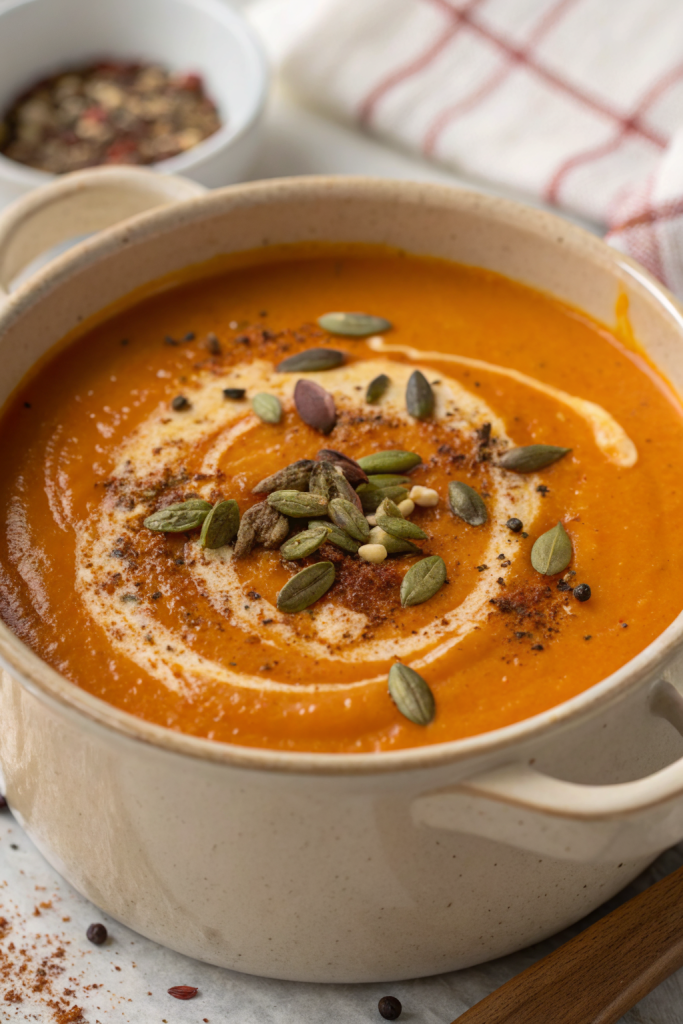
Roasted Butternut Squash Soup Recipe tastes velvety, slightly sweet, and cozy with a gentle kick of spice that keeps each spoonful interesting. It works well for busy weeknights, meal prep, or casual dinner parties, and you can make it in about 1 hour from start to finish. I first made a version of this on a broke college night with a $2 squash and a lot of hope, and it still feels like a small miracle every fall.
Why Roasted Butternut Squash Soup Recipe Is Worth It
Roasting the squash concentrates the natural sweetness and adds caramelized flavor that stovetop-only versions never match. The spices, aromatics, and a touch of cream or coconut milk give the soup a restaurant-level finish with very little effort.
You can keep the soup dairy-free, gluten-free, and meal-prep friendly without any weird ingredients. It also freezes beautifully, so you cook once and enjoy several cozy bowls later.
“This Roasted Butternut Squash Soup Recipe tastes like a fancy café special, but it comes together in my tiny kitchen on a Tuesday night. ★★★★★”
Ingredients You Need
Produce
- 1 large butternut squash (about 3–3.5 pounds), peeled, seeded, and cubed
- 2 medium yellow onions, chopped
- 2 medium carrots, peeled and chopped
- 4 cloves garlic, minced
- 1–2 tablespoons fresh ginger, minced or grated
- 1 small apple, peeled and chopped (Honeycrisp or Gala adds nice sweetness)
- Optional topping: fresh herbs (sage, thyme, or chives), pomegranate arils, toasted pumpkin seeds
Pantry
- 3 tablespoons olive oil or avocado oil, divided
- Use a neutral oil if you prefer a milder flavor.
- 1–2 tablespoons harissa paste
- Use mild harissa if you avoid heat; swap with 1 teaspoon smoked paprika plus a pinch of cayenne.
- 1 teaspoon ground coriander
- 1 teaspoon ground turmeric
- ½ teaspoon ground cumin (optional, but adds depth)
- ½–1 teaspoon ground cinnamon (optional, for a cozy note)
- 4 cups vegetable broth or chicken broth, low sodium
- I like Better Than Bouillon for easy pantry storage.
- 1–2 teaspoons kosher salt, to taste
- ½ teaspoon black pepper, plus more to taste
- 1–2 tablespoons maple syrup or honey, to taste
- This balances the natural squash flavor, especially if the squash tastes bland.
- ½–1 cup canned coconut milk (full-fat) or heavy cream
- Coconut milk keeps it dairy-free and adds richness.
- 1–2 tablespoons butter or vegan butter (optional, for a silky finish)
- 1–2 tablespoons lemon juice or apple cider vinegar, to taste, for brightness
Optional toppings
- Greek yogurt or coconut yogurt swirl
- Toasted pumpkin seeds or sunflower seeds
- Crispy chickpeas
- Croutons (use gluten-free if needed)
- Chili crisp or extra harissa for heat lovers
Equipment
- Large baking sheet
- Parchment paper or silicone baking mat
- Large stock pot or Dutch oven
- Wooden spoon or spatula
- Immersion blender
- You can use a regular blender, but blend in batches and vent the lid slightly.
- Measuring cups and spoons
- Sharp chef’s knife and sturdy cutting board
Quick Tips & substitutions
- Cut the squash into even cubes so it roasts at the same rate and browns instead of steaming.
- Toss the squash with oil, salt, and pepper before roasting to build flavor from the start.
- Use pre-cut butternut squash from the store if you want to save time and avoid wrestling with a whole squash.
- Swap butternut with kabocha or acorn squash if that sits in your pantry; keep the roasting method the same.
- Use coconut milk instead of cream for a dairy-free Roasted Butternut Squash Soup Recipe with rich texture.
- Thin the soup with extra broth if you prefer a lighter consistency, or simmer longer to thicken.
- Taste and adjust salt, acid (lemon or vinegar), and sweetness at the end; this step turns a good soup into a great one.
- Roast the onions and carrots with the squash if you want deeper flavor and fewer dishes.
- Use smoked paprika instead of harissa if you want smoky flavor without much heat.
- Add a small boiled potato or extra carrot if you want more body without extra cream.
How to Make Roasted Butternut Squash Soup Recipe
Step 1: Roast the butternut squash
Preheat the oven to 400°F (200°C). Line a baking sheet with parchment paper for easy cleanup. Toss the cubed butternut squash with 1–2 tablespoons of oil, salt, and pepper, then spread the cubes in a single layer. Roast 25–35 minutes, until the edges brown and the centers feel very tender when you poke them with a fork.
Step 2: Sauté veggies and aromatics
Heat the remaining oil in a large stock pot or Dutch oven over medium heat. Once hot, add onions and carrots; cook until soft, about 8 minutes. Stir in garlic, ginger, harissa, coriander, turmeric, cumin, and cinnamon; cook 2 minutes, until aromatic. Season with salt and pepper.
Step 3: Add apple, broth, and roasted squash
Stir in the chopped apple and cook 2–3 minutes to soften it slightly. Add the roasted butternut squash to the pot along with the broth. Scrape up any browned bits from the bottom of the pot because they add flavor. Bring the mixture to a gentle simmer and cook 10–15 minutes so the flavors mingle.
Step 4: Blend the soup
Turn off the heat. Use an immersion blender to blend the soup directly in the pot until it turns completely smooth and creamy. If you use a regular blender, blend in batches and keep the lid slightly open with a towel over the top so steam escapes safely. Return the blended soup to the pot if you used a stand blender.
Step 5: Adjust texture and richness
Stir in coconut milk or heavy cream, starting with ½ cup and adding more until the soup reaches your ideal richness. Add butter or vegan butter if you want extra silky texture. If the soup tastes too thick, add more broth or water a little at a time. If it tastes thin, simmer it uncovered for a few minutes to reduce.
Step 6: Season to perfection
Taste the soup and add more salt and pepper if needed. Stir in maple syrup or honey to balance the flavors, especially if the squash tastes more savory than sweet. Add lemon juice or apple cider vinegar a teaspoon at a time until the flavor pops. Taste again and adjust any final seasoning so the soup tastes bright, cozy, and well-rounded.
Step 7: Serve and garnish
Ladle the Roasted Butternut Squash Soup Recipe into warm bowls. Swirl in yogurt, cream, or coconut milk if you like a pretty finish. Sprinkle with toasted seeds, fresh herbs, or crispy chickpeas for crunch. Add a small spoonful of harissa or chili crisp on top if you enjoy extra heat.
Recipe Variations
- Gluten-free: Use gluten-free toppings such as roasted seeds, gluten-free croutons, or crispy chickpeas; the base soup already avoids gluten.
- Vegan: Use vegetable broth, coconut milk, and vegan butter; skip dairy cream and yogurt toppings.
- Low carb: Skip the apple and maple syrup, and use extra roasted squash and a bit more ginger for flavor.
- Extra protein: Stir in cooked red lentils or white beans before blending, or top with crispy roasted chickpeas.
- Kid-friendly mild version: Reduce or omit harissa and use sweet paprika instead, then add a drizzle of maple syrup at the end.
- Ultra-spiced version: Increase harissa, ginger, and coriander, and finish with a squeeze of lime and chopped cilantro.
- Smoky version: Add 1–2 teaspoons smoked paprika and top with roasted corn kernels.
- Herb-forward version: Add a handful of fresh sage or thyme leaves during the simmer, then blend them into the soup.
Ways to Serve Roasted Butternut Squash Soup Recipe
- Pair with a grilled cheese sandwich or a melty quesadilla.
- Serve in small cups as a starter before a cozy fall or winter meal.
- Spoon over cooked quinoa or rice for a more filling bowl.
- Serve with a big green salad and crusty bread for a simple dinner.
- Use as a sauce over roasted vegetables or baked chicken thighs.
- Offer as part of a soup-and-sandwich bar for casual gatherings.
Storage Success
Cool the Roasted Butternut Squash Soup Recipe to room temperature before you stash it away. Store it in airtight containers in the fridge for up to 4 days, and reheat gently on the stove over low heat while you stir often. Add a splash of broth or water if it thickens in the fridge. Freeze in single portions for up to 3 months, then thaw overnight in the fridge and reheat on the stove until it steams and tastes fresh again.
Leave a Reply