
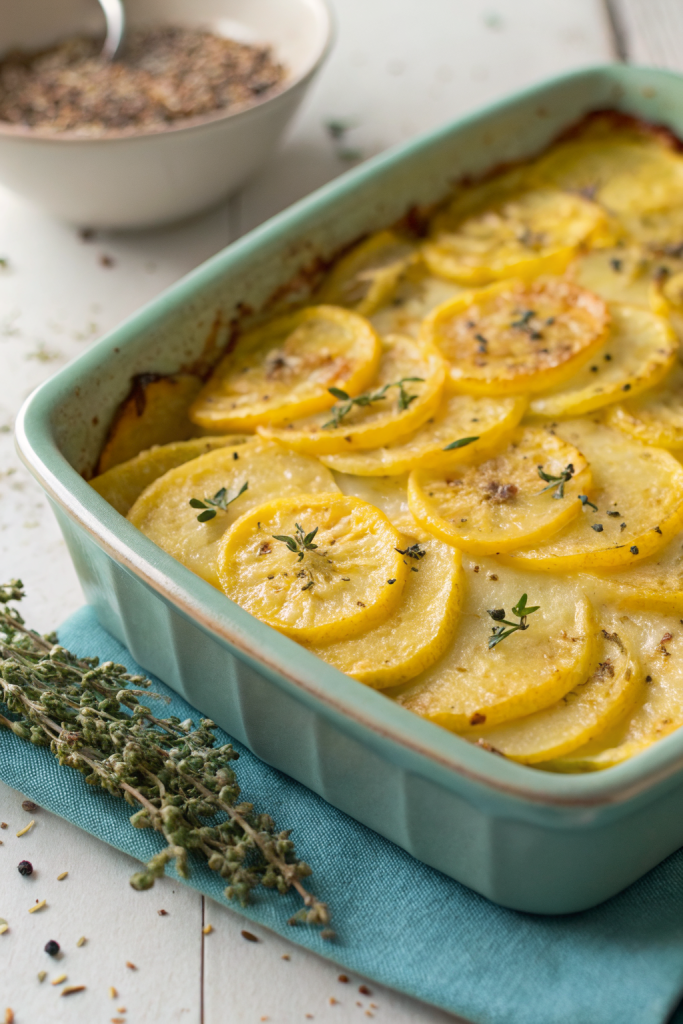
Sage Butternut Squash Gratin Recipe layers sweet roasted squash, nutty cheese, and crispy golden crumbs into one bubbling pan of cozy comfort. It tastes rich, herby, and slightly sweet, with crispy edges and a creamy center, and it works perfectly for weeknights or holiday tables in about 1 hour total. I tested this version on my very picky Midwestern family, and they scraped the dish clean without a single polite “I’m full” excuse.
Why Sage Butternut Squash Gratin Recipe Is Worth It
This gratin hits that sweet spot between comfort food and “I ate a vegetable.” The butternut squash turns silky and sweet, the sage adds an earthy, savory note, and the cheese and cream tie everything together into one spoonable, golden-topped situation.
You can prep it ahead, bake it right before serving, and it holds beautifully on a buffet or holiday table. It also uses simple ingredients from a regular grocery store, so you don’t need a specialty cheese shop or a second mortgage.
“This Sage Butternut Squash Gratin Recipe tastes like mac and cheese and roasted squash had a very classy baby. ★★★★★”
Ingredients You Need
Main ingredients
- 1 large butternut squash (about 2 ½–3 pounds), peeled, seeded, and sliced into ⅛–¼-inch thin half-moons
- Shortcut: Use 2–2 ½ pounds pre-peeled, pre-cut butternut squash from the produce section.
- 1 medium yellow onion, thinly sliced
- 2 cloves garlic, minced
- 2 tablespoons fresh sage, finely chopped (or 2 teaspoons dried rubbed sage)
- 1 teaspoon fresh thyme leaves (or ½ teaspoon dried thyme)
- 3 tablespoons unsalted butter, divided
- 1 tablespoon olive oil
Cream and cheese
- 1 cup heavy cream
- Lighter option: Use half-and-half; the sauce thickens a bit less but still tastes great.
- ½ cup whole milk
- 1 teaspoon kosher salt, plus more to taste
- ½ teaspoon black pepper
- ¼ teaspoon ground nutmeg (freshly grated if possible)
- 1 cup shredded Gruyère cheese
- Budget swap: Use Swiss or a mix of Swiss and mozzarella.
- ½ cup freshly grated Parmesan cheese
- Pantry shortcut: Use pre-grated Parmesan from the refrigerated section, not the shelf-stable can.
Crispy topping
- ¾ cup panko breadcrumbs
- Gluten-free option: Use gluten-free panko or crushed gluten-free crackers.
- 2 tablespoons grated Parmesan
- 2 tablespoons melted butter
- Pinch of salt and pepper
Optional flavor boosters
- ½ teaspoon smoked paprika for a subtle smoky note
- 1 teaspoon Dijon mustard whisked into the cream for a sharper, more savory flavor
- 2–3 tablespoons chopped toasted pecans or walnuts for crunch on top
Equipment
- 9×13-inch baking dish or similar 2–2.5 quart casserole dish
- Large skillet or sauté pan
- Sharp chef’s knife and sturdy cutting board (or a mandoline for thin, even slices)
- Mixing bowls
- Whisk
- Foil for covering during baking
- Oven preheated to 375°F (190°C)
Quick Tips & substitutions
- Slice the squash thin and even so it cooks through and turns tender in the same time.
- Use pre-cut butternut squash to save time; just slice any large chunks thinner so they layer well.
- Swap Gruyère with sharp cheddar or a blend of cheddar and mozzarella if that’s what you have.
- Use dried sage and thyme if fresh herbs feel pricey; just use about one-third the amount.
- Add a handful of baby spinach or chopped kale between layers for extra greens.
- Choose half-and-half instead of heavy cream if you want a lighter sauce, and reduce milk slightly.
- Use gluten-free panko or crushed gluten-free crackers to keep the gratin gluten-free.
- Skip dairy by using a rich, unsweetened oat or cashew cream and a good melting dairy-free cheese.
- Toast the panko in a dry skillet for a minute or two to boost crunch and flavor before mixing with butter.
- Let the gratin rest 10–15 minutes after baking so it sets and slices more neatly.
How to Make Sage Butternut Squash Gratin Recipe
Step 1: Sauté veggies and aromatics
Heat olive oil and 1 tablespoon butter in a large skillet over medium heat. Add the sliced onion and cook until soft and lightly golden, about 8–10 minutes, stirring occasionally. Stir in the garlic, sage, thyme, salt, pepper, and nutmeg, and cook 1–2 minutes until the mixture smells fragrant. Turn off the heat and set the skillet aside.
Step 2: Prep the squash and pan
Peel the butternut squash, slice it in half lengthwise, and scoop out the seeds. Slice the squash into thin half-moons, about ⅛–¼ inch thick, so they cook evenly and turn tender. Grease your baking dish with a little butter or oil, and preheat the oven to 375°F (190°C).
Step 3: Mix the creamy sauce
In a bowl or large measuring cup, whisk together the heavy cream, milk, a pinch of salt, black pepper, and Dijon mustard if you use it. Taste the mixture and adjust seasoning so it already tastes nicely salted and flavorful. Stir in the smoked paprika if you want a subtle smoky note.
Step 4: Layer the squash, onions, and cheese
Spread a thin layer of the cream mixture on the bottom of the baking dish. Arrange a layer of squash slices over it, slightly overlapping them like shingles. Spoon some of the onion-sage mixture over the squash, then sprinkle a mix of Gruyère and Parmesan on top. Repeat the layers (cream, squash, onions, cheese) until you use everything, finishing with cheese on top.
Step 5: Add the crispy topping
In a small bowl, mix the panko, Parmesan, melted butter, and a pinch of salt and pepper. Stir until the crumbs look evenly coated and slightly clumpy. Sprinkle this mixture evenly over the top of the gratin, and dot with the remaining 1 tablespoon of butter if you want extra richness.
Step 6: Bake until bubbly and golden
Cover the dish loosely with foil, tenting it so it doesn’t touch the crumbs. Bake for 25–30 minutes, until the squash starts to turn tender and the cream bubbles around the edges. Remove the foil and bake another 15–20 minutes, until the top turns deep golden brown and the squash feels very tender when you pierce it with a knife.
Step 7: Rest and serve
Remove the gratin from the oven and let it rest 10–15 minutes. This rest time helps the creamy sauce thicken and the layers set so you scoop or slice clean portions. Sprinkle with a little extra chopped sage or thyme if you like, then serve warm.
Recipe Variations
-
Gluten-free
- Use gluten-free panko or crushed gluten-free crackers for the topping.
- Check labels on broth or dairy-free cream alternatives if you use them.
-
Vegan
- Use a rich, unsweetened oat or cashew cream in place of dairy cream and milk.
- Swap cheese with a good melting dairy-free cheese and a few spoonfuls of nutritional yeast.
-
Low carb-ish
- Replace half the butternut squash with thinly sliced cauliflower or rutabaga.
- Use a bit more cheese and less cream to keep the sauce thick and satisfying.
-
Extra protein
- Add cooked, crumbled Italian sausage or chicken sausage between layers.
- Sprinkle toasted nuts (pecans, walnuts, or hazelnuts) over the top for crunch and protein.
-
Herb switch-ups
- Swap sage with rosemary and thyme for a different flavor profile.
- Add a little chopped chives or green onion on top after baking for freshness.
Ways to Serve Sage Butternut Squash Gratin Recipe
- Serve as a side dish with roasted chicken, turkey, or simple baked salmon.
- Pair with a crisp green salad and warm crusty bread for a cozy vegetarian dinner.
- Spoon next to grilled pork chops or seared tofu for a hearty fall plate.
- Serve small squares as part of a holiday buffet with other vegetable sides.
- Reheat leftovers for lunch with a fried or poached egg on top.
Storage Success
Let the Sage Butternut Squash Gratin cool to room temperature, then cover the dish tightly or transfer leftovers to airtight containers. Store in the fridge for up to 4 days, and reheat in a 350°F oven until hot and bubbly, or use the microwave for single portions. If the top softens, sprinkle a few fresh breadcrumbs and a drizzle of olive oil on before reheating in the oven to bring back some crunch. You can also assemble the gratin up to a day ahead, keep it covered in the fridge, then bake right before serving, adding 5–10 extra minutes to the covered baking time.
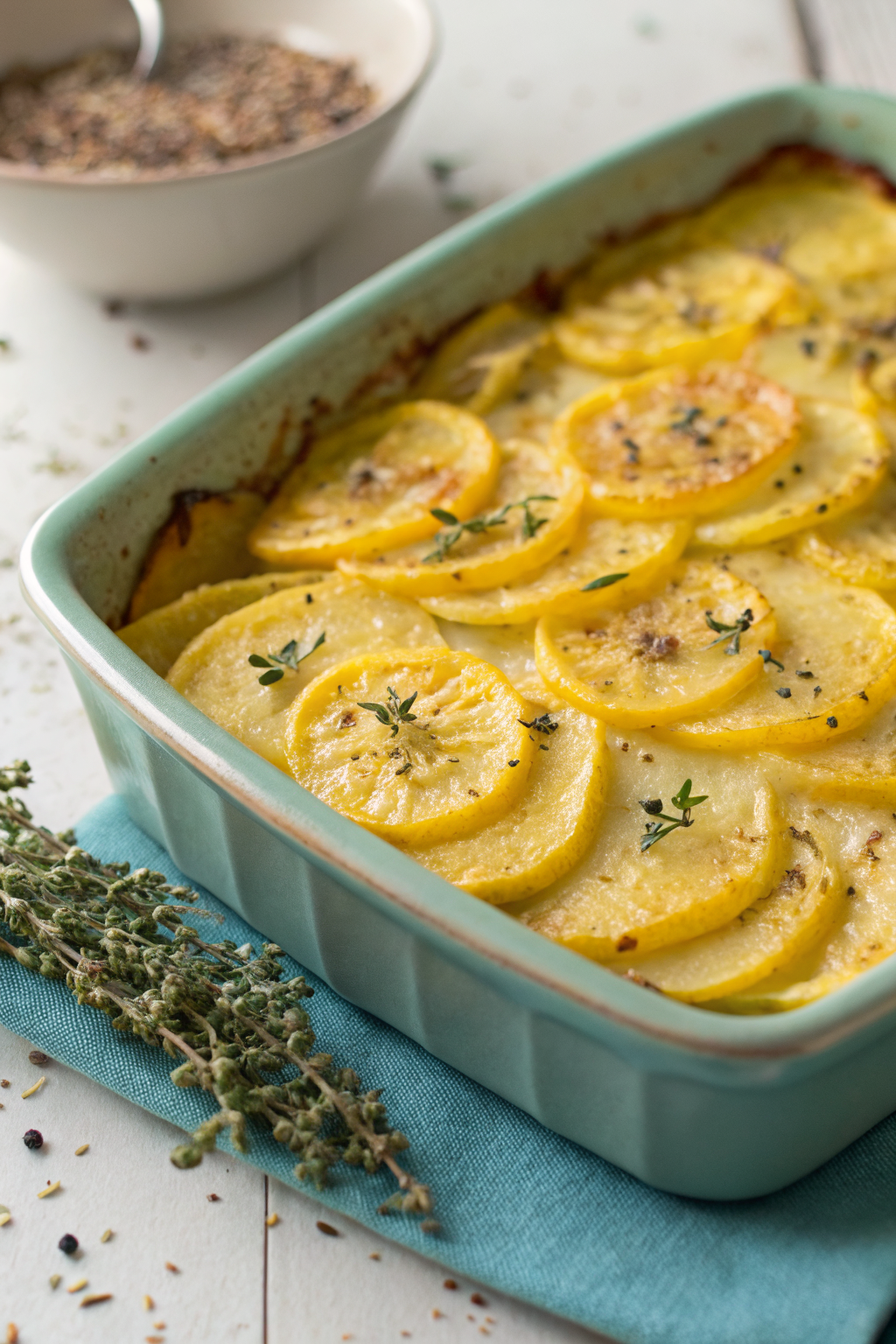
Sage Butternut Squash Gratin Recipe
Ingredients
Instructions
- Preheat the oven to 375°F (190°C). Grease a 9x13-inch or similar 2–2.5 quart baking dish with butter or oil.
- Heat the olive oil and 1 tablespoon of the butter in a large skillet over medium heat. Add the sliced onion and cook, stirring occasionally, until soft and lightly golden, about 8–10 minutes.
- Stir in the garlic, chopped sage, thyme, 1 teaspoon kosher salt, 1/2 teaspoon black pepper, and the nutmeg. Cook 1–2 minutes more, until fragrant, then remove from the heat.
- Peel the butternut squash, halve it lengthwise, scoop out the seeds, and slice into thin half-moons about 1/8–1/4 inch thick so they cook evenly.
- In a bowl or large measuring cup, whisk together the heavy cream and whole milk. Whisk in the Dijon mustard and smoked paprika if using. Taste and adjust seasoning with a little extra salt and pepper if needed.
- Spread a thin layer of the cream mixture over the bottom of the prepared baking dish.
- Arrange a layer of squash slices over the cream, slightly overlapping them like shingles.
- Spoon some of the onion–sage mixture evenly over the squash, then sprinkle with a mix of Gruyère and Parmesan cheese.
- Repeat the layers—cream, squash, onions, cheese—until all the ingredients are used, finishing with a layer of cheese on top.
- In a small bowl, mix together the panko breadcrumbs, grated Parmesan, melted butter, and a pinch of salt and pepper until the crumbs are evenly coated and slightly clumpy.
- Sprinkle the breadcrumb mixture evenly over the top of the gratin. Dot with the remaining 1–2 tablespoons butter if you like extra richness.
- Cover the dish loosely with foil, tenting it so it doesn’t touch the crumbs. Bake for 25–30 minutes, until the squash is beginning to turn tender and the cream is bubbling around the edges.
- Remove the foil and continue baking for 15–20 minutes more, or until the top is deep golden brown and the squash is very tender when pierced with a knife.
- Let the gratin rest for 10–15 minutes before serving so the sauce thickens slightly and the layers set.
Notes
Approximate per serving (8 servings): 310–340 calories; fat 22–24 g; saturated fat 13–15 g; carbohydrates 22–25 g; fiber 3–4 g; sugars 5–7 g; protein 8–10 g; sodium 420–520 mg. Values are estimates and will vary based on specific ingredients, brands, and portion sizes.
Leave a Reply